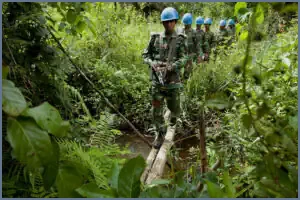
For decades, the United Nations has documented a severe human rights crisis in Bangladesh while simultaneously funding the very institutions accused of these violations to maintain peace in other nations. On September 15, the Bangladeshi government announced the dissolution of the Rapid Action Battalion (RAB), a unit long accused of torture, enforced disappearances, and extrajudicial killings. The RAB was immediately replaced by the Special Response Battalion (SRB). Just one month after this transition, 50 Bangladeshi soldiers departed for Haiti as an advance team for a U.N.-authorized force tasked with gang suppression.
The question of whether the path to international peacekeeping has been closed to officers with documented records of abuse remains a critical concern. In short, the door remains open. Bangladesh has been a significant contributor to U.N. peacekeeping operations since 1988 and was the top troop-contributing country from 2021 to 2023. According to Foreign Minister Khalilur Rahman, the nation earned approximately 8.62 billion taka, or roughly $73 million, in foreign currency from these missions during the 2023-24 fiscal year. Over 23 fiscal years ending in 2022-23, the Bangladeshi armed forces generated 279.41 billion taka through these deployments, often placing officers in well-paid U.N. roles following their service in the RAB.
The RAB was established in 2004 under the Bangladesh Nationalist Party (BNP) government, utilizing personnel on loan from the military and police. The unit became synonymous with major crimes; in 2014, a court sentenced 16 RAB members to death for their involvement in the abduction and murder of seven individuals in Narayanganj. By 2021, the United States imposed sanctions on the unit, citing allegations of over 600 disappearances since 2009. Following the ouster of Sheikh Hasina in August 2024, a Commission of Inquiry on Enforced Disappearances reviewed 1,569 complaints, implicating the RAB in roughly a quarter of them. The commission found prima facie evidence against 82 officers, including 40 from the RAB and 11 from the Directorate General of Forces Intelligence (DGFI). In October 2025, prosecutors charged 28 individuals, including 23 current or retired army officers, regarding operations within secret interrogation cells.
Human rights abuses have persisted through changes in government. The rights group Odhikar reported at least 40 extrajudicial killings during the first 14 months of the interim government led by Muhammad Yunus. Under the subsequently elected BNP government, Ain o Salish Kendra recorded 11 additional extrajudicial killings in the first half of 2026. The U.N. Committee Against Torture raised concerns in 2019 regarding the deployment of former RAB officers to peacekeeping missions. A May 2024 report by DW indicated that more than 100 RAB officers had served in peacekeeping roles, including 40 after the U.N. had issued warnings. The army’s press office has characterized such reports as false, asserting a spotless international record, yet U.N. records confirm substantiated cases of sexual exploitation and abuse by Bangladeshi personnel, including the rape of a minor in the Central African Republic.
Three primary factors contribute to the continued deployment of these officers. First, the personnel transition mechanism remains flawed; RAB officers were on loan from other branches and returned to their parent services upon completion of their tours. The SRB Act effectively transferred all manpower, powers, and records from the RAB to the new unit, with Transparency International Bangladesh noting that without fundamental reforms, the new force risks replicating the culture of its predecessor. Second, oversight mechanisms remain weak. While the interim government briefly brought the National Human Rights Commission into compliance with the Paris Principles in 2025, the BNP government later repealed this ordinance, restoring a 2009 law that prevents the commission from investigating security forces. Finally, the U.N. system itself relies heavily on self-certification by the candidate and the host government, a process that Human Rights Watch argues is insufficient when governments actively cover up abuses.
Despite warnings from U.N. experts regarding the involvement of military officials in alleged violations against Indigenous people in the Chittagong Hill Tracts, uncertainty remains regarding the existence of an independent screening mechanism. As Bangladesh prepares to deploy approximately 1,600 personnel to Haiti, critics argue that without credible vetting, officers implicated in violence at home could be empowered to repeat those abuses against vulnerable populations abroad. Although the U.N. has previously suspended deployments from countries such as Sri Lanka and Burundi due to human rights concerns, it has not applied the same standard to Bangladesh, choosing instead to continue funding these forces while simultaneously documenting the crisis they have created.
With the overthrow of the Awami League government, many would have thought things might change for good, but little has changed in this regard.
You have reached the limit of 3 free articles this month.
Related Articles

Md. Kazi Bijoy is a dedicated tech enthusiast and content creator with a passion for digital innovation. With years of experience in the tech industry, he specializes in breaking down complex topics into easy-to-understand guides. When he isn’t writing, he explores the latest gadgets and researches emerging trends in the digital world.