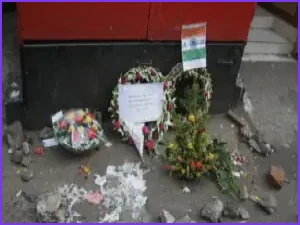
As India marks another anniversary of the November 26, 2008 Mumbai terror attacks, the nation is evaluating how its defense posture has transformed from historical restraint to an active policy of zero tolerance toward terrorism. Supported by strong political resolve and sustained military action, the shift aims to dismantle terror infrastructure and choke the operational support networks of cross-border groups.
A clear demonstration of this kinetic strategy occurred during Operation Sindoor from May 7 to 10, 2025. Launched following a terror attack in Pahalgam, the operation involved 88 hours of precision strikes carried out inside Pakistan, underscoring New Delhi's transition toward immediate counter-strikes.
Addressing a counterterrorism conference in Delhi on November 19, Home Minister Amit Shah announced another major development, confirming that security forces had eliminated Latif Bhat, identified as the last known home-grown terrorist. Shah stated that the successful operation made the entire Kashmir region free of India-born terrorists. He called for strengthening proactive offensive strategies while expanding structural and operational counterterrorism capabilities.
Data compiled by the South Asia Terrorism Portal reveals a steep decline in violence over recent decades. Total terrorist fatalities in India dropped to 25 in the current year, compared to 1,232 in 2008 and a peak of 3,005 in 2001. Security force casualties fell to four this year, down from 366 in 2008 and 883 in 2001. Civilian fatalities also saw a drastic reduction, with two deaths recorded this year compared to 915 in 2008 and 1,508 in 2001.
Despite these lower casualty figures, security analysts urge caution against declaring total victory or prematurely diverting military resources to conventional defense threats. Analysts emphasize that complex security challenges remain and that hasty declarations could risk undermining years of operational gains and military sacrifices.
India's long-running fight against state-sponsored cross-border terrorism began in Kashmir during the early 1990s. Direct foreign linkages were starkly highlighted on December 24, 1999, when Indian Airlines Flight IC-814 was hijacked. Under intense public and international pressure—and facing limited politico-military options—India released Pakistan-based terrorists Ahmed Omar Sheikh and Masood Azhar in exchange for more than 160 civilian hostages.
Strategic restraint was tested again on December 13, 2001, when the Pakistan-based terror group Jaish-e-Mohammed launched an attack on the Indian Parliament in Delhi. The incident triggered Operation Parakaram, a massive two-year military deployment. However, amid intense international pressure and concerns surrounding both nations' nuclear capabilities, the confrontation concluded without direct military action against Pakistan.
The policy benchmark shifted dramatically on November 26, 2008, when 10 heavily armed terrorists trained and launched from Pakistan entered Mumbai via sea routes. Over a 60-hour siege, the attackers struck multiple high-profile targets, including the Taj Mahal Palace Hotel, the Oberoi-Trident, Chhatrapati Shivaji Terminus, Nariman House, and Cama Hospital. The strikes resulted in 166 deaths, including foreign nationals and security personnel, exposing severe gaps in coastal defenses and tactical preparedness.
While earlier security responses were constrained despite clear evidence of foreign backing, India's current counterterrorism doctrine relies on offensive readiness, enhanced intelligence capabilities, and direct action against foreign and local terror networks.
Related Articles

Meet Md. Rubel Rana
As a core contributor to Worlddincidents.com, Rubel Rana brings a unique perspective to the world of journalism. Whether it’s deep-diving into historical trivia or covering the latest global headlines, Rubel Rana is committed to delivering high-quality, high-impact articles. Their writing blends meticulous research with a compelling voice, helping readers stay informed and curious about the world around them.