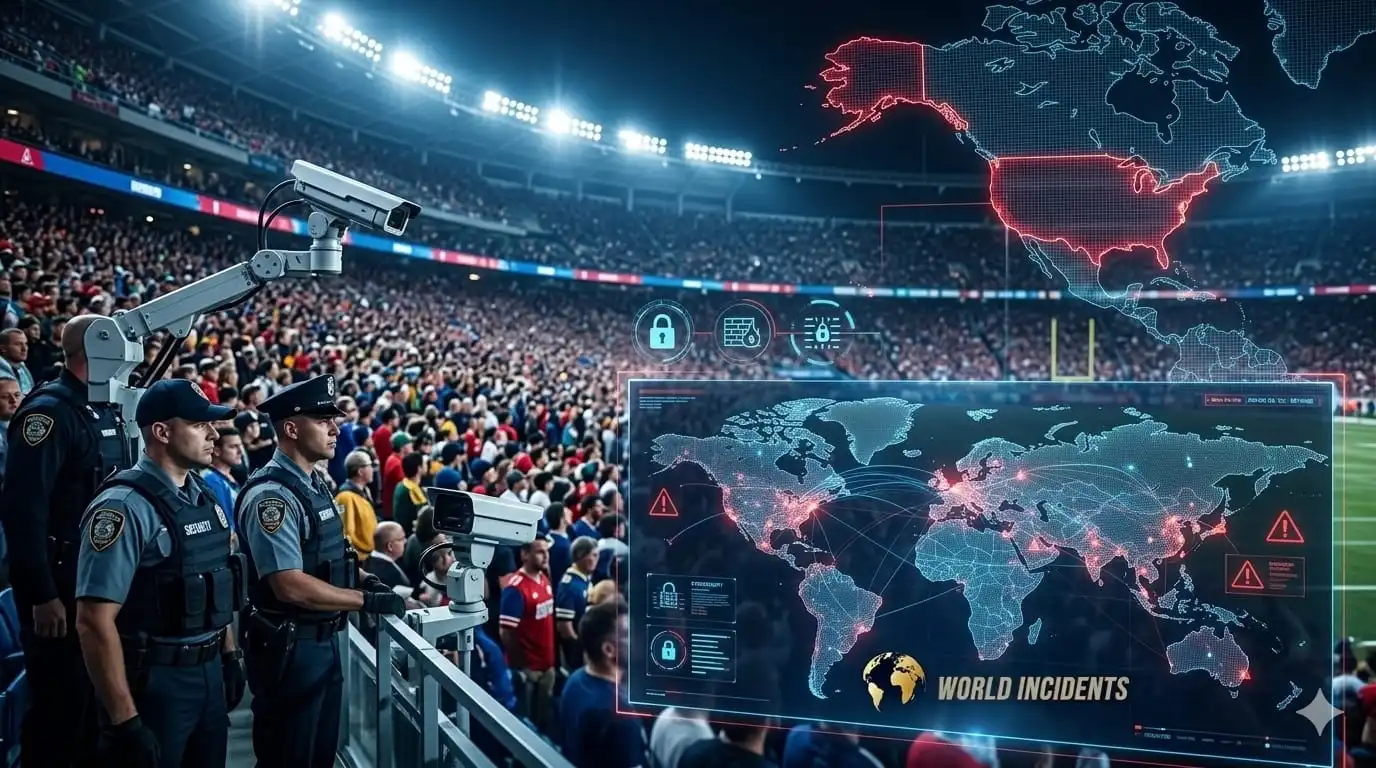
FIFA World Cup Security Risks 2026: Top Geopolitical Threats
The upcoming FIFA World Cup 2026 will be one of the biggest sporting events in history. For the first time, the tournament will be hosted across three countries: the United States, Canada, and Mexico. While millions of fans worldwide are excited about the event, security experts are carefully analyzing the potential World Cup Security Risks 2026.
Large international events often face complex security challenges. From terrorism threats to cyberattacks and geopolitical tensions, governments must prepare carefully to ensure the tournament runs smoothly.
In this article, we explore the major World Cup Security Risks 2026 and how global authorities are planning to manage them.
Why World Cup Security Risks 2026 Matter
The World Cup Security Risks 2026 are significant because the tournament will involve:
48 national teams
Millions of international travelers
Dozens of host cities
Massive global media attention
Such scale creates opportunities for security vulnerabilities. Governments and intelligence agencies are already assessing the World Cup Security Risks 2026 to prevent incidents that could disrupt the tournament.
International sporting events often become symbolic targets for groups seeking global attention, making security planning essential.
Terrorism Threats and World Cup Security Risks 2026
One of the biggest concerns surrounding the World Cup Security Risks 2026 is the possibility of terrorist attacks. Large stadium gatherings and fan zones create crowded environments that may attract extremist groups.
Security agencies across North America are strengthening intelligence coordination to minimize these Security Risks 2026.
Key counterterrorism measures include:
Advanced surveillance technology
Counter-terror intelligence sharing
Enhanced stadium security screening
International law enforcement cooperation
These precautions aim to reduce terrorism-related Security Risks 2026.
Cybersecurity Threats During the Tournament
Cyberattacks are becoming increasingly common at global events. Experts warn that Security Risks 2026 will likely include sophisticated cyber threats targeting digital infrastructure.
Potential cyber risks include:
Ticketing system hacks
Broadcasting disruptions
Data theft from fans
Disinformation campaigns
As digital technology becomes central to sporting events, cybersecurity will play a critical role in addressing Security Risks 2026.
Governments and private companies are working together to secure networks, cloud systems, and digital platforms.
Geopolitical Tensions and World Cup Security Risks 2026
International politics can also influence the Security Risks 2026. Diplomatic conflicts, sanctions, or political protests could create tension during the tournament.
Potential geopolitical concerns include:
Political demonstrations
Diplomatic disputes between nations
Travel restrictions for fans
Security coordination between host countries
Because the tournament spans three nations, managing cross-border cooperation is vital to addressing Security Risks 2026.
Border Control and Immigration Challenges
Another important factor in Security Risks 2026 is border management. Millions of fans are expected to travel between host countries during the tournament.
Authorities must manage:
visa processing
airport security
cross-border transportation
crowd management
Efficient coordination between the United States, Canada, and Mexico is necessary to minimize logistical Security Risks 2026.
Stadium Security and Crowd Management
Stadium safety is a critical component of Security Risks 2026. Large crowds increase the possibility of stampedes, riots, or security breaches.
Modern stadium security includes:
facial recognition systems
AI surveillance monitoring
drone detection technology
controlled fan entry systems
These tools help authorities manage Security Risks 2026 effectively.
Organized Crime and Black Market Risks
Another potential concern in Security Risks 2026 is the involvement of organized crime networks.
Common risks include:
counterfeit tickets
illegal betting operations
black market merchandise
financial scams targeting tourists
Authorities are working closely with international law enforcement agencies to combat these Security Risks 2026.
The Role of Technology in Preventing Security Risks
Technology will play a major role in managing Security Risks 2026. Artificial intelligence and advanced surveillance systems allow authorities to detect threats earlier.
Key technologies include:
AI-based threat detection
predictive policing tools
smart stadium monitoring
biometric security systems
These innovations are expected to reduce many Security Risks 2026.
How Governments Are Preparing
Host countries have already begun large-scale preparations to address Security Risks 2026.
Preparations include:
international intelligence collaboration
large-scale emergency response drills
cybersecurity infrastructure upgrades
enhanced border security systems
By investing in these strategies, authorities hope to minimize Security Risks 2026 and ensure a safe tournament for fans worldwide.
Final Thoughts
The FIFA World Cup is more than just a sporting event—it is a global celebration watched by billions of people. However, the scale of the tournament also creates complex Security Risks 2026.
From cybersecurity threats to geopolitical tensions, authorities must carefully manage multiple challenges. Fortunately, strong international cooperation and modern technology are helping reduce these Security Risks 2026.
If managed effectively, the 2026 tournament could become one of the safest and most successful World Cups in history.
FAQ Section
What are the main Security Risks 2026?
The main Security Risks 2026 include terrorism threats, cyberattacks, geopolitical tensions, crowd control issues, and organized crime activities targeting international fans.
Why is cybersecurity important for Security Risks 2026?
Cybersecurity is critical because hackers may attempt to disrupt ticket systems, broadcasting networks, or fan data during the tournament.
How are governments preparing for Security Risks 2026?
Governments are strengthening intelligence sharing, improving stadium security, enhancing border control systems, and investing in cybersecurity infrastructure.
Which countries are hosting the 2026 World Cup?
The 2026 FIFA World Cup will be hosted by the United States, Canada, and Mexico.
Will Security Risks 2026 affect fans traveling to the tournament?
Authorities are implementing advanced security measures to minimize Security Risks 2026, ensuring that fans can safely enjoy the tournament.

Meet Md. Rubel Rana
As a core contributor to Worlddincidents.com, Rubel Rana brings a unique perspective to the world of journalism. Whether it’s deep-diving into historical trivia or covering the latest global headlines, Rubel Rana is committed to delivering high-quality, high-impact articles. Their writing blends meticulous research with a compelling voice, helping readers stay informed and curious about the world around them.
2 thoughts on “FIFA World Cup Security Risks 2026: Top Geopolitical Threats”