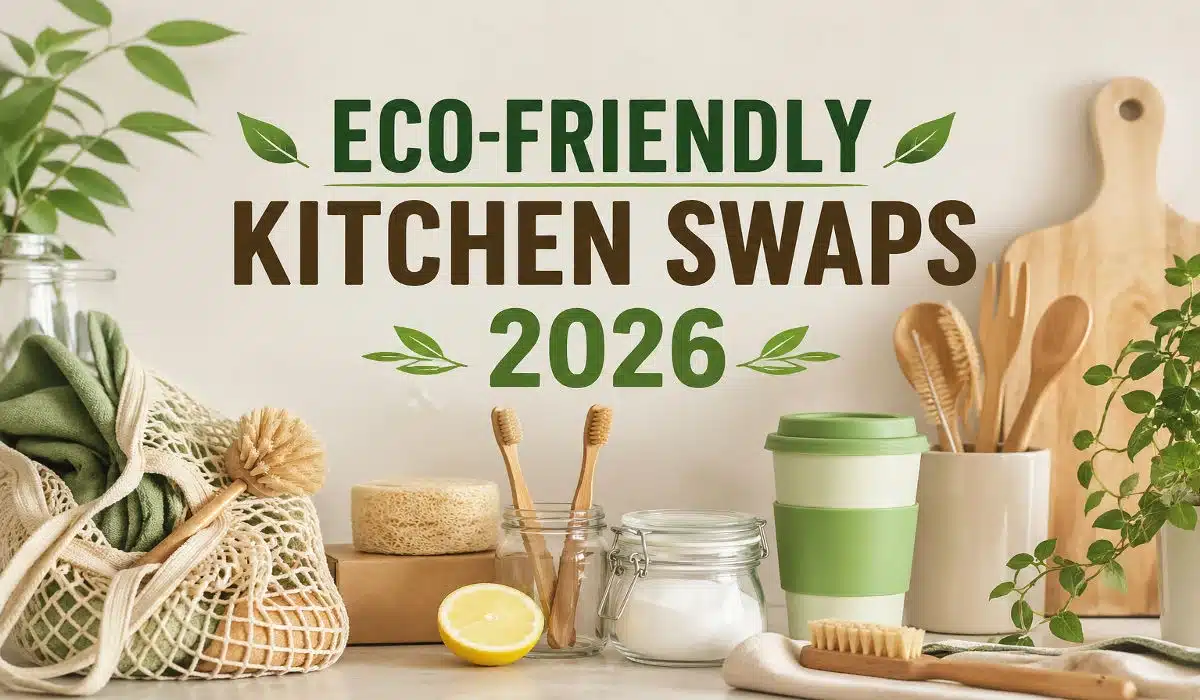
In 2026, the “disposable culture” is being replaced by a “durability mindset.” The most effective eco-friendly kitchen swaps 2026 are those that move away from petroleum-based plastics toward high-performance, natural materials like bamboo, glass, and medical-grade silicone.
Revolutionizing Food Storage
Traditional cling film is one of the most persistent pollutants in the kitchen. A primary eco-friendly kitchen swap 2026 is the transition to Beeswax or Soy-wax wraps. These are made from organic cotton coated in wax, providing a breathable, antimicrobial seal for leftovers.
The Swap: Replace plastic wrap with Silicone Stretch Lids.
Why it works: They are airtight, leak-proof, and can last for over 1,000 uses, significantly reducing your household’s plastic footprint.
The Death of the Disposable Sponge
Most yellow-and-green sponges are actually made of polyurethane, which sheds microplastics into the water system. One of the most essential eco-friendly kitchen swaps 2026 is switching to Compostable Cellulose Sponges or Wooden Dish Brushes.
The Swap: Swap plastic scrubbers for Bamboo Palm Brushes with plant-based bristles.
Benefit: These brushes are 100% biodegradable. Once the bristles wear out, the entire tool can be added to your home compost bin.
The Paperless Revolution
Paper towels contribute nearly 27% of municipal solid waste globally. In 2026, the trend of “Unpaper Towels” has gone mainstream. These are reusable cloth sheets that snap together on a roll.
The Eco-Friendly Kitchen Swap 2026: Replace single-use paper rolls with reusable bamboo or organic cotton cloths.
The Impact: A single set of 12-24 cloths can replace thousands of paper towels over their lifespan, saving you hundreds of dollars.
High-Performance Cookware Materials
Non-stick pans coated with PFAS (the “forever chemicals”) are being phased out in 2026. Savvy homeowners are choosing eco-friendly kitchen swaps 2026 like Cast Iron, Carbon Steel, or Ceramic-coated cookware.
Pro Tip: Cast iron is arguably the ultimate sustainable tool because it is virtually indestructible and improves with age, eliminating the need for frequent replacements.
Solid Dish Soap Bars
Liquid dish soap is mostly water, shipped in heavy plastic bottles. One of the smartest eco-friendly kitchen swaps 2026 is the move toward Solid Dish Soap Bars.
The Swap: Replace bottled liquid soap with a high-concentration soap block.
Why it matters: It eliminates plastic bottle waste and reduces the carbon footprint associated with shipping heavy liquids. One block often lasts as long as three standard bottles.
Smart Composting Solutions
Managing organic waste is a cornerstone of a green home. In 2026, Airtight In-Kitchen Compost Bins have become a standard fixture. These bins use charcoal filters to prevent odors while collecting scraps for garden fertilizer or municipal pickup.
Read More: The Impact of Fed Leadership Change 2026
Transitioning to Induction Hobs
One of the most impactful eco-friendly kitchen swaps 2026 is moving from traditional gas stoves to induction hobs. Induction technology is significantly more energy-efficient because it uses electromagnetism to heat the cookware directly, reducing wasted heat by up to 90%. In 2026, induction hobs are faster, safer, and eliminate the indoor air pollutants associated with gas combustion.
“Smart” Anti-Waste Refrigeration
As of April 2026, smart fridges with “AI Vision” have become a practical eco-swap. These appliances use internal cameras to track your inventory and alert you when items are nearing their expiration date. This eco-friendly kitchen swap 2026 helps households drastically reduce food waste—one of the largest contributors to methane emissions—by providing real-time grocery lists and recipe suggestions based on what’s already in the fridge.
Switching to Plastic-Free Chopping Boards
Research in early 2026 has highlighted plastic chopping boards as a major overlooked source of microplastics in our food. A vital eco-friendly kitchen swap 2026 is moving to End-Grain Wood, Bamboo, or FSC-certified Birchwood boards. Unlike plastic, wood has natural antimicrobial properties and, when properly oiled, can last a lifetime without shedding harmful synthetic particles into your meals.
Integrated In-Home Water Filtration Systems
To completely eliminate the need for bottled water, 2026 kitchens are integrating 4-in-1 Boiling Water and Filtration Taps. This eco-friendly kitchen swap 2026 provides instant filtered, chilled, sparkling, and boiling water from a single fixture. It eliminates the energy waste of boiling a kettle and the plastic waste of bottled beverages, all while encouraging better hydration through advanced filtration.
Bio-Based and Recycled “Eco-Composites”
The 2026 kitchen is seeing a surge in tools made from Polylactic Acid (PLA) and other bioplastics derived from corn starch or sugarcane. One of the newest eco-friendly kitchen swaps 2026 is replacing petroleum-plastic utensils with those made from circular materials like recycled aluminum or eco-composites. These tools offer the durability of traditional materials but are fully compostable or recyclable at the end of their lifecycle.
Natural Fiber “Decor-Storage”
Sustainable design in 2026 emphasizes “Storage that looks like Decor.” A popular eco-friendly kitchen swap 2026 is replacing plastic bins with Rattan, Seagrass, or Coconut-wood baskets. These natural textures not only bring a biophilic, calming aesthetic to the kitchen but also use rapidly renewable resources that are completely biodegradable.
Greywater-Compatible Cleaning Fixtures
Modern 2026 renovations often include low-flow faucets and greywater-ready plumbing. An advanced eco-friendly kitchen swap 2026 is the installation of aerators and smart sensors on taps. These devices reduce daily water consumption by up to 50% without affecting usability, making your kitchen smarter and more resource-efficient with every wash.
Loose Leaf Tea & Stainless Steel Infusers
Most traditional tea bags contain up to 25% plastic (polypropylene) to help them stay sealed in boiling water, releasing billions of microplastics into every cup. A quick and easy eco-friendly kitchen swap 2026 is switching to loose leaf tea paired with a stainless steel infuser. This simple change eliminates plastic ingestion, reduces packaging waste, and allows the tea leaves to be composted directly after use, enriching your garden soil instead of sitting in a landfill.
High-Efficiency Reusable Coffee Filters
In the landscape of eco-friendly kitchen swaps 2026, moving away from bleached paper coffee filters is a major win. Switching to a stainless steel mesh or organic hemp coffee filter is an essential eco-friendly kitchen swap 2026 that improves your morning routine. Unlike paper filters, which are often single-use and chemically treated, these reusable options allow natural oils to pass through for a richer flavor while ensuring your eco-friendly kitchen swaps 2026 mission remains consistent and waste-free.
Eco-Conscious Cleaning Subscriptions
In 2026, many households are moving away from supermarket aisles in favor of direct-to-door, zero-plastic refills. Adopting a refillable tablet system for your counters is a top-tier eco-friendly kitchen swap 2026 that eliminates thousands of single-use spray bottles. By integrating these eco-friendly kitchen swaps 2026, you simplify your supply chain and ensure that every spray used in your home supports a circular economy, making your eco-friendly kitchen swaps 2026 mission truly comprehensive.
Investing in Multi-Functional Bio-Based Utensils
As we look deeper into eco-friendly kitchen swaps 2026, the materials of our smaller tools are seeing a major shift. Replacing traditional nylon or cheap plastic spatulas with FSC-certified wood or high-grade bio-composites is a smart eco-friendly kitchen swap 2026. These innovative materials are derived from natural sources like cornstarch or flax fibers, offering heat resistance without the risk of leaching chemicals into your food. By choosing these eco-friendly kitchen swaps 2026, you support a cradle-to-cradle lifecycle where your cooking tools can eventually return to the earth as compost, completing the circle of a truly sustainable kitchen.
FAQ
Q1: Are eco-friendly kitchen swaps more expensive?
Ans: While the upfront cost is often higher (e.g., $15 for a silicone bag vs. $5 for a box of plastic ones), the long-term savings are massive. Most eco-friendly kitchen swaps 2026 pay for themselves within 6-12 months.
Q2: How do I clean silicone lids and beeswax wraps?
Ans: Silicone is dishwasher-safe. Beeswax wraps should be washed with cool water and mild soap to keep the wax from melting, then air-dried.
Q3: What is the most important swap for a beginner?
Ans: Start with reusable grocery and produce bags. It’s the easiest way to immediately stop thousands of pieces of plastic from entering your home.

Mr. Udoy is a professional Web Developer and Blogger with 7+ years of experience in the tech world. He specializes in web architecture and digital storytelling. As the driving force behind worldincidents.com, he focuses on delivering high-quality, well-researched content to a global audience.