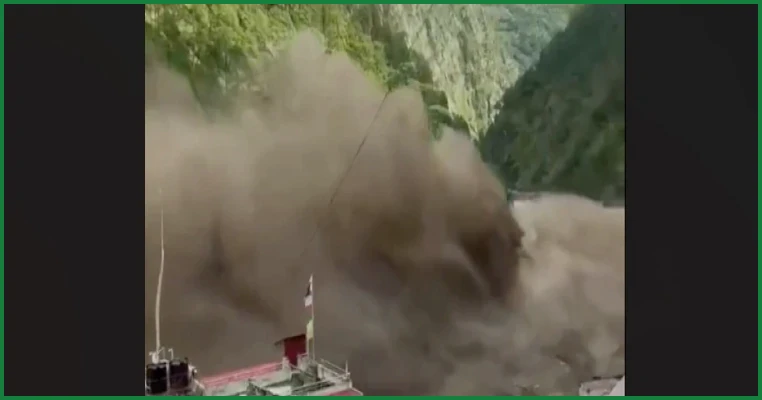
At least 160 people have died and more than 400 others, mostly foreign tourists, are missing after devastating flash floods swept through the northern mountain valleys of Nepal. The disaster, which struck on Wednesday, has decimated entire communities, destroying homes, roads, bridges, and critical infrastructure along the country's northern border areas.
According to Hikmat Singh Ayer, the CEO and senior director of Nepal's Tourism Board, 403 people remain unaccounted for following the floods. Citing data compiled from various tour operators, Ayer confirmed that the missing foreign nationals include 33 Americans, 34 Australians, 24 Canadians, 19 Malaysians, four Germans, and one Israeli. Most of the missing tourists were participating in trips organized by travel and tourism agencies.
The catastrophic water surge was triggered by an earthquake that caused a massive landslide, blocking the Bhote Koshi River, according to Nepal's Foreign Minister Shishir Khanal. The blockage gave way on Wednesday morning, sending violent torrents of water down the river through the northern Rasuwa district, located north of the capital city of Kathmandu. The sudden deluge quickly spread to the neighboring districts of Nuwakot and Dhading.
The physical impact of the flood has been severe. The Nepal Electricity Authority (NEA) confirmed that six of its major hydropower and transmission facilities were damaged in the flooding. David Fisher, the head of delegation for the International Red Cross in Nepal, described the scale of the destruction, noting that ground operations have been severely hindered because many areas remain completely inaccessible. "Entire villages have disappeared," Fisher said. "Markets have disappeared, and a critical artery for commerce between China and Nepal has also now been damaged, making it very difficult for many of those families who depend on that for their living."
Rescue and relief efforts are being challenged by Nepal's rugged, mountainous geography, which is filled with deep valleys and narrow gorges. Helicopters have managed to rescue some stranded individuals, but aerial teams have been unable to land in the heavily affected areas of Syapru Besi and Timure. Nepali police have confirmed the recovery of at least 157 bodies, though they have not yet released details regarding the nationalities of the deceased. Additionally, Chinese state media reported three deaths and other major casualties from a mudslide at a border hub in neighboring Tibet.
Nepali President Ramachandra Paudel expressed his deep sadness over the sudden loss of lives and property, calling on the government, political parties, emergency agencies, and the general public to intensify rescue and relief operations. Prime Minister Balen Shah stated on social media that coordination has begun with medical teams, scouts, and the Red Cross to take all necessary emergency steps.
Local authorities continue to warn of further dangers. District administrator Narendra Pariyar cautioned that there could be heavy casualties and extensive property loss, urging people living along the banks of the Bhote Koshi River to immediately evacuate to higher ground. Nepal Police spokesman Abi Narayan Kafle reiterated the warning, noting that while the exact extent of the damage is still unknown, all available resources have been deployed to assist with evacuations and response efforts.
In response to the tragedy, international support has begun to mobilize. U.S. Secretary of State Marco Rubio expressed solidarity with the people of Nepal, stating that the U.S. government stands ready to assist with humanitarian aid. Meanwhile, India's government ordered authorities in states along the Nepal border to be on high alert.
Related Articles

Md. Kazi Bijoy is a dedicated tech enthusiast and content creator with a passion for digital innovation. With years of experience in the tech industry, he specializes in breaking down complex topics into easy-to-understand guides. When he isn’t writing, he explores the latest gadgets and researches emerging trends in the digital world.