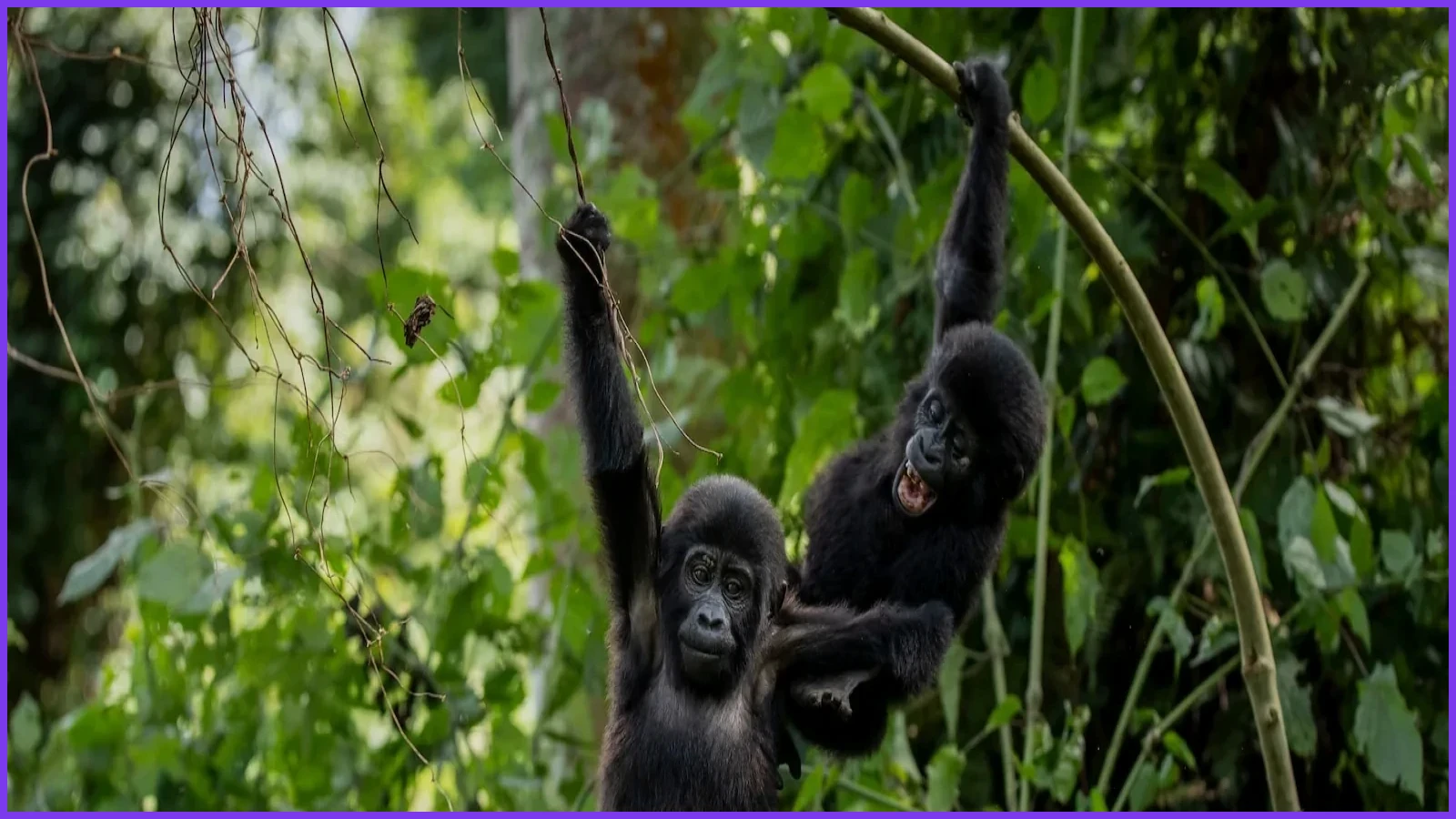
In an effort to safeguard the expanding population of endangered mountain gorillas, communities bordering Uganda's Bwindi Impenetrable National Park are planting trees along the forest's edge to establish a sustainable buffer zone. This community-led conservation initiative aims to provide residents with essential resources like firewood, medicine, and craft materials outside the park boundaries, thereby reducing human encroachment into the gorillas' critical habitat.
Bwindi Impenetrable National Park is home to approximately 450 mountain gorillas, representing nearly half of the global population. While a 2018 survey showed the world's mountain gorilla population had surpassed 1,000—marking a dramatic recovery from the brink of extinction—the physical boundaries of their forest home remain fixed. "Being a neighbor to the park, I understand that the number of gorillas is increasing, but the forest habitat is not increasing," explained Christina Katushabe, the founder of Change a Life Bwindi.
Katushabe’s organization works to supply useful trees and restore degraded land while boosting local biodiversity. Members of the Batwa, an Indigenous community that has helped guide the conservation project, select the specific tree species used for medicine, timber, and firewood. To support these efforts, the Uganda Wildlife Authority distributes seedlings, prioritizing medicinal trees that residents might otherwise seek inside the national park.
Joseph Muhindo, an assistant tourism and hospitality officer with the Uganda Wildlife Authority, noted that the initiative allows residents to harvest what they need directly within their communities "without tampering with the habitat for the gorillas." This strategy has helped the International Union for Conservation of Nature change the status of mountain gorillas from critically endangered to endangered.
Tourism has played a vital role in funding this recovery, with visitors trekking to see habituated gorilla families, which in turn generates local employment and revenue. Eunice Owembabazi, a member of a local women's crafts group, highlighted the harmony the project fosters, stating that the tree planting near the park means "we people and the gorillas do not inconvenience each other."
The conservation campaign has also expanded to local classrooms, where students are actively planting trees for future family use. Davis Musinguzi, a student at Ruhijja Seed Secondary School, shared his enthusiasm, saying, "Now we are going to protect the forest, so that our gorillas can stay well." These community conservation activities were organized to commemorate World Gorilla Day, which is observed globally every year on September 24.
Related Articles

Md. Kazi Bijoy is a dedicated tech enthusiast and content creator with a passion for digital innovation. With years of experience in the tech industry, he specializes in breaking down complex topics into easy-to-understand guides. When he isn’t writing, he explores the latest gadgets and researches emerging trends in the digital world.