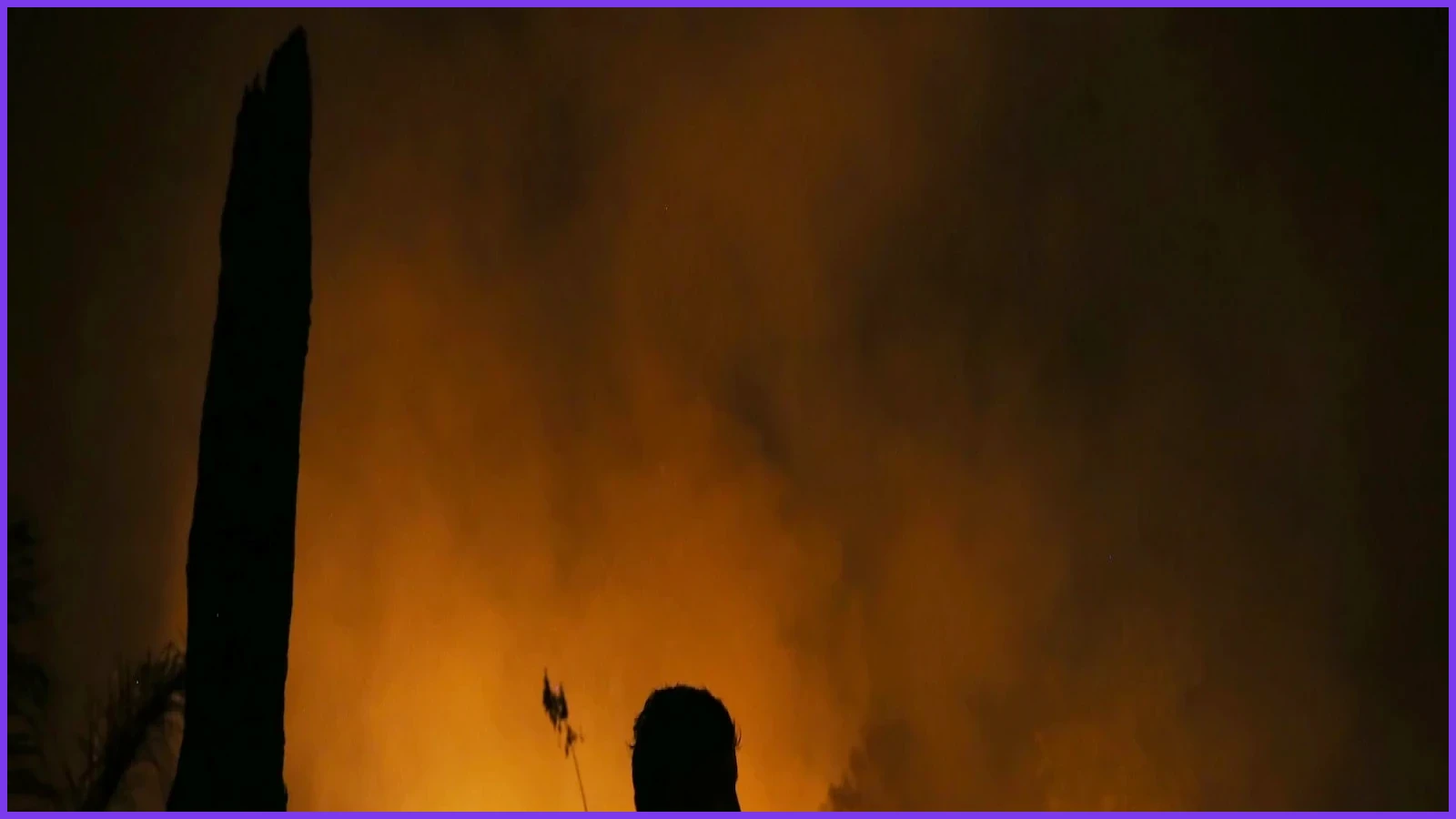
Brazilian authorities have launched an investigation into a dramatic surge in Amazon wildfires, suspecting that the blazes may have been intentionally ignited for political purposes. The spike in fire activity follows the first round of national elections held on October 4, with officials noting that fire counts across the biome have tripled since that date. The political climate remains tense as President Luiz Inácio Lula da Silva and Sen. Flávio Bolsonaro, son of former President Jair Bolsonaro, prepare for a runoff election on October 25. In the first round, Flávio Bolsonaro secured 47% of the vote, while President Lula received 45%.
Environment Minister João Paulo Capobianco told reporters that there are strong indications of a premeditated effort behind the fires. After conducting aerial inspections of the affected areas on Sunday and Wednesday, Capobianco reported observing fires arranged in distinct geometric patterns within protected forests, which strongly suggests deliberate human intervention rather than natural causes. While the specific identities of those responsible and their underlying motivations remain under investigation, the impact on the region has been severe, particularly in the states of Amazonas and Para.
In Manaus, the capital of Amazonas and the region's largest city, the resulting smoke has significantly disrupted daily life. The situation has become so hazardous that local authorities have canceled public school classes, and residents are being urged to wear face masks to protect against the poor air quality. Susana Braz, a 35-year-old biologist in Manaus, described the personal toll of the crisis, noting that the smoke has permeated homes to such an extent that sleeping has become difficult. She expressed frustration over the situation, questioning whether the public should simply accept the persistent smoke as a normal condition of life in the region.
The political dimensions of the crisis have drawn significant attention. A report by Barometro, a tool developed by the climate strategy agency FALA—part of the global Climate Action Against Disinformation coalition—analyzed 165 social media posts from 41 politicians in Amazonas and found that nearly 55% of the content originated from right-leaning figures. The analysis highlighted that these fires have been used as a campaign tool, with local politicians either claiming credit for firefighting efforts or accusing their opponents of negligence. This comes in an election cycle where climate change and forest protection have otherwise remained on the fringes of public discourse.
Deforestation in the Amazon soared under former President Bolsonaro, while Lula has brought it back down to the lowest in a decade. Flávio Bolsonaro has denied climate change but said he is an environmental defender, without offering details on protecting the Amazon or supporting forest financing. In speeches, he has called for modernizing environmental laws, which many environmentalists read as loosening them. Lula did not address the criticism but said in a video posted Saturday on X that he had spoken with Amazonas Gov. Roberto Cidade and that the federal government was sending resources to support firefighting efforts. “The people of Amazonas can count on the federal government. We are together in this fight to protect lives, preserve the forest and support those facing this emergency,” the president said.
The Amazon stores vast amounts of carbon and releases moisture that regulates weather far beyond South America. But climate change and deforestation are making it hotter, drier and more flammable. El Niño, a recurring climate pattern, can worsen heat and drought. “Nearly all ignitions in the region are caused by human activity, mainly to renew pastures or clear land,” said Ane Alencar, science director at Brazil’s nonprofit Amazon Environmental Research Institute. “During very dry periods, those fires can escape.” Alencar noted that while fire counts were expected to increase with a developing El Niño, the timing around elections is notable. “Over the past 10 days, we’ve seen fire hot spots nearly triple compared with the 10 days before the election, mainly around Manaus,” she said. “Something happened that led people to burn more.”
João Morita, a coordinator at ICMBio, the federal agency that manages Brazil’s protected areas, has been on the front lines fighting fires in conservation areas. He said several factors could explain last week’s spike, including residents of national forests burning crop plots, despite a ban. “Fires start for all sorts of reasons. Some are retaliation for enforcement actions. Others are deliberately set with malicious intent. Any unauthorized burning is a crime, so there is a range of possibilities,” Morita said. Officials and researchers have warned that El Niño’s effects on the Amazon could be worse in 2027 than this year. In a statement to the AP, the Amazonas government said it met with federal officials over the weekend to discuss firefighting efforts and had declared a state of emergency in municipalities affected by wildfires. “The measure takes into account worsening climate conditions caused by El Niño, with below-average rainfall and high temperatures forecast, which favor the outbreak and spread of fires,” the state government said.
Related Articles

Mr. Udoy is a professional Web Developer and Blogger with 7+ years of experience in the tech world. He specializes in web architecture and digital storytelling. As the driving force behind worldincidents.com, he focuses on delivering high-quality, well-researched content to a global audience.