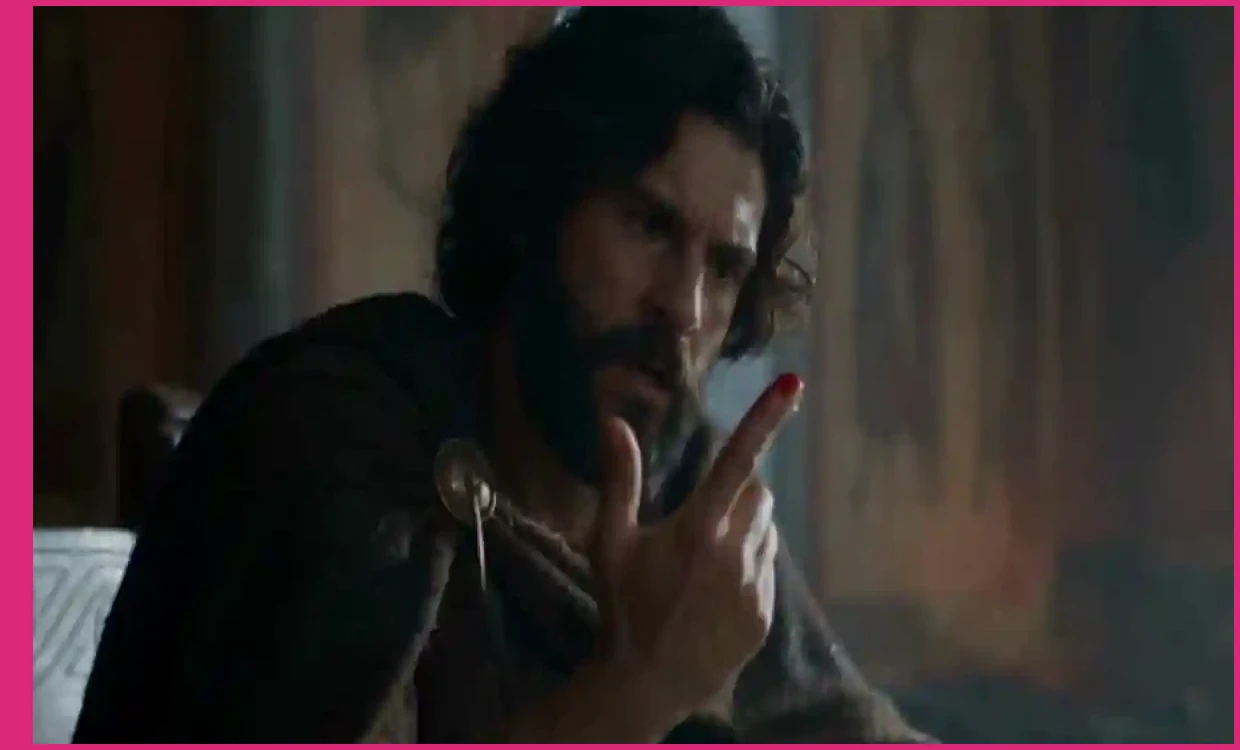
Following a public dispute over Christopher Nolan’s cinematic adaptation of The Odyssey, tech billionaire Elon Musk has released a seven-minute AI-generated video episode of the Greek epic created with Grok AI. Musk had previously criticized Nolan's blockbuster film online prior to viewing it, condemning perceived "wokery" over the casting decisions for Elliot Page as Sinon and Lupita Nyong'o as Helen of Troy. As Nolan's feature achieved immense critical praise and massive box-office revenue, Musk reacted by asserting on social media that he could produce a superior and more authentic version using artificial intelligence.
The newly published online short serves as an initial installment, opening with a prologue sequence that was absent from Nolan's theatrical release. In Musk’s version, the story begins off-screen with Odysseus faking madness to evade participating in the Trojan War. To expose his ruse, grim-faced leaders Agamemnon and Palamedes test him by placing his infant son, Telemachus, in the path of a plough in a field. Odysseus quickly intervenes to save his child, thereby proving his sanity and reluctantly consenting to join the military expedition.
The sequence continues as Odysseus departs, leaving behind his wife Penelope and Telemachus—who rapidly ages into a young boy—to join the gathering fleet. Upon the armada's arrival at Troy, an intertitle text informs viewers of a 10-year flashforward, setting the scene just as the siege is poised to escalate into the famous Trojan horse strategy.
Despite the high-profile launch, the production is characterized by ponderous, inert AI imagery displaying an uncanny-valley quality reminiscent of classical-era Call of Duty video game graphics. In key dramatic moments—including Odysseus saving his son, parting with his family, navigating treacherous sea voyages, and making pivotal decisions—the movement lacks emotional motivation, with warships lined up across the water like a row of high-definition space invaders. The audio presentation relies heavily on digital robotic voice work, delivering dialogue in a rigid, over-emphatic, and declamatory style.
Critiques of the release emphasize that the project stems less from a genuine narrative passion than an effort to salvage an online debate. The commentary mockingly speculates whether future Grok AI efforts might include a version of Digger featuring Tom Cruise as an oil tycoon saving the universe through endless drilling, or a version of You Can See Everything in which a glassy-eyed Elizabeth Holmes proves her blood-testing device works before flying away with Musk.
While advocates argue that generative AI technology continues to improve, the current release highlights the fundamental divide between artistic merit and financial cost. Although AI production costs represent a tiny fraction of traditional filmmaking budgets, critics contend that the artistic outcome remains vastly inferior to human craftsmanship, advising Musk to retreat from his AI narrative project.
Of course, as we are always being told, AI is continuously improving. With succeeding episodes, this boring and pointless series may look better. But if Elon’s AI-Odyssey is of any value at all, it is to underscore the basic truth: nobody believes AI has any artistic merit, only financial merit. In terms of quality, it is a pitiful fraction of the real thing, but a zillionth of a zillionth of a zillionth of the cost. It is time for Elon to make his own inglorious retreat from this phoney AI Dull-yssey.
Related Articles

Meet Md. Rubel Rana
As a core contributor to Worlddincidents.com, Rubel Rana brings a unique perspective to the world of journalism. Whether it’s deep-diving into historical trivia or covering the latest global headlines, Rubel Rana is committed to delivering high-quality, high-impact articles. Their writing blends meticulous research with a compelling voice, helping readers stay informed and curious about the world around them.