
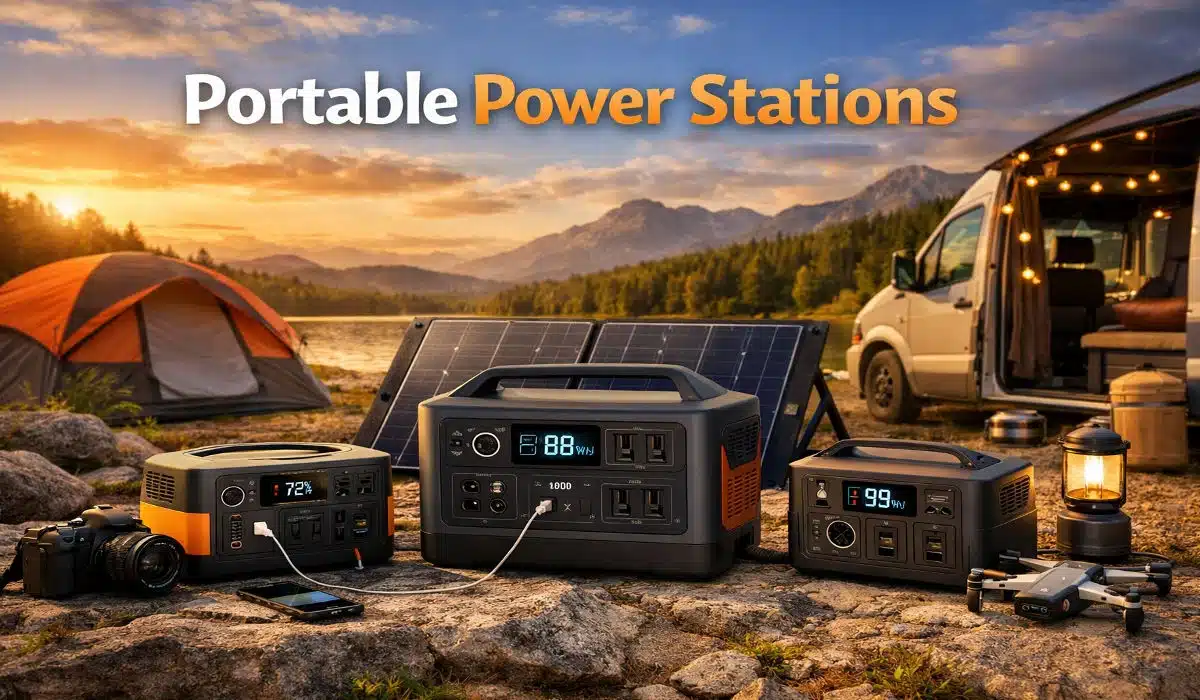
In 2026, our reliance on mobile technology and outdoor lifestyles has reached an all-time high. Whether you are a digital nomad working from a remote forest, a camping enthusiast, or a homeowner preparing for unexpected blackouts, Portable Power Stations have become an essential piece of equipment. No longer just “giant power banks,” these sophisticated energy hubs now offer silent, emission-free power that can run everything from smartphones to heavy-duty kitchen appliances.
What Defines Modern Portable Power Stations?
At its core, a portable power hub is a high-capacity rechargeable battery equipped with various outlets (AC, USB, DC, and USB-C PD). Unlike traditional gas generators, Portable Power Stations operate silently and can be used safely indoors.
In 2026, the industry has standardized LiFePO4 (Lithium Iron Phosphate) chemistry. This transition is crucial because it allows Portable Power Stations to last for over 3,000 to 5,000 charge cycles—essentially a 10-year lifespan—while being significantly safer and more heat-resistant than older lithium-ion models.
Key Features to Look for in 2026
When shopping for Portable Power Stations, understanding the technical specifications is vital for matching the device to your needs:
Watt-Hour (Wh) Capacity: This tells you how much total energy the unit holds. For weekend camping, 500Wh is plenty. For home backup, you should look for units exceeding 2,000Wh.
Inverter Rating (Watts): This determines what appliances you can plug in. If you want to run a coffee maker or a hair dryer, you’ll need Portable Power Stations with at least a 1,500W to 2,000W continuous AC output.
Bi-Directional Fast Charging: Modern units can now charge from 0% to 80% in under an hour using a standard wall outlet, a massive improvement over the 6-8 hour wait times of the past.
Turning Units into Solar Generators
One of the biggest trends this year is the seamless pairing of solar panels with Portable Power Stations. This combination creates a sustainable “Solar Generator.”
Most 2026 models feature built-in MPPT (Maximum Power Point Tracking) controllers. This technology ensures that even on cloudy days, your Portable Power Stations extract the maximum possible energy from the sun. For off-grid living, this makes these devices a permanent energy solution rather than just a temporary battery.
The Rise of Smart App Control
In 2026, top-tier Portable Power Stations come with integrated Wi-Fi and Bluetooth connectivity. Through a dedicated smartphone app, users can:
- Monitor real-time input and output wattage.
- Remotely turn off AC ports to save energy.
- Adjust charging speeds to prolong battery health.
- Receive firmware updates that optimize energy efficiency.
Specialized Use Cases for 2026
For Digital Nomads and Content Creators
Compact Portable Power Stations (250Wh – 500Wh) are now light enough to carry in a backpack. They can charge a high-end laptop 5–10 times, ensuring that your “office” never runs out of juice, no matter how remote your location.
For Emergency Home Backup
Larger, expandable Portable Power Stations can now be integrated directly into home circuits via a transfer switch. In the event of a grid failure, these units can power essential medical devices, refrigerators, and lights for several days.
Maintenance and Safety Tips
To get the most out of your investment, follow these guidelines for Portable Power Stations:
Storage: Keep your unit in a cool, dry place. If storing long-term, keep the battery between 40% and 80% to maintain cell health.
Avoid Overloading: Always check the “Surge Rating” of your appliances. High-draw motors (like those in old fridges) can occasionally trip the safety breakers on smaller Portable Power Stations.
The Transition to Solid-State Battery Technology
One of the most exciting breakthroughs in 2026 is the introduction of solid-state cells in premium Portable Power Stations. Unlike traditional liquid-electrolyte batteries, solid-state technology offers significantly higher energy density in a much smaller footprint. This means that a unit that used to weigh 50 lbs can now deliver the same energy at just 35 lbs. Furthermore, these advanced Portable Power Stations are virtually fireproof and perform exceptionally well in extreme temperatures, making them the gold standard for high-end overland expeditions and professional field research where reliability is the only option.
Modular Expansion and Scalable Ecosystems
In the past, you were stuck with the capacity you initially purchased, but the latest Portable Power Stations feature modular designs. Leading brands now offer “Expansion Batteries” that plug directly into your main unit via high-speed communication ports. This allows users to start with a modest 2kWh setup and scale up to 10kWh or more as their energy needs grow. This ecosystem approach ensures that your investment in Portable Power Stations remains future-proof, allowing you to build a comprehensive home backup system piece by piece without needing to replace the entire core unit.
Sustainable Manufacturing and the Circular Economy
As global environmental standards tighten in 2026, the manufacturing of Portable Power Stations has shifted toward sustainability. Many of the top-rated units are now constructed using recycled aluminum and post-consumer plastics for their outer chassis. Additionally, manufacturers are implementing “Battery Second Life” programs, where the cells from older Portable Power Stations are recycled into grid-scale storage systems. By choosing these eco-friendly power solutions, consumers are not only securing their own energy independence but also participating in a circular economy that minimizes electronic waste and carbon footprints.
FAQ
Q1: Can I leave my power station plugged in all the time?
Ans: Most modern Portable Power Stations have “Pass-through charging” and battery management systems (BMS) that prevent overcharging, making it safe to keep them plugged in.
Q2: How long will a 1000Wh unit run a 100W TV?
Ans: Mathematically, it would be 10 hours, but due to inverter efficiency losses (usually ~15%), expect around 8.5 hours of runtime.
Q3: Are these units waterproof?
Ans: Most are water-resistant, but very few Portable Power Stations are fully waterproof. It is always best to keep them under a cover during rain.
Conclusion
The era of noisy, polluting gas generators is fading. Portable Power Stations offer a clean, smart, and versatile alternative that fits the modern world. As battery technology continues to shrink in size and grow in capacity, these devices will remain the backbone of mobile and emergency power for years to come.
read more: Xbox Game Pass Games List 2026

Mr. Udoy is a professional Web Developer and Blogger with 7+ years of experience in the tech world. He specializes in web architecture and digital storytelling. As the driving force behind worldincidents.com, he focuses on delivering high-quality, well-researched content to a global audience.