
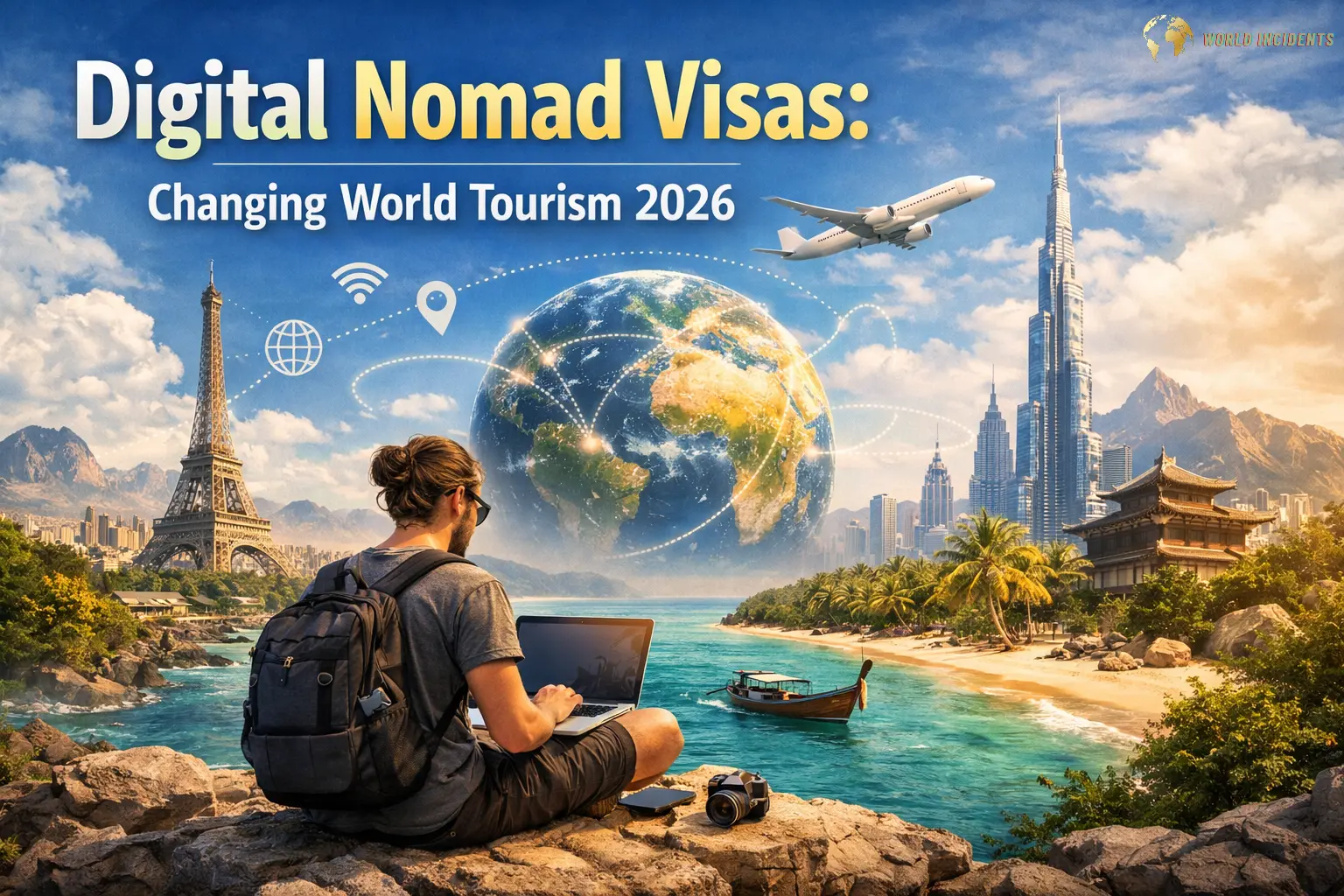
The landscape of travel has undergone a seismic shift. If 2024 was the year of recovery, then 2026 is officially the year of the “Global Citizen.” The traditional concept of a two-week vacation is rapidly fading, replaced by a much more sustainable and long-term approach to exploration. Central to this transformation is the explosion of Digital Nomad Visas: Changing World Tourism 2026, a movement that has fundamentally rewritten the rules of world tourism.
As countries compete to attract high-skilled remote workers, the very definition of a “tourist” is being redefined. Let’s explore how these new visa policies are reshaping our world.
The Death of Seasonal Tourism
One of the most significant ways Digital Nomad Visas Changing World Tourism 2026 has changed the game is by killing “seasonal tourism.” Traditionally, places like the Greek Islands or the Italian coast would be packed in summer and ghost towns in winter.
Now, with digital nomad visas allowing stays from 6 months to 2 years, these destinations stay vibrant year-round. Remote workers are choosing to stay through the “off-season,” providing a steady stream of income for local businesses that used to struggle during the winter months. This shift is creating a more stable and resilient tourism economy globally.
Economic Revitalization of Rural Areas
Governments are no longer just pushing travelers toward capital cities. In 2026, countries like Japan, Spain, and Portugal are using nomad visas to breathe life into aging rural villages.
By offering fast satellite internet and tax incentives, they are attracting young professionals to the countryside. This Digital Nomad Visas: Changing World Tourism 2026 trend is helping to reverse “urban flight,” as remote workers renovate old farmhouses and spend their earnings in local markets, effectively spreading wealth far beyond the reach of traditional city tours.
The Rise of “Workation” Infrastructure
World tourism infrastructure is changing to accommodate the long-term traveler. Hotels are being replaced by “Coliving Spaces”—hubs where travelers can live, work, and network under one roof.
We are seeing a massive increase in:
Coworking Cafes: Coffee shops designed with ergonomic chairs and soundproof booths.
Community Events: Tourism boards are now organizing networking meetups rather than just sightseeing bus tours.
Enhanced Connectivity: High-speed 6G and satellite links are now standard requirements for any destination claiming to be “nomad-friendly.”
For more detailed data on how global tourism trends are evolving, you can check out the latest reports from the World Tourism Organization (UNWTO).
Cultural Immersion vs. Surface-Level Sightseeing
The Digital Nomad Visas: Changing World Tourism 2026 movement encourages “Slow Travel.” When you have a year to spend in a country, you don’t rush through the 10 most famous monuments in three days. Instead, you learn the local language, attend neighborhood festivals, and build real relationships with the residents.
This leads to a much deeper form of cultural exchange. In 2026, tourism is becoming less about “consuming” a culture and more about “contributing” to it. Nomads often volunteer for local projects or mentor students in the host country, creating a positive social impact that short-term tourists rarely provide.
Challenges and New Regulations
It’s not all smooth sailing. The massive influx of high-earning remote workers has led to “gentrification” in some cities, causing local rent prices to skyrocket. In response, 2026 has seen a wave of new regulations.
Many countries now require:
Minimum Income Thresholds: Ensuring that nomads can support themselves without taking local jobs.
Digital Nomad Taxes: A fair tax system where nomads contribute to the local infrastructure they use.
Mandatory Health Insurance: To ensure travelers don’t put a strain on the host country’s public health system.
Redefining Community Engagement
The expansion of Digital Nomad Visas: Changing World Tourism 2026 is not just about money; it’s about social fabric. In earlier years, travelers were often seen as “outsiders” who stayed for a few days and left. However, the 2026 nomad is different. Because they stay for months, they become part of the local community.
We are witnessing a new phenomenon called “Skill-Sharing Tourism.” For example, a software engineer from Berlin staying in Bali on a digital nomad visa might host weekend coding workshops for local youth. Similarly, a marketing expert in Medellin might help a local coffee farmer set up an e-commerce store. This exchange of knowledge is one of the most positive side effects of Global Digital Nomad Visas Impact 2026, creating a lasting legacy that goes beyond typical tourist spending.
Technology as the Backbone of Global Mobility
In 2026, you cannot talk about world tourism without mentioning the role of technology. The success of Digital Nomad Visas: Changing World Tourism 2026 is built on several key tech pillars:
Universal Identity Wallets: Most nomad-friendly countries now accept digital ID wallets. This means your visa, health insurance, and work permits are all stored in a single, secure app on your phone. No more carrying stacks of paperwork to border control.
AI-Driven Living: Artificial Intelligence now helps nomads find the best “neighborhood fits” based on their work schedule, budget, and lifestyle preferences.
Decentralized Banking: In 2026, cross-border payments have become nearly instant and fee-free. This allows nomads to pay local rent and utilities without the headache of traditional banking delays.
This technological ease is what makes the Digital Nomad Visas: Changing World Tourism 2026 so appealing to millions of professionals who previously feared the logistics of living abroad.
The “Nomad Family” Trend
One of the most surprising shifts in 2026 is the rise of families traveling on digital nomad visas. It’s no longer just for single backpackers. With the remote work revolution fully matured, many parents are taking their children on “World-Schooling” adventures.
Countries are responding by offering “Family Nomad Packages,” which include:
Short-term Schooling Options: Allowing children of visa holders to attend local international schools for a semester.
Health Access for All: Comprehensive family health plans that are integrated into the visa application.
Community Childcare: Shared co-living spaces now frequently include professional childcare and play areas.
This diversification proves that Global Digital Nomad Visas Impact 2026 is a long-term shift in how humanity views “home” and “work.”
Environmental Sustainability and Ethical Travel
With more people living in foreign countries for longer periods, the environmental impact of travel is being scrutinized. Thankfully, the 2026 nomad is more eco-conscious than the average tourist.
The Digital Nomad Visas: Changing World Tourism 2026 has encouraged a move away from high-carbon “island hopping” flights. Instead, nomads are using high-speed rail networks and electric vehicle rentals to explore their host countries. Since they stay longer, they produce less waste and have a smaller carbon footprint per day compared to a tourist who flies in and out for a weekend.
Many countries are now even offering “Green Nomad Visas,” where travelers can get a discount on their visa fees if they participate in local environmental conservation projects during their stay.
Beyond 2026
As we look past 2026, the ripple effects of these visa policies will continue to expand. We expect to see “Regional Visa Zones,” where one digital nomad visa will grant you access to an entire continent, similar to a digital Schengen Area for workers.
The competition for talent will intensify. Countries that fail to adapt their visa laws will likely see a “brain drain,” while those embracing the Digital Nomad Visas: Changing World Tourism 2026 will thrive as global hubs of innovation and culture.
Tourism is no longer a luxury; it is becoming a borderless way of life. The 2026 nomad is the pioneer of a world where your office is wherever you choose to open your laptop.
Quick Summary for Readers
To wrap up, the Digital Nomad Visas: Changing World Tourism 2026 has achieved three major things:
It has stabilized local economies through year-round residency.
It has fostered a deeper level of cultural understanding and skill-sharing.
It has pushed governments to modernize their digital and physical infrastructure.
The world has never been more connected, and the future of tourism has never looked brighter.
Conclusion
The era of the digital nomad is no longer a niche subculture; it is the backbone of modern tourism. The Digital Nomad Visas: Changing World Tourism 2026 has proved that when you give people the freedom to work from anywhere, they don’t just travel—they integrate.
As we look toward the rest of 2026, it’s clear that world tourism will continue to evolve into a more sustainable, integrated, and technology-driven experience. The world is becoming one large office, and for those with the right visa, the sky is truly the limit.
Read Also: Best Hidden Travel Gems for Solo Travelers in 2026
Share this update with your friends and others.

Mr. Udoy is a professional Web Developer and Blogger with 7+ years of experience in the tech world. He specializes in web architecture and digital storytelling. As the driving force behind worldincidents.com, he focuses on delivering high-quality, well-researched content to a global audience.