
Incredible Smartphones: The Ultimate Digital Wellness Trend in 2026
Incredible E-ink Smartphones: The Ultimate Digital Wellness Trend in 2026
The way the world interacts with its devices is changing dramatically. In a landscape saturated with dazzling OLED panels and high-refresh-rate displays, a quieter revolution is gaining global momentum: the rise of E-ink smartphones. These extraordinary devices are quickly becoming the definitive answer to a growing crisis — digital burnout, eye fatigue, and relentless screen addiction. Welcome to 2026, the year E-ink smartphones are no longer a niche curiosity but the ultimate digital wellness trend.
What Are E-ink Smartphones?
E-ink smartphones use electronic ink (e-paper) display technology instead of traditional LCD or OLED screens. Originally popularized by e-readers like the Amazon Kindle, this technology renders text and images by reflecting ambient light — just like real ink on paper — rather than emitting harsh backlight radiation directly into your eyes.
Read More: Top 5 Budget Gaming Phones of 2026 for Ultimate
Modern E-ink smartphones in 2026 have evolved far beyond the slow, monochrome screens of the past. Thanks to advanced Kaleido and Carta color e-paper panels, users now get vivid color reproduction, 300+ PPI resolution, and responsive refresh rates that handle messaging, browsing, and even light media consumption with ease.
📌 Quick Fact
E-ink displays consume up to 90% less power than OLED screens while idle. This single engineering advantage transforms how long a smartphone can last on a single charge — often 5 to 7 days.
Why E-ink Smartphones Are Dominating Digital Wellness in 2026
The concept of digital wellness — managing one’s relationship with technology for better mental and physical health — has become mainstream. Governments, health organizations, and tech analysts worldwide are sounding alarms about excessive screen exposure. E-ink smartphones offer a hardware-level solution, not just a software toggle.
1. Radical Reduction in Eye Strain
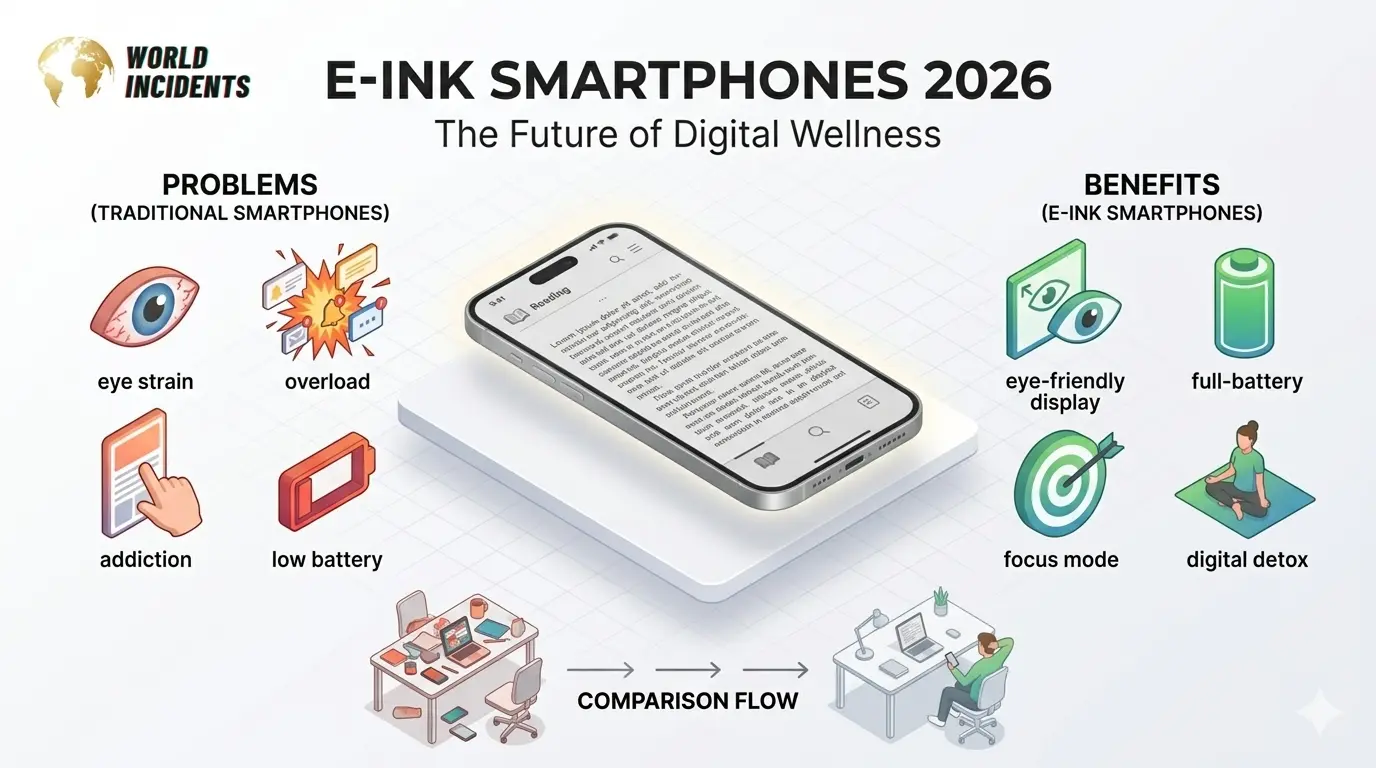
The most celebrated benefit of E-ink smartphones is their profound effect on eye health. Conventional smartphone displays emit blue light that suppresses melatonin production and causes digital eye strain (asthenopia). E-paper technology eliminates this by operating without active backlight emission. Millions of users switching to E-ink smartphones report significant reduction in headaches, dry eyes, and reading fatigue within just weeks of use.
2. Extraordinary Battery Longevity
E-ink smartphones only consume energy when the display content changes. This means a static home screen or an open email thread draws almost zero power. Real-world users of 2026’s leading E-ink smartphones regularly report 5 to 10 days of battery life on a single charge — a feat unimaginable on OLED devices. For global travelers, professionals, and wellness-conscious users, this is a game-changing advantage.
3. Intentional, Mindful Usage
Unlike addictive, dopamine-triggering full-color OLED feeds, E-ink smartphones naturally encourage more intentional phone use. The calmer, paper-like aesthetic reduces the compulsive scroll habit. Social media platforms become tools rather than traps. This behavioral shift is at the heart of what makes E-ink smartphones the ultimate digital wellness device.
4. Outdoor Readability
One persistent flaw of OLED smartphones is near-unreadability in direct sunlight. E-ink smartphones excel in bright outdoor conditions because they reflect light rather than compete with it. The brighter the environment, the sharper and more readable the display becomes — making these devices ideal for outdoor professionals, hikers, and travelers.
Top E-ink Smartphones to Watch in 2026
| Device | Display | Battery Life | Color E-ink | Best For |
|---|---|---|---|---|
| Hisense Hi Reader Phone 2 | 6.1″ Kaleido 3 | 7–9 days | ✔ | Reading & work |
| BOOX Palma 2 | 6.13″ Carta 1300 | 5–7 days | ✘ | Minimalists |
| Mudita Pure 2 | 2.84″ mono e-paper | 10–14 days | ✘ | Digital detox |
| Onyx BOOX Leaf 3 | 7.8″ Carta 1200 | 6–8 days | ✔ | Productivity |
| Daylight DC-1 Pro | 10.5″ LivePaper | 8–10 days | ✔ | Creative pros |
The Science Behind Digital Wellness and E-ink Technology
Research from leading ophthalmology institutes confirms that prolonged exposure to high-luminance, blue-light-rich displays correlates with increased cortisol levels, disrupted circadian rhythms, and long-term macular stress. E-ink smartphones sidestep these physiological issues entirely. Their front-lit or side-lit systems use warm, adjustable illumination spectrums that do not interfere with sleep patterns or hormonal balance.
Furthermore, the slower refresh nature of E-ink smartphones means users are cognitively discouraged from endless video scrolling. The brain receives fewer novelty-seeking rewards per minute, gradually recalibrating dopamine sensitivity — a core goal of any meaningful digital wellness strategy.
Who Should Use E-ink Smartphones?
E-ink smartphones are not for everyone — and they shouldn’t be. They shine for specific user profiles:
- Remote workers and writers who read and compose text-heavy content daily
- Students and academics looking to reduce blue-light exposure during long study sessions
- Parents managing children’s screen time with a low-stimulation alternative
- Health-conscious professionals prioritizing sleep quality and eye health
- Travelers and outdoor enthusiasts who need multi-day battery independence
- Mindfulness practitioners seeking a device that supports, not sabotages, focus
Challenges Still Facing E-ink Smartphones
Despite their extraordinary wellness advantages, E-ink smartphones are not without limitations. Video playback, high-speed gaming, and intensive media consumption remain compromised on e-paper displays due to inherent refresh rate constraints. Camera performance and app ecosystems on many E-ink smartphones still lag behind mainstream flagship devices.
However, 2026 hardware innovations are rapidly closing these gaps. Manufacturers are embedding dual-screen architectures — an e-paper primary screen paired with a compact high-refresh secondary display for media — offering users the best of both worlds without sacrificing the wellness benefits that make E-ink smartphones so compelling.
The Future: E-ink Smartphones and the Global Wellness Economy
The global digital wellness market is projected to exceed $800 billion by 2030. E-ink smartphones are perfectly positioned at this intersection of consumer technology and preventative health. Major telecom carriers in Europe, Asia, and North America are beginning to offer dedicated E-ink smartphones plans catering to wellness-first subscribers.
Technology policy analysts predict that by 2027, several countries will formally recommend E-ink smartphones as part of national digital health guidelines — especially for children and elderly populations. The momentum is undeniable. E-ink smartphones are not a temporary fad. They are a structural shift in how humanity relates to its most personal technology.
Conclusion
E-ink smartphones represent one of the most meaningful technological movements of this decade. By combining the communication power of modern smartphones with the physiological gentleness of paper-like displays, these incredible devices offer a genuine, hardware-based path to digital wellness. Whether you are battling screen fatigue, fighting smartphone addiction, or simply seeking a more intentional digital life, E-ink smartphones in 2026 deliver a compelling, scientifically grounded answer.
The incredible rise of E-ink smartphones is more than a trend — it is the future of healthy, mindful technology. And that future is already here.