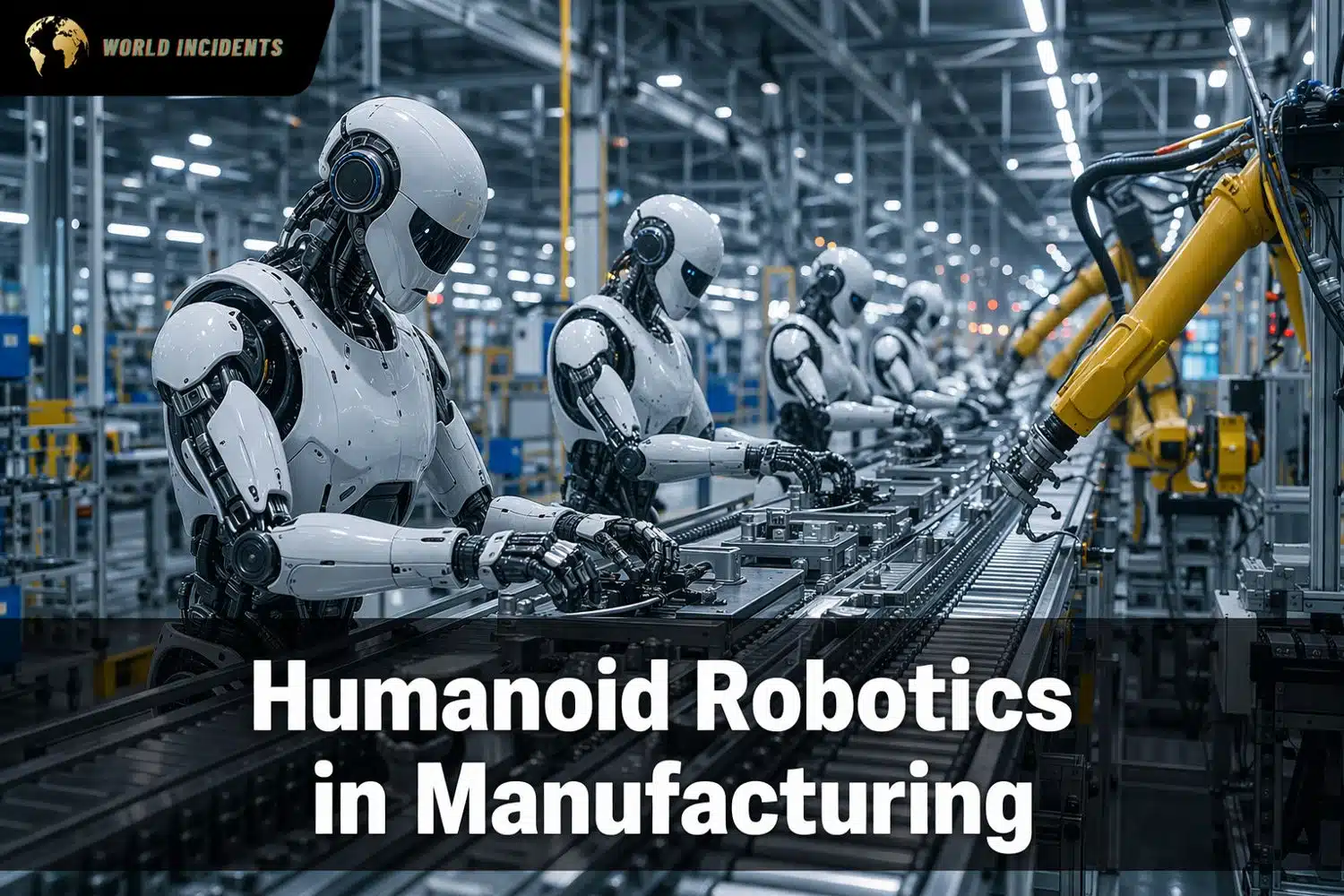
The year 2026 marks a historic turning point for global supply chains. For decades, factories relied on stationary robotic arms bolted to floors. Today, the rapid evolution of Humanoid Robotics in Manufacturing has introduced a more flexible, versatile, and human-like workforce. These general-purpose machines are no longer science fiction; they are actively filling labor gaps and performing complex tasks alongside their human counterparts.
The Shift Toward Humanoid Robotics in Manufacturing
Why is the industry moving away from traditional automation? The answer lies in the adaptability of Humanoid Robotics in Manufacturing. Unlike specialized machines designed for a single task, humanoid robots are built to navigate environments designed for humans.
Versatile Dexterity: Modern Humanoid Robotics in Manufacturing features high-degree-of-freedom hands that can handle delicate electronics or heavy automotive parts with equal precision.
Navigational Intelligence: Using advanced LiDAR and vision-based AI, these robots can walk through cluttered factory floors, climb stairs, and operate standard machinery without requiring expensive facility redesigns.
Key Drivers Behind Humanoid Robotics in Manufacturing in 2026
The massive adoption of Humanoid Robotics in Manufacturing this year is driven by three critical factors:
Solving Global Labor Shortages
As the manufacturing workforce ages, industries are facing a deficit of millions of skilled workers. Humanoid Robotics in Manufacturing provides a scalable solution to perform dull, dirty, or dangerous tasks, allowing human workers to focus on high-level supervision and creative problem-solving.
Advancements in Embodied AI
The “brains” behind Humanoid Robotics in Manufacturing have seen a massive upgrade. Large Behavior Models (LBMs) now allow robots to learn tasks simply by watching a human perform them once, drastically reducing the time needed for deployment.
Leading Players in Humanoid Robotics in Manufacturing
Several tech giants and startups have deployed their units into real-world factory settings in 2026:
Tesla’s Optimus Gen 3: Now a staple in Gigafactories, Optimus demonstrates the peak efficiency of Humanoid Robotics in Manufacturing by handling battery cell logistics.
Figure AI & BMW Partnership: Figure’s humanoid units are now performing sub-assembly tasks, showcasing how Humanoid Robotics in Manufacturing can integrate into legacy automotive lines.
Apptronik Apollo: Focused on logistics within manufacturing hubs, Apollo is the gold standard for “payload-to-weight” efficiency in the humanoid sector.
Overcoming the Challenges of Humanoid Robotics in Manufacturing
Despite the excitement, the road to total integration isn’t without hurdles. Implementing Humanoid Robotics in Manufacturing requires addressing:
Battery Endurance: Most 2026 models offer 6–8 hours of runtime. Swappable battery tech is becoming a mandatory feature for 24/7 operations.
Safety Protocols: Ensuring that Humanoid Robotics in Manufacturing can stop instantly if a human enters its “swing zone” is a top priority for ISO safety standards this year.
Initial Capital Investment: While the ROI is clear, the upfront cost of Humanoid Robotics in Manufacturing remains high for small-to-medium enterprises.
Future Outlook
The trajectory for Humanoid Robotics in Manufacturing suggests that by 2030, these robots will be as common as forklifts. We are moving toward a “dark factory” model where Humanoid Robotics in Manufacturing handles the entire night shift, significantly increasing global production capacity without increasing human labor hours.
Enhanced Safety in Human-Robot Collaboration (HRC)
A major breakthrough for Humanoid Robotics in Manufacturing in 2026 is the advancement of “Soft-Touch” robotics and advanced sensor fusions. Unlike traditional industrial robots that must be caged, modern Humanoid Robotics in Manufacturing units are equipped with skin-like tactile sensors and 360-degree LiDAR.
This technology allows Humanoid Robotics in Manufacturing to work directly alongside human employees on the same assembly line. If a human worker accidentally bumps into the robot or steps into its path, the humanoid’s “reflex system” stops its motion in milliseconds. This safe integration is why Humanoid Robotics in Manufacturing is being rapidly deployed in “Brownfield” factories (older facilities) where there isn’t enough space to build separate safety zones for machines.
The “RaaS” Model: Scaling Humanoid Robotics in Manufacturing
For small and medium-sized enterprises (SMEs), the high upfront cost of Humanoid Robotics in Manufacturing was initially a barrier. However, 2026 has seen the rise of Robotics-as-a-Service (RaaS). This subscription-based model allows factories to “rent” Humanoid Robotics in Manufacturing units on a monthly or per-task basis.
Under the RaaS framework, the provider handles all maintenance, software updates, and AI training for Humanoid Robotics in Manufacturing, significantly lowering the financial risk for the manufacturer. This shift is democratizing high-end automation, ensuring that Humanoid Robotics in Manufacturing is not just a tool for giants like Tesla or BMW, but a viable solution for local parts suppliers and specialized assembly shops worldwide.
AI-Driven Predictive Maintenance in Humanoid Robotics in Manufacturing
One of the most cost-effective features of Humanoid Robotics in Manufacturing in 2026 is the integration of “Self-Diagnostic” AI. Unlike traditional machines that require manual scheduling for repairs, Humanoid Robotics in Manufacturing units use a network of internal sensors to monitor their own joint friction, motor temperature, and battery health in real-time.
By utilizing edge computing, Humanoid Robotics in Manufacturing can predict a mechanical failure before it happens, automatically walking itself to a maintenance station during a shift change. This “Zero-Downtime” approach ensures that Humanoid Robotics in Manufacturing remains operational for nearly 99% of the year, drastically reducing the overhead costs associated with unexpected assembly line halts.
FAQ
Q1: Will Humanoid Robotics in Manufacturing replace all human jobs?
Ans: No. They are designed to augment the workforce by taking over repetitive and hazardous tasks, while humans move into roles involving AI management and complex maintenance.
Q2: What is the average ROI for Humanoid Robotics in Manufacturing?
Ans: Most tier-one manufacturers are seeing a full return on investment within 18 to 24 months due to increased uptime and reduced injury-related costs.
Q3: Can Humanoid Robotics in Manufacturing work in environments without Wi-Fi?
Ans: Yes. Most high-end Humanoid Robotics in Manufacturing units in 2026 are equipped with “Edge AI” capabilities. This means the robot’s “brain” is built directly into its hardware, allowing it to process vision and movement locally. While a connection is needed for initial updates, Humanoid Robotics in Manufacturing can continue to perform its tasks autonomously even if the factory’s network goes down, preventing costly production halts.
Conclusion
As we conclude 2026, it is clear that Humanoid Robotics in Manufacturing is the most significant industrial upgrade of the century. It bridges the gap between human intuition and robotic endurance. For manufacturers, the question is no longer if they will adopt these robots, but how soon they can integrate them into their existing workflows.
read more: Smartphone Photography

Mr. Udoy is a professional Web Developer and Blogger with 7+ years of experience in the tech world. He specializes in web architecture and digital storytelling. As the driving force behind worldincidents.com, he focuses on delivering high-quality, well-researched content to a global audience.