
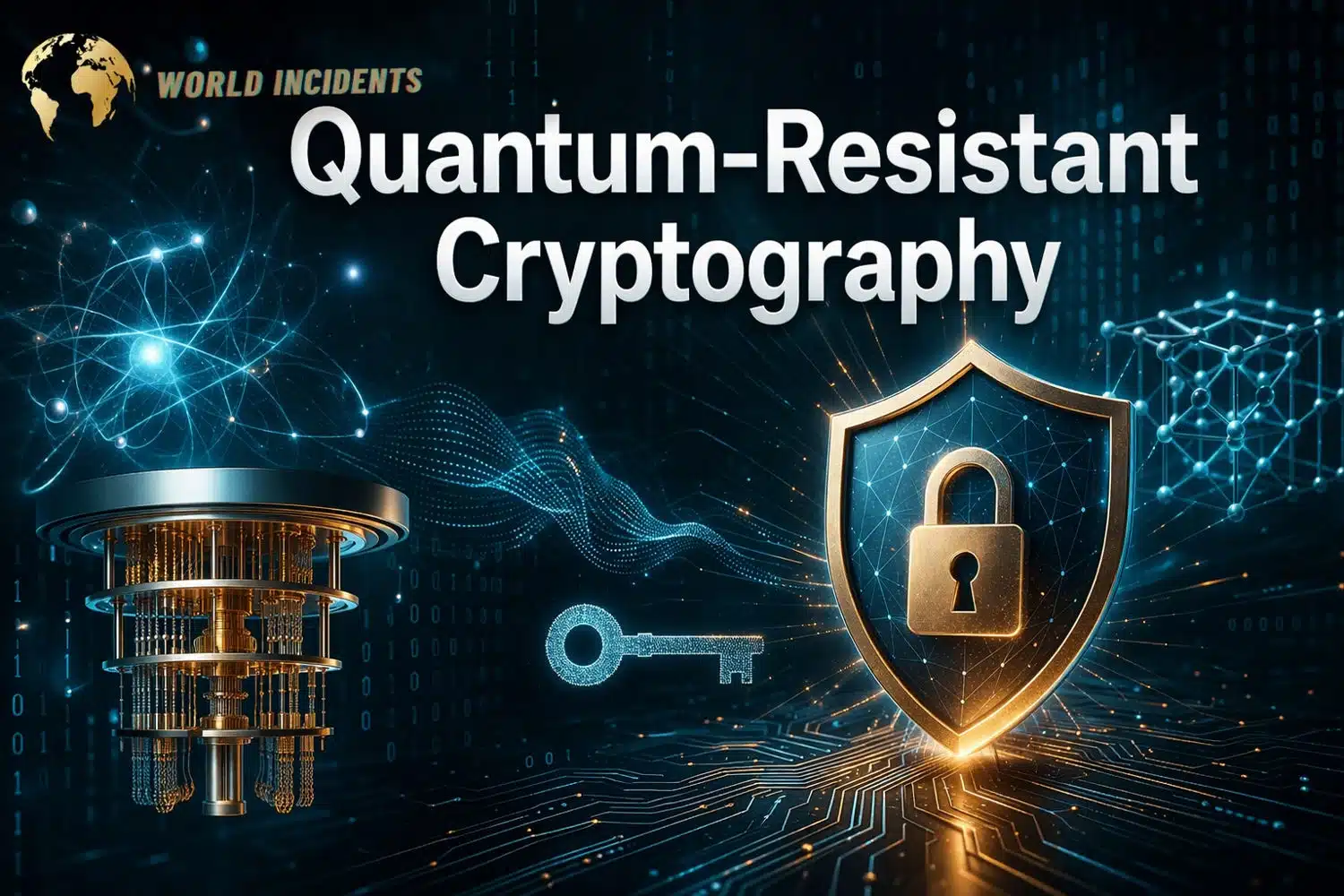
As we move through 2026, the tech industry is facing a “silent” crisis often referred to as “Q-Day”—the day a quantum computer becomes powerful enough to break current encryption standards. To combat this, Quantum-Resistant Cryptography (also known as Post-Quantum Cryptography) has moved from a theoretical research topic to a mandatory security requirement for governments and corporations worldwide. Understanding Quantum-Resistant Cryptography is no longer optional; it is the foundation of digital survival in the mid-2020s.
What Makes Quantum-Resistant Cryptography Different?
To understand Quantum-Resistant Cryptography, we must first recognize the weakness of current systems. Today’s encryption, like RSA and ECC, relies on the difficulty of factoring large prime numbers—a task that would take classical computers thousands of years but could be solved by a quantum computer in minutes.
Quantum-Resistant Cryptography uses entirely different mathematical problems that are “hard” for both classical and quantum computers. These include:
Lattice-based Cryptography: A primary method in Quantum-Resistant Cryptography that hides data inside complex multi-dimensional grids.
Hash-based Signatures: Using traditional hash functions to create secure digital signatures.
Code-based Cryptography: Relying on the difficulty of decoding general linear codes.
The Implementation of Quantum-Resistant Cryptography in 2026
This year has seen a massive shift in how software handles data. Quantum-Resistant Cryptography is now being integrated into everyday tools:
Web Browsers: Major browsers now support PQC-enabled TLS handshakes to prevent “Store Now, Decrypt Later” attacks.
Financial Systems: Banks are migrating their ledgers to Quantum-Safe Cryptography to protect long-term assets.
Messaging Apps: Popular end-to-end encrypted apps have updated their protocols to include Quantum-Safe Cryptography layers, ensuring that private conversations remain private even in the 2030s.
NIST Standards and Quantum-Resistant Cryptography
The National Institute of Standards and Technology (NIST) has been the driving force behind Quantum-Safe Cryptography. By 2026, the final standards for algorithms like ML-KEM (Kyber) and ML-DSA (Dilithium) have been fully ratified. These algorithms are the “gold standard” for anyone implementing Quantum-Resistant Cryptography. Following these NIST-approved paths is the most effective way for developers to ensure their systems are future-proof.
The Challenge of Migrating to Quantum-Resistant Cryptography
While the benefits are clear, moving to Quantum-Safe Cryptography is not without its hurdles. These new algorithms often require:
Larger Key Sizes: Compared to RSA, Quantum-Safe Cryptography keys can be significantly larger, impacting network bandwidth.
Increased Latency: The computational power needed for Quantum-Safe Cryptography can slow down older hardware.
Hybrid Approaches: Many experts recommend a “Hybrid” model, combining current encryption with Quantum-Safe Cryptography to provide safety against both current and future threats.
Why Businesses Need Quantum-Resistant Cryptography Today
You might ask, “If quantum computers aren’t here yet, why do I need Quantum-Resistant Cryptography now?” The answer is “Harvest Now, Decrypt Later.” Hackers are currently stealing encrypted data and storing it, waiting for the day a quantum computer can unlock it. By adopting Quantum-Safe Cryptography today, you ensure that even if your data is stolen now, it remains unreadable in the future.
The Economic Impact of Adopting Quantum-Resistant Cryptography
The transition to Quantum-Safe Cryptography is not just a technical challenge; it is a massive economic undertaking. In 2026, global spending on “Quantum-Proofing” infrastructure has reached billions of dollars. Companies that fail to integrate Quantum-Resistant Cryptography into their long-term roadmaps are now facing higher insurance premiums and lower trust scores from institutional investors.
The “Quantum-Readiness” certification has become a new gold standard in the tech industry. For startups and enterprises alike, investing in Quantum-Safe Cryptography today prevents the catastrophic costs of a total system overhaul when “Q-Day” finally arrives. By making the switch early, businesses can avoid the “Panic Migration” phase, where the cost of talent and specialized Quantum-Resistant Cryptography software is expected to skyrocket.
The “Hybrid Era”
We are currently living in what experts call the “Hybrid Transition Era.” Since completely replacing old encryption overnight is impossible, many 2026 systems are using a dual-layered approach. This involves wrapping current RSA or ECC encryption inside a new layer of Quantum-Safe Cryptography.
This hybrid method ensures that if a flaw is discovered in the new Quantum-Resistant Cryptography algorithms, the old, battle-tested encryption still provides a baseline of protection. Conversely, if a quantum attacker attempts to break the data, the Quantum-Safe Cryptography layer remains unassailable. This “defense-in-depth” strategy is currently the recommended path by cybersecurity agencies for anyone deploying Quantum-Resistant Cryptography in high-stakes environments like power grids and satellite communications.
FAQ
Q1: Is Quantum-Safe Cryptography the same as Quantum Key Distribution (QKD)?
Ans: No. QKD uses physical properties of light, while Quantum-Resistant Cryptography uses advanced math that runs on regular computers and the internet.
Q2: Will my current phone support Quantum-Safe Cryptography?
Ans: Most modern smartphones from 2025 and 2026 have hardware acceleration for Quantum-Safe Cryptography algorithms, so you likely won’t notice a speed difference.
Conclusion
In 2026, the transition to Quantum-Safe Cryptography is the most significant upgrade to the internet’s infrastructure since its inception. It is a race against time, but with the right implementation of Quantum-Safe Cryptography, we can ensure a secure, private, and resilient digital future.
read more: Incredible Solar Tech

Mr. Udoy is a professional Web Developer and Blogger with 7+ years of experience in the tech world. He specializes in web architecture and digital storytelling. As the driving force behind worldincidents.com, he focuses on delivering high-quality, well-researched content to a global audience.