
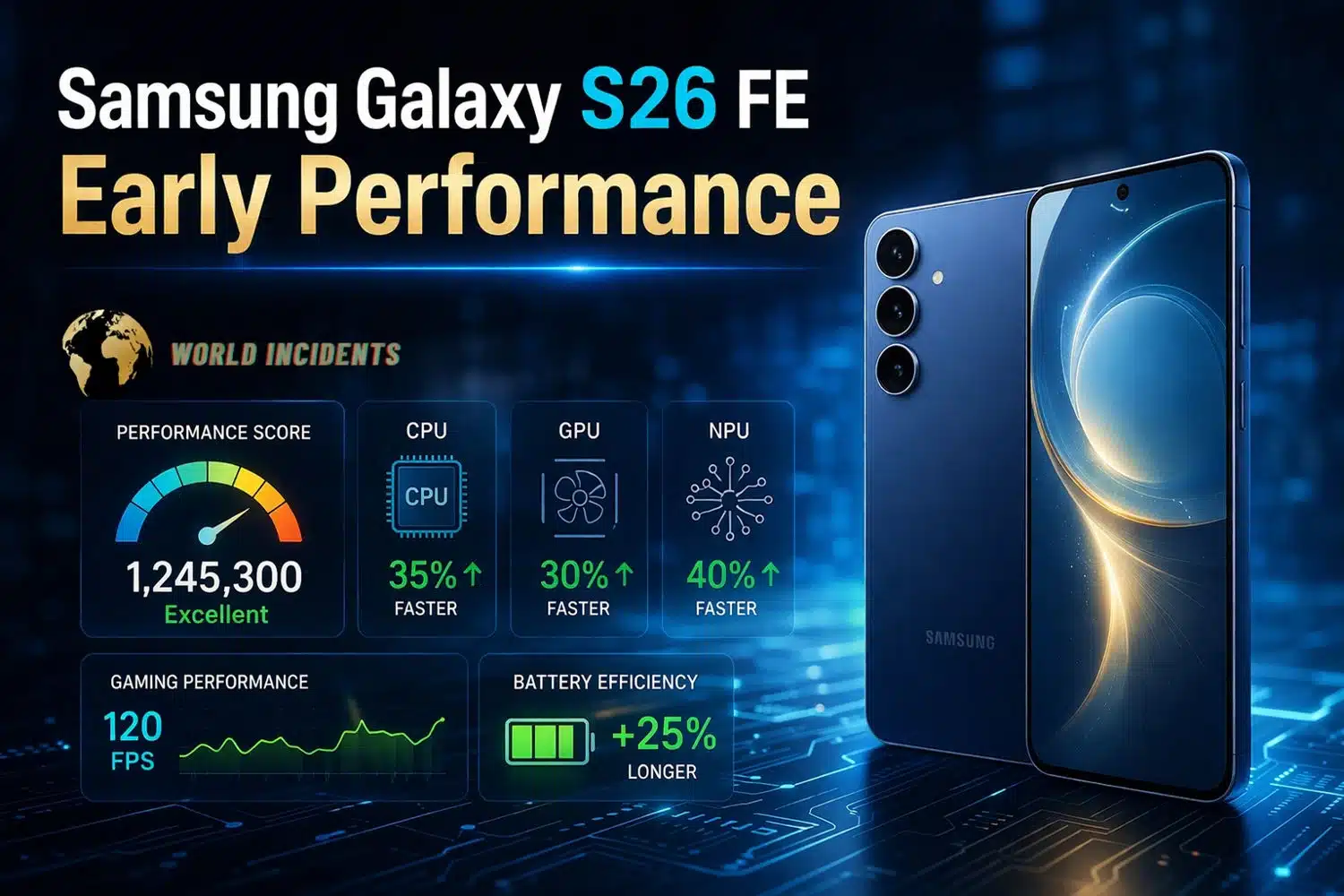
The Samsung Galaxy S26 FE Early Performance reports have finally started surfacing on benchmarking sites like Geekbench, and the results are sparking a massive debate among tech enthusiasts. As we move through April 2026, Samsung has already solidified its flagship lineup with the standard S26 series, but the “Fan Edition” remains the most anticipated device for budget-conscious power users. Understanding the Samsung Galaxy S26 FE Early Performance is crucial because it determines whether this phone can truly bridge the gap between mid-range pricing and flagship-level power. Early leaks suggest a device that is built for efficiency, but with some surprising choices in the chipset department that could redefine the FE lineup’s value proposition.
Samsung Galaxy S26 FE Early Performance Benchmarks
When we look at the core of the Samsung Galaxy S26 FE Early Performance, the most striking detail is the choice of processor. While the flagship S26 uses the cutting-edge 2nm Exynos 2600, Geekbench listings for model SM-S741U indicate that the S26 FE will likely feature the Exynos 2500 chipset. In initial tests, the Samsung Galaxy S26 FE Early Performance registered a single-core score of 2,426 and a multi-core score of 8,004. This puts the device in a unique position—it is significantly more powerful than the previous S25 FE but remains about 30% slower than its more expensive S26 siblings. For users who prioritize daily fluidity over extreme gaming, these performance figures suggest a very capable daily driver.
Gaming and Graphics
A major part of the Samsung Galaxy S26 FE Early Performance analysis involves its GPU capabilities. By opting for the Exynos 2500, Samsung is bringing the Xclipse 950 GPU to a more affordable price point. Early stress tests and performance simulations indicate that the Samsung Galaxy S26 FE Early Performance will handle popular titles like Genshin Impact and PUBG Mobile at high settings with consistent frame rates. However, compared to the Snapdragon 8 Elite Gen 5 found in some regional S26 models, the FE version may experience slightly more thermal throttling during extended sessions. This makes the Samsung Galaxy S26 FE Early Performance impressive for its class, though it clearly targets the “casual gamer” rather than the “e-sports pro.”
Multitasking and RAM
Memory management plays a vital role in the Samsung Galaxy S26 FE Early Performance. Current leaks confirm that the base model will come with 8GB of RAM, running on the latest Android 17. While some hoped for a 12GB jump to support more intensive AI features, the Samsung Galaxy S26 FE Early Performance in multitasking remains snappy. Samsung’s One UI 8.5 optimization seems to play a large part here, allowing the 8GB RAM to feel more like 12GB through aggressive background process management. If you are someone who frequently switches between heavy apps, the Samsung Galaxy S26 FE Early Performance ensures that you won’t face significant lag in your day-to-day workflow.
Battery Efficiency and AI
In 2026, performance isn’t just about speed; it’s about how smart the phone is. The Samsung Galaxy S26 FE Early Performance benefits greatly from the integrated NPU (Neural Processing Unit) within the Exynos 2500. This allows the phone to run many “Galaxy AI” features—like real-time translation and advanced photo editing—locally on the device. Furthermore, the Samsung Galaxy S26 FE Early Performance in terms of battery endurance is expected to be a highlight. Thanks to the 3nm architecture of its chip, the 4,900mAh battery is projected to last longer than the flagship S26, as the slightly less powerful processor sips energy more conservatively during light tasks.
Samsung Galaxy S26 FE Early Performance vs. Flagship S26
If we compare the Samsung Galaxy S26 FE Early Performance directly against the standard Galaxy S26, the differences become clear. The standard S26, with its 2nm Exynos 2600, hits multi-core scores of over 11,000, which is a massive lead. However, for 90% of users, the Samsung Galaxy S26 FE Early Performance of 8,004 is more than enough for social media, streaming, and productivity. The real question for consumers is whether the roughly $200–$300 price difference justifies the extra raw power of the flagship. Based on the Samsung Galaxy S26 FE Early Performance data, the FE model offers roughly 75% of the flagship’s power at a much more attractive price point.
Software Optimization
A critical factor that many reviewers overlook is how software affects the Samsung Galaxy S26 FE Early Performance. In 2026, hardware is only half the story; Samsung’s One UI 8.5 is designed to dynamically allocate resources based on user habits. This means the Samsung Galaxy S26 FE Early Performance actually improves over the first few weeks of use as the AI learns which apps you use most frequently. By prioritizing CPU cycles for your favorite apps and putting background processes to sleep, the Samsung Galaxy S26 FE Early Performance remains consistent and lag-free, even when the internal storage starts to fill up.
Thermal Management
To ensure that the Samsung Galaxy S26 FE Early Performance doesn’t drop during intensive tasks, Samsung has reportedly upgraded the internal cooling system. Unlike previous FE models that suffered from minor overheating, the Samsung Galaxy S26 FE Early Performance is backed by a 20% larger vapor chamber. This hardware improvement is vital for maintaining the Samsung Galaxy S26 FE Early Performance during high-definition video recording or long navigation sessions in the hot Dhaka summer. Because the device can dissipate heat more effectively, users can enjoy peak performance for longer durations without the dreaded “thermal throttling” that often plagues thinner smartphones.
FAQ
1. Does This budget flagship’s output match the S26 Ultra?
No, This budget flagship’s output is about 40-45% lower in multi-core benchmarks compared to the S26 Ultra’s Snapdragon 8 Elite Gen 5.
2. Will This budget flagship’s output stay consistent after updates?
Samsung’s history with FE models shows that they maintain performance well through 3-4 years of updates, and with Android 17, This budget flagship’s output is expected to remain stable.
3. Is 8GB RAM enough for the Samsung Galaxy S26 FE Early Performance in 2026?
Yes, for most tasks and standard AI features, 8GB is sufficient. However, for heavy pro-level video editing, you might notice a slight difference compared to 12GB models.
Conclusion
In conclusion, This budget flagship’s output indicates that Samsung is prioritizing balance over brute force this year. By utilizing the refined Exynos 2500, they are providing a stable, cool-running, and AI-capable device that fulfills the “Fan Edition” promise. While it might not win the benchmark wars against the Ultra models, This budget flagship’s output is perfectly tuned for the needs of 2026’s mobile market. Whether you are looking for a reliable work phone or a capable media device, these early performance indicators suggest that the S26 FE will be one of the most efficient smartphones in its category.
read more: MacBook Air vs. Ultra-thin Windows Competitors

Mr. Udoy is a professional Web Developer and Blogger with 7+ years of experience in the tech world. He specializes in web architecture and digital storytelling. As the driving force behind worldincidents.com, he focuses on delivering high-quality, well-researched content to a global audience.