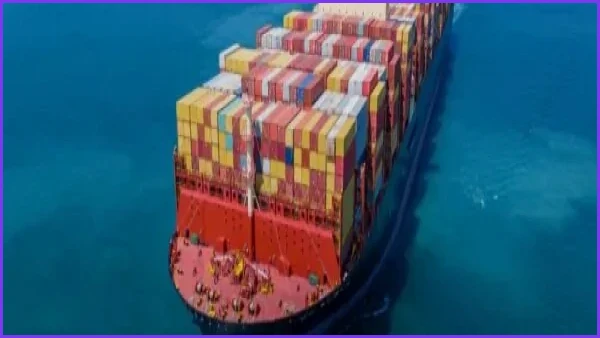
A decade after former Japanese Prime Minister Abe Shinzo first introduced the Free and Open Indo-Pacific (FOIP) vision in 2016, Japan is adapting its strategic framework to face an increasingly complex international landscape. Rising geopolitical and economic challenges—including high-tariff measures by the United States, China's tightened export restrictions on critical minerals, cyberattacks threatening critical infrastructure, and supply chain disruptions compounded by the de facto closure of the Strait of Hormuz—have prompted a recalibration of Tokyo's diplomatic and economic security approach.
In response to these shifting global dynamics, current Japanese Prime Minister Takaichi Sanae unveiled the Updated FOIP framework during her address in Hanoi in May 2026. While reaffirming core principles such as freedom, openness, diversity, inclusiveness, and the rule of law, the revised strategy elevates national autonomy and resilience as crucial prerequisites for achieving the broader FOIP vision. The policy prioritizes securing supply chain resilience for energy and critical materials while building essential infrastructure for the emerging artificial intelligence and data era, aligning directly with Japan's domestic economic security objectives.
Under Japan's economic security concept, the objective is neither self-sufficiency nor complete economic decoupling from specific nations. Instead, the focus is on minimizing vulnerability to supply disruptions and external shocks while preserving the benefits of the international division of labor, thereby limiting potential damage to society. Economic coercion remains a key concern, particularly when procurement of essential materials is heavily concentrated in a single nation with limited alternatives. Furthermore, individual corporate procurement choices often fail to reflect broader societal losses caused by supply disruptions, while governments frequently prioritize immediate national interests over cross-border impacts.
Trade disruptions during the COVID-19 pandemic and the ongoing Middle East crisis demonstrated how national export restrictions on essential goods, while politically rational for individual states, can exacerbate global supply chain instability. Importing nations face mounting procurement difficulties when uncoordinated protectionist measures spread. Highlighted during Takaichi's Hanoi address, the interconnected nature of global manufacturing means a disruption in crude oil supplies to Southeast Asian nations would cascade, halting exports of chemical products to countries throughout Asia.
To directly mitigate these supply risks, Japan announced POWERR Asia in April 2026, a financial cooperation package valued at approximately $10 billion. The initiative is designed to assist Asian nations in procuring crude oil and petroleum products while expanding their national stockpiling systems, serving as a concrete demonstration of the Updated FOIP initiative.
Although World Trade Organization (WTO) regulations govern member export restrictions under specific conditions, existing multilateral rules remain insufficient for addressing emergency supply shortages or counteracting economic coercion. Consequently, regional trade frameworks are moving to fill these coverage gaps. Ongoing negotiations aim to amend the Comprehensive and Progressive Agreement for Trans-Pacific Partnership (CPTPP) to reinforce supply chain resilience and enhance joint dialogue on market-distorting practices and economic coercion. Similarly, discussions under the Regional Comprehensive Economic Partnership (RCEP) are shifting focus toward supply chain resilience ahead of the agreement's scheduled review in 2027.
International cooperation is also expanding into the digital realm, where the misuse of generative AI has accelerated the scale and frequency of cyberattacks targeting interconnected critical infrastructure across borders. To address these digital vulnerabilities, Takaichi proposed the FOIP Digital Corridor Concept, anchored by trusted communications infrastructure. This effort builds upon long-standing Japanese investments in regional capacity building, including the ASEAN-Japan Cybersecurity Capacity Building Centre (AJCCBC). Japan's strategy emphasizes diversifying communications routes, expanding threat information sharing, and conducting joint cybersecurity exercises to strengthen collective regional defenses.
Ultimately, the success of the Updated FOIP framework will not be gauged by the creation of new institutions or the sheer number of announced projects. Rather, its effectiveness will be evaluated by the extent to which Japan and its partner nations expand their economic alternatives and reduce systemic vulnerabilities to supply disruptions and sudden external shocks.
You have reached the limit of 3 free articles this month.
Related Articles

Meet Md. Rubel Rana
As a core contributor to Worlddincidents.com, Rubel Rana brings a unique perspective to the world of journalism. Whether it’s deep-diving into historical trivia or covering the latest global headlines, Rubel Rana is committed to delivering high-quality, high-impact articles. Their writing blends meticulous research with a compelling voice, helping readers stay informed and curious about the world around them.