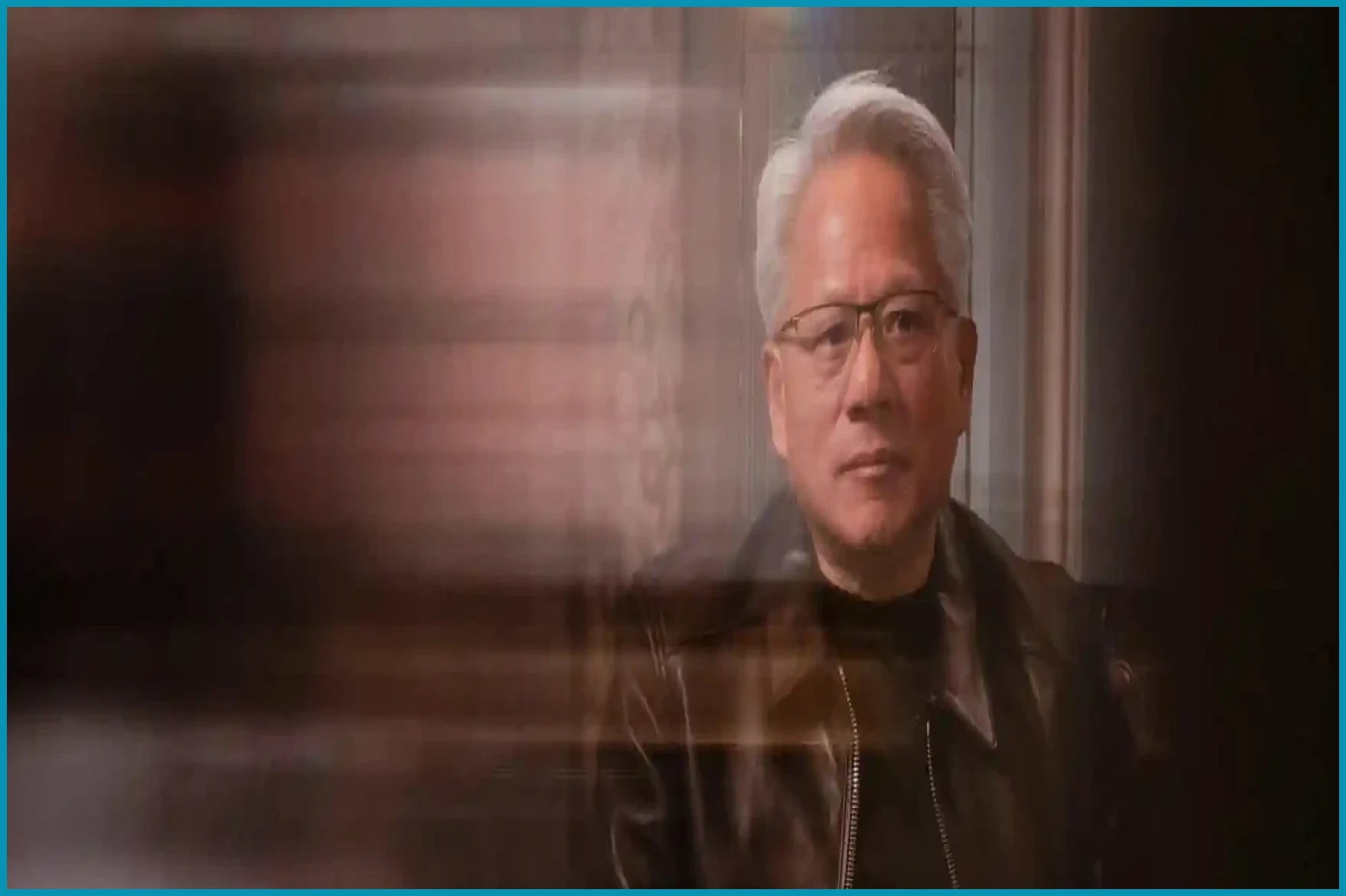
Jensen Huang, the founder and CEO of the $4tn chip giant Nvidia, has resigned from his position after 33 years, following a series of damaging allegations regarding extramarital affairs and potential international espionage. The departure of one of the most prominent figures in Silicon Valley has triggered a major corporate crisis, cast significant uncertainty over the ongoing AI boom, and raised alarms regarding the vulnerability of top-tier US executives to foreign intelligence operations.
The scandal erupted when reports surfaced that Huang had maintained a close relationship with a woman suspected by US officials of spying for the Chinese government. Following a New York Times report on the matter, Huang issued a letter to Nvidia employees this past weekend admitting to being unfaithful to his wife of 41 years. His resignation on Thursday followed further reports of two additional affairs with Nvidia staff members, causing the company’s stock to plummet and erasing hundreds of billions of dollars in market value. The Nasdaq index fell 4% immediately following the announcement of his departure.
Investigations are now mounting into the scope of the potential security breach. US officials had been monitoring Alice Huang, a Chinese executive who managed the Singapore-based datacenter firm Megaspeed, due to concerns that her company was violating export controls by diverting advanced AI chips to China. Intelligence gathered via electronic surveillance reportedly linked the Nvidia CEO to a relationship with her. State secretary Marco Rubio reportedly oversaw a classified memo in the spring of this year detailing these concerns. There are ongoing questions regarding why Megaspeed was not placed on a national security list despite internal warnings, putting pressure on US commerce secretary Howard Lutnick.
Security experts describe the situation as a textbook example of a "honeypot" operation, a tactic where foreign agents leverage personal or sexual relationships to gain access to sensitive information or influence. "The honeypot style trap is as old as the earth itself," said Randy Watt, head of the corporate threat assessment firm SRW. "It speaks to a consistent weakness in humans that is exploitable." Don Aviv, CEO of the corporate intelligence firm Interfor International, noted that while this instance is high-profile, such schemes occur frequently across various industries. His firm has conducted approximately a dozen similar investigations over the last three years.
The incident has highlighted broader vulnerabilities within the US tech sector. With Silicon Valley holding immense intellectual property, it has long been a target for foreign spying. During the Cold War, Soviet agents famously operated from the Russian consulate in San Francisco to steal technological secrets. Former FBI special agent Rick Smith, who spent over two decades in the Bay Area working in counterintelligence, noted that Soviet intelligence officers operated out of the Russian consulate in San Francisco. US officials estimated at the time that the Moscow Kremlin had mobilized thousands of spies in the country with the intent to steal intellectual property. "Gaining access to our advanced technology continues to be their top priority," William Casey, director of the CIA, warned in 1985.
In recent years, China has been the primary focus of counterintelligence concerns, with a report from the Center for Strategic and International Studies identifying over 224 incidents of Chinese espionage in the US between 2000 and 2022. Recent cases include the conviction of a former Google engineer for stealing confidential data and the arrest of a Saudi national in October for planting a listening device at OpenAI's headquarters. Some operations linked to China have even involved honeypot-style schemes, such as the case of former California congressman Eric Swalwell, who admitted to "occasionally hooking up" with suspected Chinese operative Christine Fang.
In response to the growing threat of corporate espionage, major companies have increased security training, including simulations of honeypot scenarios. However, experts argue that human judgment remains the most significant vulnerability. "Everybody thinks it’s like what we see in Hollywood – surreptitious entry and listening devices and bugs and tails," said Eduardo Jany, head of global security for a major US corporation. "It’s really more about social engineering." Corporations will sometimes hire firms to conduct what’s called penetration testing to check for weak points in their security, which involves using simulated attacks to uncover real vulnerabilities. One security expert described an example of his firm following an employee to the parking lot of a grocery store in order to gain access to their car and take a corporate ID card left hanging from their rearview mirror.
The challenge is compounded by the status of C-suite leaders, who often exercise high levels of autonomy and may be resistant to security protocols or warnings about their personal lives. "These are really smart, accomplished people and you don’t want to come across telling them that they don’t know how to behave themselves or that they’re not sophisticated enough to know that they’re being taken advantage of," said Brian Stephens, president of security risk advisory at the CEO advisory firm Teneo. "It’s a defense mechanism to being told that the way you live your life is going to have to change," added Elizabeth Buckley, Teneo’s head of cyber and technical solutions.
Nvidia has announced that it has hired a top US law firm to conduct an internal investigation into Huang's relationships. Additionally, Donald Trump, who maintained a close relationship with Huang, stated that the FBI would initiate its own probe. Huang has agreed to testify before Congress and is currently facing a lawsuit in California from shareholders alleging he misled them. The Chinese government has denied any involvement in the affair or any corporate espionage, dismissing the reports as a smear campaign.
During the 1970s and 80s, Soviet intelligence officers operated out of the Russian consulate in San Francisco as they carried out spying operations, according to former FBI special agent Rick Smith, who spent over two decades in the Bay Area working in counterintelligence. US officials estimated at the time that the Mo
Huang was first seen with Alice Huang, a Chinese executive who ran the Singapore-based Megaspeed datacenter firm, in late 2023. The two were together at a bar in Taiwan in 2024 and again at a conference in 2025, by which time the US commerce department was investigating whether Megaspeed was diverting AI chips to China
Related Articles

Meet Md. Rubel Rana
As a core contributor to Worlddincidents.com, Rubel Rana brings a unique perspective to the world of journalism. Whether it’s deep-diving into historical trivia or covering the latest global headlines, Rubel Rana is committed to delivering high-quality, high-impact articles. Their writing blends meticulous research with a compelling voice, helping readers stay informed and curious about the world around them.