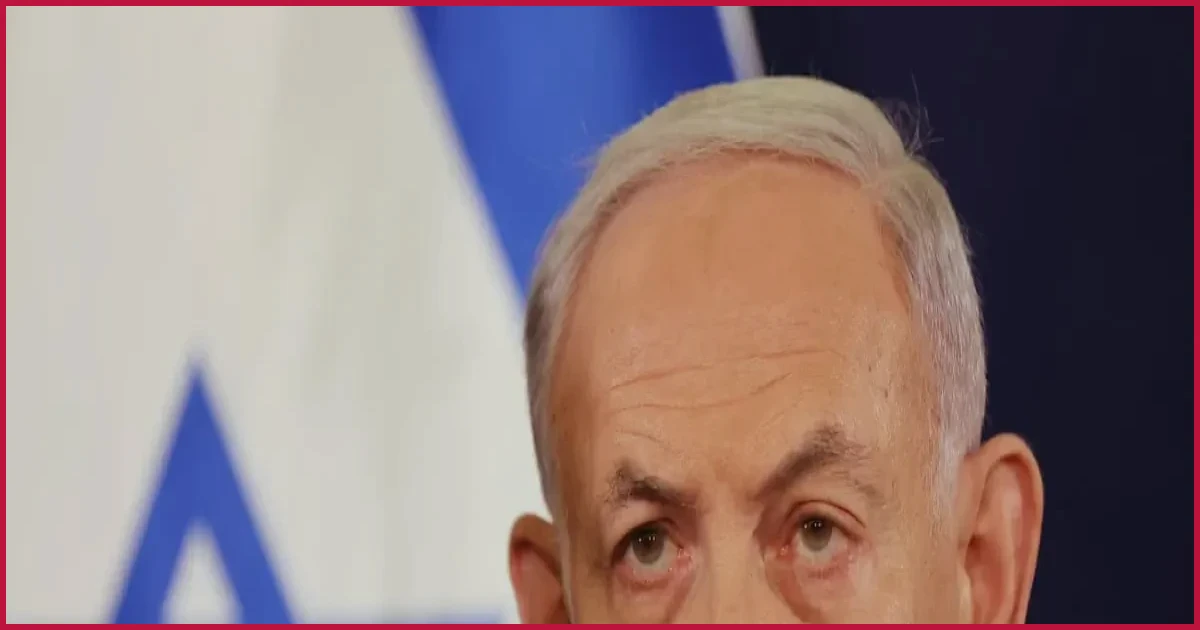
Following the defeat of his far-right coalition government in last month's national elections, Israeli Prime Minister Benjamin Netanyahu is utilizing aggressive maneuvers to remain in power while serving in a nominal caretaker role. Complex multiparty talks are underway to establish Israel's next administration, during which Netanyahu has publicly called for a government of national unity that explicitly excludes Arab political parties.
Netanyahu's recent actions have drawn direct comparisons to Donald Trump's post-2020 election tactics in the United States. Netanyahu has made unsubstantiated claims of voter fraud targeting Arab-Israeli political groups, whose historic turnout secured 19 parliamentary seats and positioned them as potentially decisive power brokers in the upcoming government formation. Additionally, he has raised unverified assertions of foreign interference, despite official investigators reporting no evidence to support such claims.
Concerns are escalating over potential civil unrest surrounding parliamentary procedures. Political commentators, including analyst Yossi Verter, have warned that Netanyahu may attempt to incite supporters to march on the Knesset on Tuesday, November 17, the date scheduled for replacing the Knesset speaker. Observers fear such disruptions could aim to prevent the assembly from convening or prompt outgoing coalition members to derail proceedings, creating parallels to the January 6, 2021 insurrection at the United States Capitol.
In a recorded statement, Netanyahu explicitly rejected any potential governing coalition involving or supported by Arab parties, labeling such an alignment a government of national suicide that would partner with forces seeking to destroy Israel. He framed Arab-Israelis, who constitute approximately 21 percent of the national population, as security threats. He further asserted that civil unrest seen in Paris and Brussels would pale in comparison to potential instability in Jerusalem, Tel Aviv, and Haifa if such a coalition were established.
Despite intense public scrutiny over his administration's failure to prevent the October 2023 Hamas attacks, Netanyahu continues to argue that only his leadership can guarantee national security. However, Gadi Eisenkot, leader of the primary opposition "change" bloc who has been tasked with the first opportunity to form a coalition, strongly denounced Netanyahu's remarks following a tense Knesset swearing-in ceremony. Eisenkot declared Netanyahu unfit for office, stating that his actions divide the nation and compromise its security while calling for the urgent establishment of a national emergency government.
Concerns also persist regarding broader regional security implications. Prior to the election, Israel Defense Forces Chief of Staff Eyal Zamir and other high-ranking military commanders reportedly informed United States officials of suspicions that Netanyahu sought to draw Washington into a third major military conflict with Tehran within two years. Eisenkot has sent a formal letter to Netanyahu urging restraint, responsibility, and adherence to established governance processes to avoid triggering a fresh escalation with Iran.
Meanwhile, political dynamics in the United States have added further uncertainty. Significant Republican setbacks in recent U.S. midterm elections were widely linked to public dissatisfaction over the costly conflict with Iran and ongoing military aid to Israel. U.S. Vice President JD Vance explicitly cited the war and unquestioning backing of Netanyahu's government as contributing factors to the political losses. Vance was subsequently removed from his role as Iran negotiator last week after Trump declared diplomatic efforts with Tehran over. Despite the diplomatic impasse, Washington maintains an air, land, and sea blockade against Iran amid a global oil price crisis, maintaining high regional tensions that could lead to further confrontation.
Netanyahu's push to remain head of government comes as he faces severe legal and political challenges. He remains subject to an arrest warrant issued by the International Criminal Court for alleged war crimes, alongside an ongoing domestic trial on corruption charges. Critics also point to his controversial judicial overhaul, efforts to restrict broadcast media, expanding West Bank settlement activity, and widespread polarization as central elements of his contested political legacy.
Related Articles

Md. Kazi Bijoy is a dedicated tech enthusiast and content creator with a passion for digital innovation. With years of experience in the tech industry, he specializes in breaking down complex topics into easy-to-understand guides. When he isn’t writing, he explores the latest gadgets and researches emerging trends in the digital world.