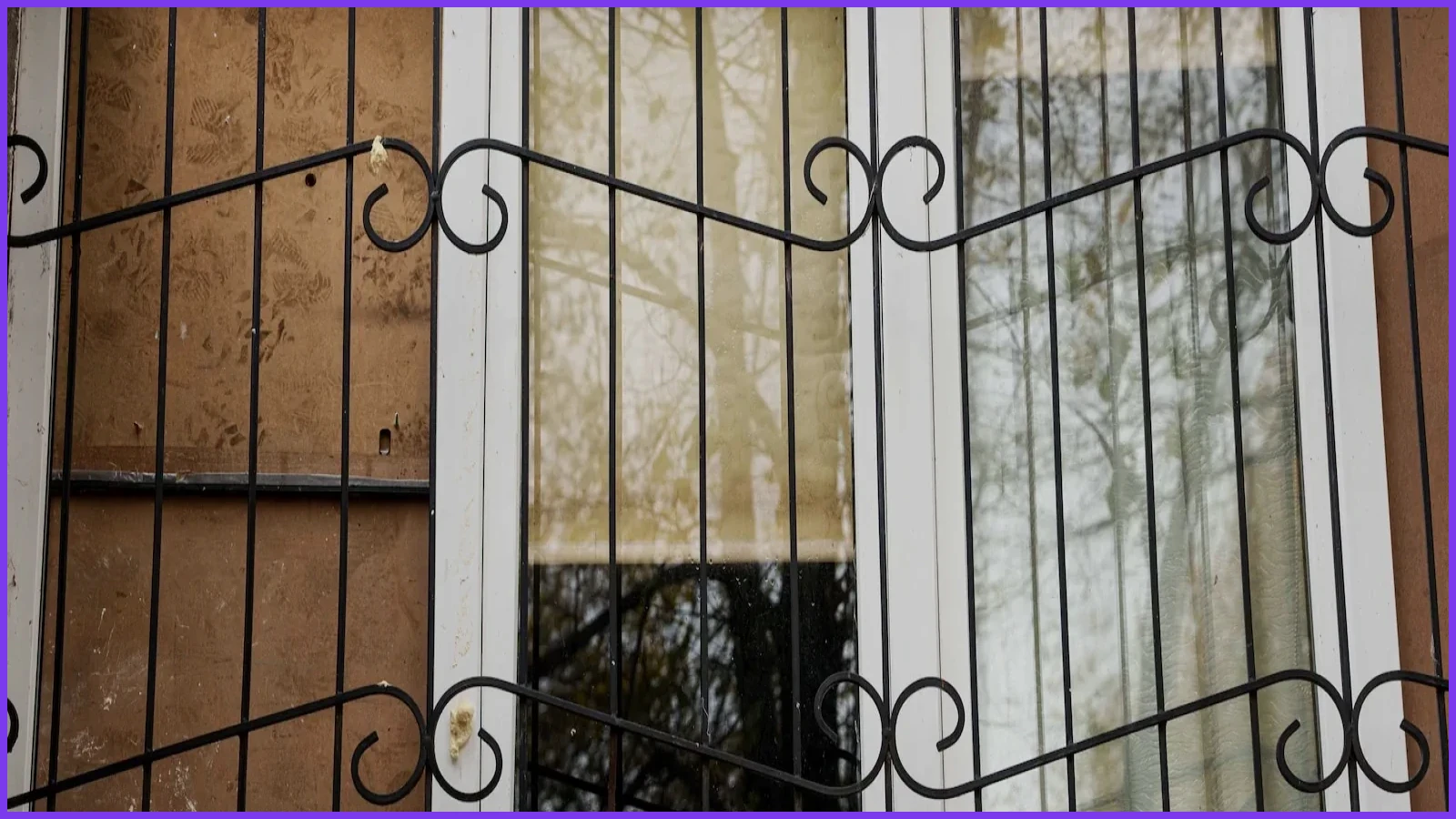
Kyiv resident Oleksandra Horban spent weeks clearing glass shards from her small ground-floor apartment after an October missile blast struck the courtyard of her horizontal, Soviet-era apartment block, known as a "groundscraper." As winter settles across the Ukrainian capital—where temperatures dropped to minus 20 degrees Celsius (minus 4 degrees Fahrenheit) last winter—a critical shortage of replacement windows and skilled labor is leaving thousands of residents exposed to the cold.
The blast damaged a vertical section of apartments in Horban's complex and shattered hundreds of facade windows. Outside her home, twisted window frames and glass mixed with autumn leaves in the muddy ground. Horban threw out her 2-year-old son's plush toys because they were covered in glass shards. She noted that even after vacuuming three times and cleaning the floors, microscopic pieces of glass still turn up in bedding or among toys.
To block out the cold, most damaged windows in the city have been covered with temporary fiberboard or plastic tarps, with some boards featuring small Plexiglas cutouts to let daylight into rooms. Replacing the windows in Horban’s apartment would cost approximately $1,700, which is more than three times Ukraine's average monthly salary. While government compensation exists, processing claims can take three to four months, leaving many low-income households unable to wait.
Without proper windows, homes quickly become exposed to severe cold, dampness, and mold, conditions made worse by frequent power outages. Housing destruction represents one of the largest economic costs of the war. World Bank estimates indicate that roughly 3 million housing units in Ukraine were destroyed or severely damaged by the end of last year, adding an estimated $90 billion to the country's total reconstruction requirements.
While domestic glass manufacturers report they can produce replacement windows in about 10 working days, a major bottleneck has emerged due to a shortage of qualified installers. Mykhailo Orlenko, executive director of the Association of Ukrainian Manufacturers of Transparent Structures, explained that window installation businesses are unable to exempt their personnel from military service. As a result, the market lost a large number of specialists to mobilization, causing installation prices to at least double over the past year.
Work conditions for installers have also grown increasingly difficult due to regular power blackouts. Oleksandr, a 42-year-old installer with 25 years of experience in the industry, said his crew must rely on battery-powered tools and physically haul heavy materials up stairwells when elevators are out of service. During a recent job replacing balcony doors and windows in a fourth-floor apartment, his team completed 18 trips up and down the stairs by hand rather than waiting for electricity to return. Oleksandr asked to be identified only by his first name due to security concerns following Russian military attacks on private businesses.
To address the acute labor shortage, professional associations lobbied the government to formally recognize window installation as a distinct trade, enabling access to grants and structured training curricula. In March, a vocational college in Kyiv opened an EU-funded training facility where 26 10th-grade students began a three-year program to become installers of windows, doors, and building facades. Working in new overalls around mock window frames built from brick, cinder block, wood, and synthetic materials, the students frequently have their classes interrupted by missile and drone air raid alerts.
Because of Ukraine's widespread skill drain, program graduates can expect starting monthly salaries of around $900, putting them on par with law school graduates, according to Orlenko. Vocational instructor Volodymyr Tserbii expressed hope that the apprentices will aid the long-term recovery of the nation. Government planners estimate that repairing damaged housing, power facilities, schools, roads, and other essential infrastructure will take at least a decade.
For Horban, waiting for replacement windows comes alongside numerous other daily hardships. Her apartment has no gas service, forcing her family to cook on a portable cylinder and heat her son's room only when electricity is available, while a leaking kitchen roof has created additional structural damage. The trauma of the attacks has also affected her toddler son, Viacheslav, who presses his nose against a surviving windowpane, waves to passersby, and asks if more "bam bam" explosions are coming. Comforting him with the words "no bam bam," Horban said the daily struggle is no longer living, but dragging out an existence to survive.
Related Articles

Meet Md. Rubel Rana
As a core contributor to Worlddincidents.com, Rubel Rana brings a unique perspective to the world of journalism. Whether it’s deep-diving into historical trivia or covering the latest global headlines, Rubel Rana is committed to delivering high-quality, high-impact articles. Their writing blends meticulous research with a compelling voice, helping readers stay informed and curious about the world around them.