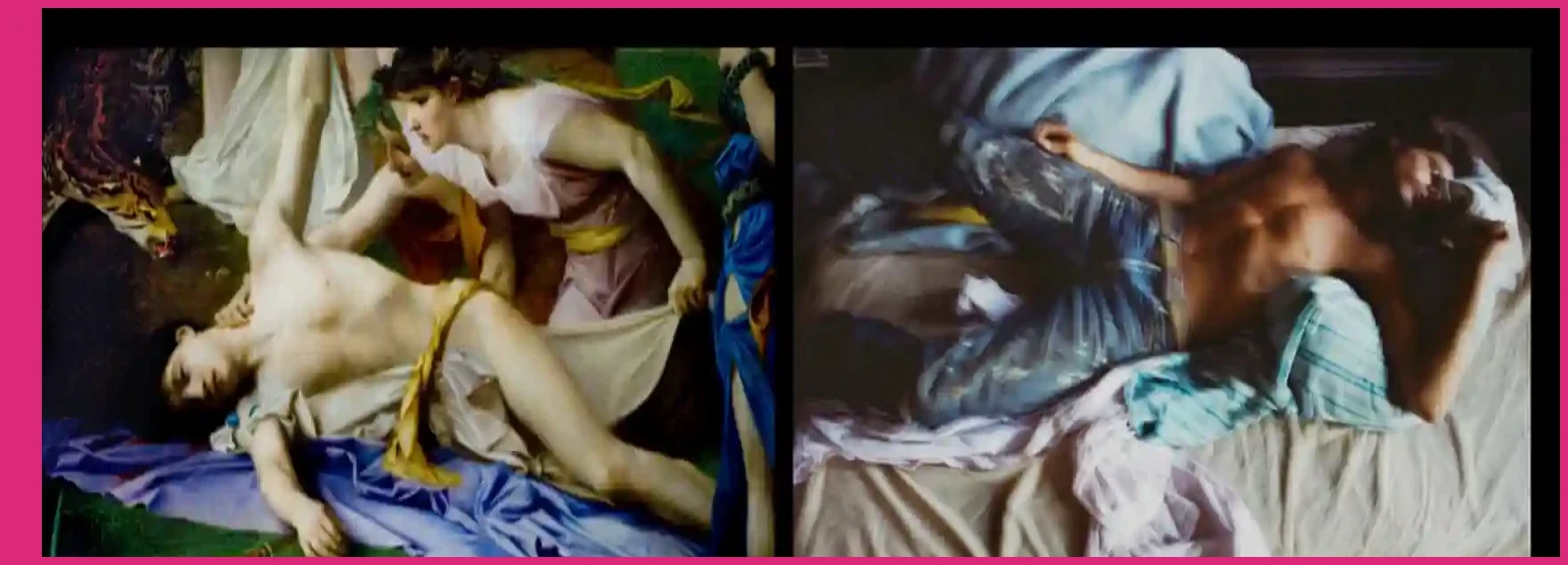
A major exhibition by photographer Nan Goldin at London's Hayward Gallery showcases the artist's unsparing exploration of human intimacy, classical beauty, and personal trauma across a series of ambitious film works. Built upon the gritty realism and unfiltered lens that marked her landmark early photo series, The Ballad of Sexual Dependency, Goldin's latest showcase bridges contemporary bohemian life with high art, ancient mythology, and environmental vulnerability.
Central to the exhibition is the film installation Stendhal Syndrome, presented inside a bronze yurt structure accessible through a vaulted corridor. The work takes its name from the condition described by French novelist Stendhal, who fell ill in Florence in 1817 after overindulging in the city's Renaissance masterpieces until he experienced heart palpitations and feared falling. On screen, Goldin narrates her own experience of aesthetic delirium during her first solitary visit to the Louvre in Paris, where she perceived the faces of her friends in classic works by Correggio and Canova. Housed within a rousing musical score, the film intercuts raw photographs of her friends—bathing together, swooning, touching themselves, or nude with legs entwined—alongside masterworks by 17th-century painter Caravaggio, whose bedroom-eyed subjects mirror Goldin's living models.
Throughout Stendhal Syndrome, Goldin pairs her photographs with tales of desire drawn from Ovid's Metamorphoses, showcasing how the Roman poet's depictions of Greek mythology foreshadow 21st-century bohemian existence. Living subjects unintentionally recreate classical compositions, fondling like Cupid and Psyche with warm flesh that echoes Canova's sculpted marble. By featuring acquaintances framed as Pygmalion, Galatea, and a Narcissus enthralled by his own reflection, Goldin poses fundamental questions regarding whether art and beauty function primarily as instruments to freeze the fleeting glory of human existence.
The exhibition turns to themes of substance abuse in the film Memory Lost, where Goldin reflects on her own and her friends' history with addiction. In one striking sequence, a photo showing a mattress marred by a dark hole burnt by an addict's cigarette is juxtaposed against enraptured imagery of red skies and winter woodlands. The work contrasts the lure of the addictive sublime—a theme running through American creative history from Edgar Allan Poe to Lou Reed—with Goldin's active campaigning against heroin and prescription opioids, questioning whether drugs heighten aesthetic perception or obscure it amid cravings and physical decline.
Animal consciousness and ecological loss form the core of You Never Did Anything Wrong, parts one and two, the installation that lends the exhibition its title. The film presents a disturbing montage of glaring animal faces, ranging from staring cats and owls to alligators, constructed from old footage featuring faded colors. Goldin derived the work's title from an epitaph on a pet cemetery gravestone, alongside another reading "We are sorry." The sequence blends found imagery of leaping horses, flocking birds, a pig crawling beneath a duvet, and a tortoise turning a companion right-side up, emphasizing the lost innocence of a natural world destroyed by human actions.
By navigating between classical art and unvarnished realism, human vulnerability and animal innocence, the Hayward Gallery exhibition highlights Goldin's lifelong effort to cross boundaries between life and creation. The presentation consolidates her standing as a premier voice in American art following Andy Warhol, offering a moving and dazing experience that ultimately leaves viewers with a sense of hope.
Related Articles

Mr. Udoy is a professional Web Developer and Blogger with 7+ years of experience in the tech world. He specializes in web architecture and digital storytelling. As the driving force behind worldincidents.com, he focuses on delivering high-quality, well-researched content to a global audience.