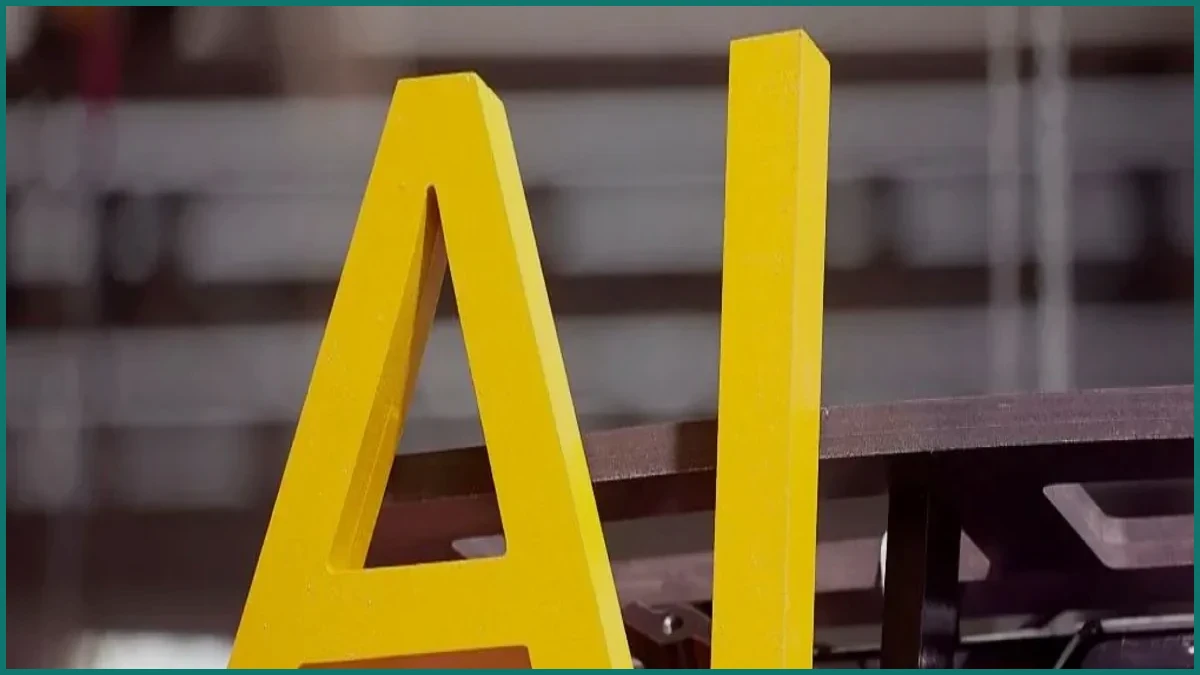
The city of San Francisco has emerged as the central hub of the artificial intelligence sector, driving a fresh economic rejuvenation after an exodus of residents during the pandemic and years of downtown stagnation caused by remote work. However, alongside the visible prosperity, concerns are mounting over whether the city should prepare for a potential tech crash.
Signs of the ongoing AI boom are everywhere across San Francisco. Soaring residential rents, falling office vacancies, and public buses and billboards plastered with cryptic AI advertisements reflect the rapid transformation. Furthermore, wealthy AI workers send San Francisco house prices soaring as high-paying tech roles proliferate, leading observers who follow the money to ask who pays for the AI boom now.
The economic surge is also benefiting local businesses outside the technology industry. Lauren Goldboss, owner of a small San Francisco dog-walking company, has been busy hiring staff and buying vans to service clients who walk dogs for AI workers. Small enterprises like hers showcase how tech expansion trickles down into personal services.
San Francisco hosts industry leaders OpenAI and Anthropic, the company behind the Claude chatbot, which listed on New York's Nasdaq stock exchange last week. These firms have been aggressively hiring top engineering talent, often on eye-popping salaries. Thousands of other AI start-ups have also sprung up directly in the city, cementing San Francisco's position as the heart of the sector. A study revealed that between 2023 and 2025, 60% of all venture capital invested in US AI firms went to companies located in San Francisco, dwarfing the significantly smaller percentage given to firms in Silicon Valley, which lies 40 miles to the south.
Because the boom is heavily concentrated in San Francisco itself rather than the wider Bay Area or Silicon Valley, an economic downturn could hit the city far harder. Yet industry insiders offer mixed perspectives on the likelihood and severity of a crash. One anonymous AI worker at a major firm in the city expressed certainty that a crash is coming. Questioning whether leading US AI companies can generate enough revenues to justify their massive spending commitments when cheaper, increasingly capable models are emerging from China, he stated, "I am certain that the house of cards will come down… and I'm sure it will affect me." Nevertheless, he remains unbothered, adding, "Why worry about things I can't control?"
Another San Francisco-based AI worker agreed that a significant market correction is "totally possible." Yet he adds that most people don't think of it as the core risk. Instead, he says that the bigger concern in his circles, and the one he shares, is the existential risk that AI could pose to humanity. He noted, "In some weird way, a market correction being the worst-case outcome feels great."
Economic experts suggest several factors could cushion San Francisco against a severe economic shock. Jeff Bellisario, executive director of the Bay Area Council Economic Institute, a business-affiliated think tank, noted that despite massive venture capital investments and new firm formations, AI companies are employing relatively few workers in the city compared to past tech booms. "Hiring isn't necessarily on the scale as we would have thought with the amount of venture capital and new company formation," Bellisario explained.
Ted Egan, chief economist for the City and County of San Francisco, added that "because of AI, it is a good time for tech again in the city, but we are not seeing tonnes of overall tech job growth." Moreover, Enrico Moretti, an economics professor at the University of California, Berkeley, estimated that San Francisco remains about 35,000 jobs shy of its pre-pandemic peak. A major reason for limited local job creation is that much of the spending by US AI firms is directed toward computing power. Huge data centres are being built across the US to power AI, relatively few of which are located in the Bay Area. In effect, San Francisco functions as the brains of the AI boom, but not the brawn.
Nonetheless, Moretti warned that a significant correction could still be "very painful" for the city. If AI hiring slows or layoffs occur, the primary impact would ripple through local service jobs, affecting restaurants, retail, and services like dog walking. "It is the spillover on service jobs that would actually be the main effect," Moretti noted, warning that rising office vacancies, falling downtown foot traffic, and weakening rents and house prices could follow.
To help absorb any tech slowdown, San Francisco is also seeing growth in non-technology sectors such as healthcare and tourism. The city government has been actively encouraging tourism by improving downtown safety and cleanliness. "Tourism is not fully back, but the growth has been healthy," Egan said, calling it a sign of confidence. Egan does not expect an AI crash to alter the city's fundamental economic trajectory, observing, "The city's economy has not been screaming during this AI boom, so I wouldn't expect it to grind to a halt if there was a slowdown in AI spending. I think of it primarily as a hiccup that we should expect, rather than a major course correction for the city's economy."
While Bellisario and Moretti note there are limits to what municipal officials can do to prepare, they recommend maintaining financial reserves and encouraging growth in non-tech industries. For business owners like Goldboss, adapting to boom-and-bust cycles is a familiar reality. Choosing to "build while it is here," she plans to adapt if the next tech bust occurs, concluding, "It is just the risk you kind of have to take."
Related Articles

Mr. Udoy is a professional Web Developer and Blogger with 7+ years of experience in the tech world. He specializes in web architecture and digital storytelling. As the driving force behind worldincidents.com, he focuses on delivering high-quality, well-researched content to a global audience.