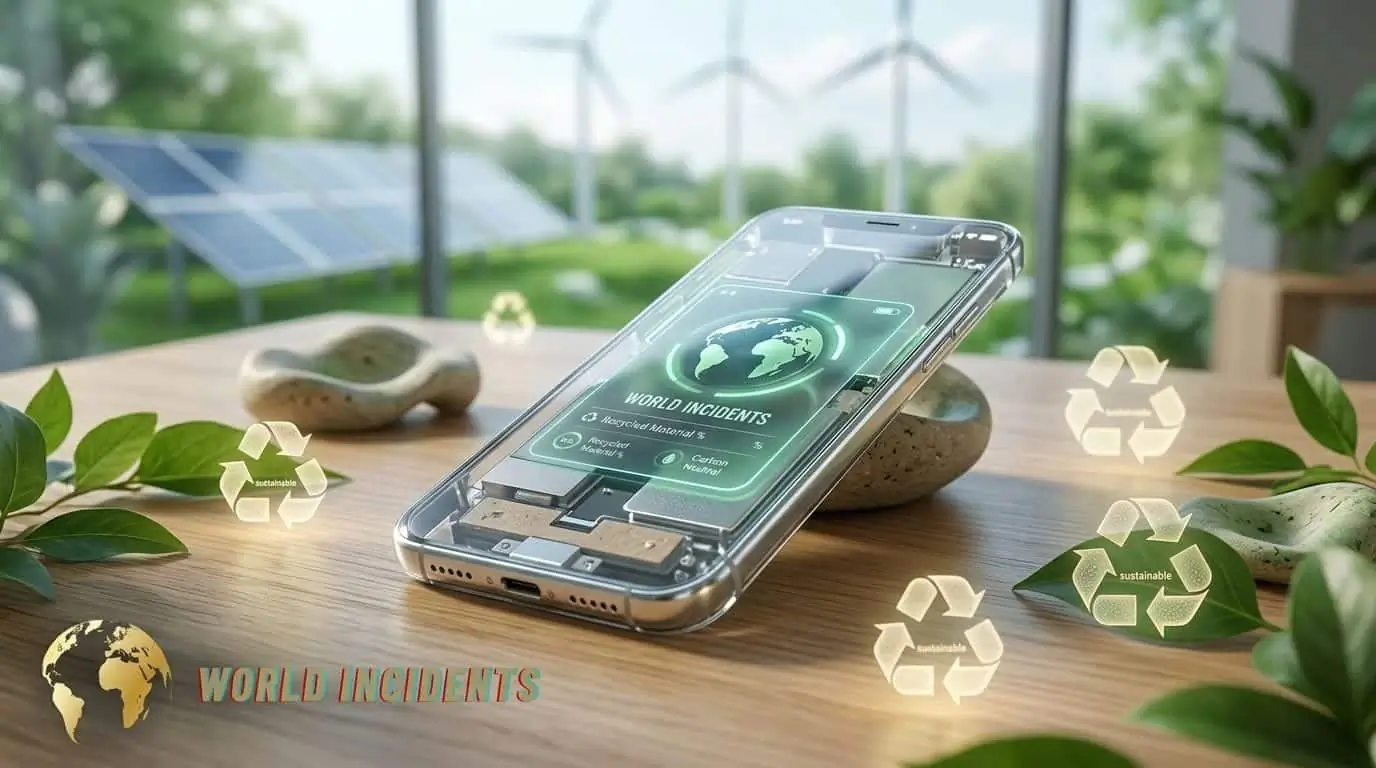
- 100% Recyclable Smartphone: The Future of Sustainable Tech
The global tech industry is changing rapidly. As environmental concerns grow, consumers are asking an important question: can a Recyclable Smartphone truly become the standard for future devices? With millions of phones discarded every year, the idea of a Recyclable Smartphone is no longer just innovation — it’s a necessity.
In this article, we explore how the Recyclable Smartphone is shaping the future of sustainable tech and whether a 100% recyclable phone is realistic in 2026 and beyond.
Why the World Needs a Recyclable Smartphone
Electronic waste is one of the fastest-growing waste streams globally. Traditional smartphones contain rare earth metals, plastics, lithium batteries, and non-biodegradable materials. A Smartphone aims to reduce this environmental burden.
What does a sustainable smartphone look like?
The rise of the Recyclable Smartphone is driven by:
Climate change awareness
Government sustainability regulations
Consumer demand for green electronics
Corporate ESG commitments
Without innovation in this area, smartphone waste will continue to harm ecosystems.
What Makes a Smartphone Truly Recyclable?
A Smartphone must meet several criteria:
1. Use of recyclable metals like aluminum
2. Biodegradable or reusable plastic alternatives
3. Modular components for easy replacement
4. Simplified battery removal
5. Reduced toxic chemical usage
Read More: Apple Launching the Lower-Cost iPhone 17e and New M4 iPad Air
For a Smartphone to be effective, manufacturers must design products for disassembly — not just performance.
The Role of Modular Design in a Smartphone
Modular design plays a crucial role in creating a successful Recyclable Smartphone. Instead of discarding the entire device when one part fails, users can replace specific components like the battery, camera, or screen.
Benefits of Smartphone design:
Extended device lifespan
Reduced e-waste
Lower carbon footprint
Cost savings for consumers
A modular Smartphone encourages long-term usage rather than annual upgrades.
Materials Used in a Recyclable Smartphone
Innovation in materials science is central to building a Smartphone. Companies are experimenting with:
Recycled aluminum frames
Ocean-recovered plastics
Bioplastic casings
Ethically sourced cobalt
Replaceable lithium batteries
These materials make the Smartphone more environmentally responsible while maintaining durability.
Can a Recyclable Smartphone Be 100% Sustainable?
While a fully Smartphone is the goal, achieving 100% sustainability is challenging. Mining, transportation, and manufacturing still generate emissions.
However, progress includes:
Carbon-neutral production facilities
Renewable energy-powered factories
Take-back recycling programs
Circular economy business models
The future Smartphone may not be perfect, but it can drastically reduce environmental damage.
Consumer Demand Driving the Recyclable Smartphone Revolution
Consumers are increasingly choosing brands that prioritize sustainability. Surveys show younger generations prefer products that align with environmental values.
A Smartphone is becoming a competitive advantage in the market. Companies that invest in green technology gain:
Brand loyalty
Regulatory compliance
Investor confidence
Long-term cost efficiency
The shift toward the Smartphone is both ethical and strategic.
Government Regulations Supporting Recyclable Smartphone Innovation
Many countries are introducing “right-to-repair” laws. These regulations require manufacturers to make parts and repair instructions accessible.
Such policies encourage the development of a Smartphone by:
Reducing forced obsolescence
Supporting modular upgrades
Encouraging responsible disposal
Regulation and innovation together accelerate the growth of the Smartphone market.
Challenges Facing the Recyclable Smartphone Industry
Despite optimism, building a scalable Smartphone faces obstacles:
Higher production costs
Limited supply of recycled materials
Consumer preference for ultra-thin designs
Complex global supply chains
Still, technology is advancing. AI-driven material recovery and advanced recycling processes are improving the feasibility of a Smartphone.
Read More: 7 Cybersecurity Tips Nobody Tells You
The Future of the Recyclable Smartphone
By 2030, experts predict sustainability will become a standard requirement rather than a marketing feature. The Smartphone could redefine the entire electronics industry.
Future innovations may include:
Fully biodegradable internal components
Advanced battery recycling systems
Zero-waste packaging
AI-optimized energy efficiency
The Smartphone represents more than a product — it represents a movement toward responsible technology.
Why You Should Care About the Recyclable Smartphone
Choosing a Smartphone supports environmental protection while promoting ethical production practices. As tech consumers, our buying decisions influence corporate priorities.
The more demand there is for a Smartphone, the faster companies will innovate sustainable solutions.
Final Thoughts
The Recyclable Smartphone is not just a futuristic concept — it is becoming a practical necessity. As sustainable tech evolves, manufacturers are rethinking design, materials, and lifecycle management.
While achieving a fully Smartphone presents challenges, the industry is moving closer to that reality every year. Eco-friendly innovation, regulatory pressure, and consumer awareness are accelerating change.
In the coming years, the Smartphone may redefine how we measure technological progress — not just by performance, but by sustainability.
The future of tech is green, and the Smartphone stands at the center of that transformation.

Meet Md. Rubel Rana
As a core contributor to Worlddincidents.com, Rubel Rana brings a unique perspective to the world of journalism. Whether it’s deep-diving into historical trivia or covering the latest global headlines, Rubel Rana is committed to delivering high-quality, high-impact articles. Their writing blends meticulous research with a compelling voice, helping readers stay informed and curious about the world around them.
1 thought on “100% Recyclable Smartphone: The Future of Sustainable Tech”