Israel is preparing for a general election this Tuesday, a vote that arrives at a critical juncture after three years of regional war. The nation remains deeply divided and braced for a significant political battle. Recent polling data published on Friday indicates that the governing coalition and the main opposition bloc are running almost neck-and-neck. The electoral landscape is being influenced by a surge of new participants, with approximately half a million first-time voters expected to cast their ballots, alongside an estimated 70,000 Israelis reportedly flying in from abroad specifically to participate in the election.
On Saturday night, large crowds of opposition voters gathered in central Tel Aviv to demand a change in government. Among those present was 21-year-old Omri, who expressed a sense of optimism, stating, "I want peace, I want security, and I want to end corruption and get the religious fanatics out." The campaign has been marked by innovative tactics, including the use of AI-generated videos to capture public attention, and the rise of a new political figure, Gadi Eisenkot.
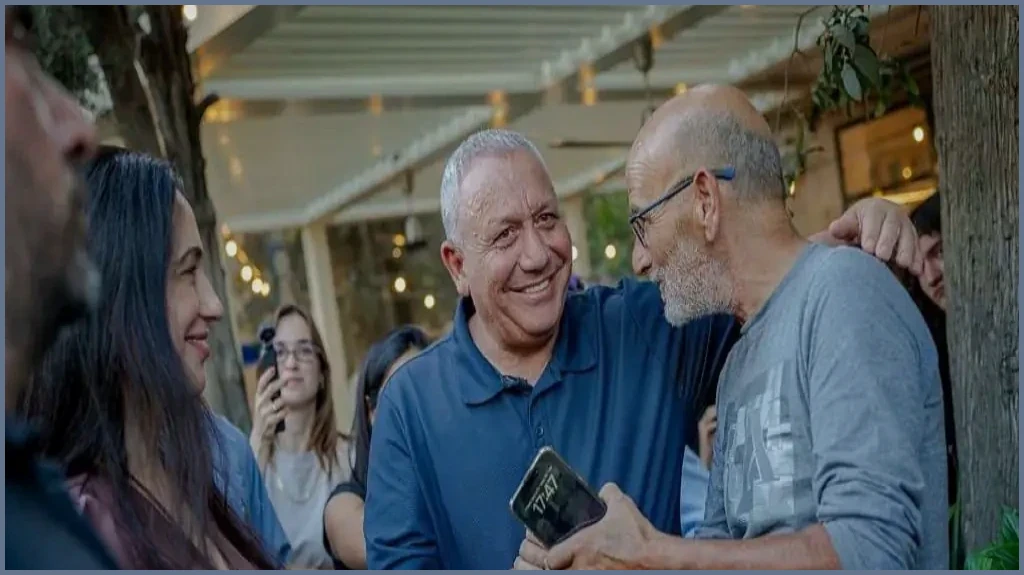
Eisenkot, a former military chief of staff, presents a distinct contrast to the aggressive, media-savvy brand of Israel's longest-serving prime minister, Benjamin Netanyahu. Relatively new to the political scene and coming from a working-class Moroccan background, Eisenkot is known for his calm manner and low-drama approach, leading some to label him a "non-politician." Despite his newcomer status, he and his centrist Yashar party have consistently challenged Netanyahu’s Likud party for the top spot in recent polls. Because Israeli politics relies on the art of coalition-building rather than a single party winning an outright majority, Eisenkot’s rising profile has intensified a race that many Israelis consider existential for the country's future.
Last week, during an appearance at a community center for Ethiopian Jews in the city of Ramle, Eisenkot navigated through security and advisors to address supporters. David, a local attendee who had met the candidate previously, noted, "He looks you in the eye, not like a leader looking down at someone. And he listens. He's very sympathetic." Eisenkot’s appeal is frequently attributed to his personal profile; as a softly-spoken military man whose son was killed during the Gaza War, he positions himself as someone from the periphery rather than the wealthy urban elite. His background became a focal point of the campaign earlier this month when a pro-Netanyahu speaker used a racist slur, referring to him as a Moroccan "monkey" during a television debate.
Addressing the crowd in Ramle, Eisenkot emphasized the stakes of the election: "These elections are about many issues. They are about security, economy, education…but primarily, they are about the identity of the State of Israel, and what kind of Israel we want to see. A Jewish state, a democratic state, a liberal, tolerant, egalitarian state." This rhetoric aligns with the opposition's platform, which characterizes Benjamin Netanyahu’s government as a threat to democracy. Critics point to his efforts to curb the powers of the judicial system and his refusal to establish a state commission of inquiry into the 7 October 2023 attacks, arguing that the Supreme Court would be biased against him. Eisenkot and other opposition leaders have pledged to form such an inquiry, a move supported by more than 70% of Jewish Israelis according to recent surveys.
In response, Benjamin Netanyahu has focused his campaign on national security, adopting the slogan "No Surrender." He has repeatedly portrayed his rivals as soft on security, attempting to leverage the fears of right-wing voters by suggesting that Jewish opposition parties might form an alliance with Arab parties—who make up about one-fifth of the population—thereby compromising national security. These elections are the first since the 7 October 2023 attacks, when Hamas-led gunmen killed nearly 1,200 people and took 251 hostages. Despite the event being widely viewed as Israel's worst security failure, the prime minister is campaigning as the only leader capable of ensuring the country's safety.
At a basement café in Jerusalem's Mahane Yehuda market, supporters of the prime minister remain steadfast. Shlomi Bashar, a self-described die-hard fan of Netanyahu, acknowledged that the prime minister bears some responsibility for the security failure, noting, "If the army had woken him in time, it wouldn't have happened." However, Bashar added, "After the 7 October, he changed the entire Middle East." Netanyahu has consistently emphasized that Israel's subsequent wars in Gaza, Iran, and Lebanon have reduced existential threats. "We need him to be re-elected so that he can finish this work," Bashar said. "In my opinion, he is one of the best leaders in the world. Most of the world loves him and respects him, because he is a strong man and his ideas are correct."
Related Articles
Md. Kazi Bijoy is a dedicated tech enthusiast and content creator with a passion for digital innovation. With years of experience in the tech industry, he specializes in breaking down complex topics into easy-to-understand guides. When he isn’t writing, he explores the latest gadgets and researches emerging trends in the digital world.