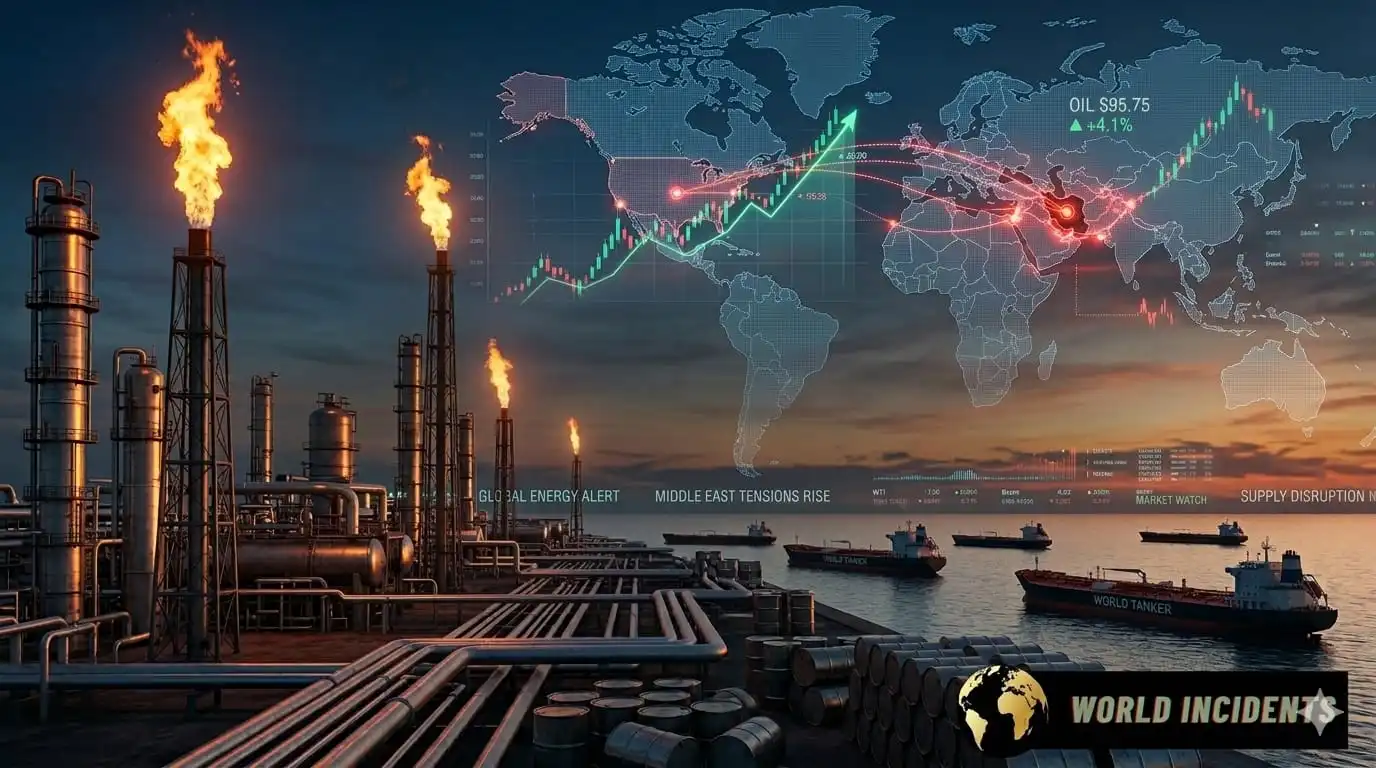
US-Iran War 2026: Why Oil Prices Are Skyrocketing Globally
The escalating US-Iran War 2026 has triggered significant concern across global markets. One of the most immediate consequences of the conflict is the sharp rise in global oil prices. As tensions intensify in the Middle East, energy markets around the world are reacting with volatility and uncertainty.
The US-Iran War 2026 has become a major geopolitical event that could reshape the global energy landscape. Oil traders, governments, and investors are closely watching how the conflict unfolds, especially because the Middle East plays a central role in global oil supply.
In this analysis, we explore why the US-Iran War 2026 is pushing oil prices higher and what it means for the global economy.
Why the US-Iran War 2026 Is Impacting Oil Markets
Energy markets are extremely sensitive to geopolitical instability. The US-Iran War 2026 is occurring in a region that produces a large portion of the world’s oil supply. Any disruption in this area can lead to immediate price fluctuations.
Iran itself is a significant oil producer. If the US-Iran War 2026 disrupts Iranian exports, global supply could shrink dramatically. Even the possibility of disruption is enough to drive prices upward.
In addition, traders often react to uncertainty. When geopolitical tensions rise, markets anticipate potential shortages, which further amplifies the impact of the US-Iran War 2026 on oil prices.
The Strategic Importance of the Strait of Hormuz
One of the biggest concerns related to the US-Iran War 2026 is the security of the Strait of Hormuz. This narrow waterway is one of the most important oil shipping routes in the world.
Nearly one-fifth of global oil passes through this region. If the US-Iran War 2026 disrupts shipping lanes in the Strait of Hormuz, it could create a major supply crisis.
Shipping companies and governments are already increasing security measures. However, even small disruptions linked to the US-Iran War 2026 could significantly impact oil transportation.
Global Energy Supply Risks
The US-Iran War 2026 is not only affecting Iranian oil exports but also creating broader energy supply concerns.
Several Middle Eastern countries export oil through nearby shipping routes. If the conflict spreads or escalates, other producers could also face disruptions.
This potential ripple effect means the US-Iran War 2026 could influence energy markets far beyond the Middle East. Countries heavily dependent on oil imports are particularly vulnerable.
Financial Markets React to the US-Iran War 2026
Financial markets typically respond quickly to geopolitical conflicts. Since the beginning of the US-Iran War 2026, energy stocks have surged while global markets have shown signs of volatility.
Investors often shift toward commodities such as oil and gold during times of conflict. This trend has intensified as the US-Iran War 2026 raises concerns about long-term stability in energy markets.
Higher oil prices can also influence inflation worldwide. As transportation and manufacturing costs increase, the economic consequences of the US-Iran War 2026 may extend far beyond the energy sector.
Economic Impact on Global Consumers
The US-Iran War 2026 is already affecting everyday consumers. Rising oil prices typically lead to higher fuel costs, increased shipping expenses, and inflation in various sectors.
Transportation industries, airlines, and logistics companies may face rising operational costs. As the US-Iran War 2026 continues to disrupt oil supply expectations, consumers worldwide could experience higher prices for goods and services.
Countries with limited energy resources may feel the economic impact more severely.
International Diplomatic Reactions
The US-Iran War 2026 has triggered diplomatic responses from multiple countries. Global powers are urging de-escalation to prevent a broader regional conflict.
Energy-importing nations are particularly concerned about the long-term consequences of the US-Iran War 2026. Many governments are exploring alternative energy supplies and strategic oil reserves to stabilize markets.
Diplomatic negotiations could play a key role in determining whether the US-Iran War 2026 continues to escalate or moves toward resolution.
Can Oil Prices Stabilize?
Whether oil prices stabilize depends largely on the outcome of the US-Iran War 2026. If tensions decrease and shipping routes remain secure, markets could regain confidence.
However, prolonged conflict may continue to influence energy markets. The longer the US-Iran War 2026 lasts, the greater the risk of sustained oil price volatility.
Energy analysts are monitoring developments closely to predict how long these market disruptions may continue.
Read More: FIFA WORLD CUP SECURITY RISKS 2026: TOP GEOPOLITICAL THREATS
Long-Term Implications for Global Energy
The US-Iran War 2026 may accelerate global efforts to diversify energy sources. Many countries are already investing in renewable energy to reduce dependence on oil imports.
If geopolitical conflicts continue to threaten oil supply chains, the US-Iran War 2026 could serve as a turning point in global energy strategy.
In the long term, governments may increase investments in alternative energy technologies and energy security infrastructure.
Conclusion
The US-Iran War 2026 has quickly become one of the most significant geopolitical developments affecting global energy markets. Rising tensions in the Middle East are creating uncertainty in oil supply chains and pushing prices higher worldwide.
While the ultimate outcome of the US-Iran War 2026 remains uncertain, its impact on the global economy is already being felt. From energy markets to consumer prices, the consequences of this conflict could shape economic trends for years to come.
Understanding the dynamics of the US-Iran War 2026 is essential for governments, businesses, and investors seeking to navigate an increasingly volatile global landscape.
FAQ Section
Why do wars affect global oil prices?
Conflicts in oil-producing regions create uncertainty about supply. When markets fear supply shortages, prices often increase.
Why is the Middle East important for global energy markets?
The Middle East holds a large portion of the world’s oil reserves and exports a significant percentage of global supply.
What is the Strait of Hormuz?
The Strait of Hormuz is a strategic waterway connecting the Persian Gulf to international shipping routes and is crucial for global oil transportation.
How do rising oil prices affect the global economy?
Higher oil prices increase transportation and manufacturing costs, which can lead to inflation and higher prices for consumers.
Can renewable energy reduce dependence on oil?
Yes. Many countries are investing in renewable energy sources such as solar, wind, and hydrogen to reduce reliance on fossil fuels.

Meet Md. Rubel Rana
As a core contributor to Worlddincidents.com, Rubel Rana brings a unique perspective to the world of journalism. Whether it’s deep-diving into historical trivia or covering the latest global headlines, Rubel Rana is committed to delivering high-quality, high-impact articles. Their writing blends meticulous research with a compelling voice, helping readers stay informed and curious about the world around them.
2 thoughts on “US-Iran War 2026: Why Oil Prices Are Skyrocketing Globally”