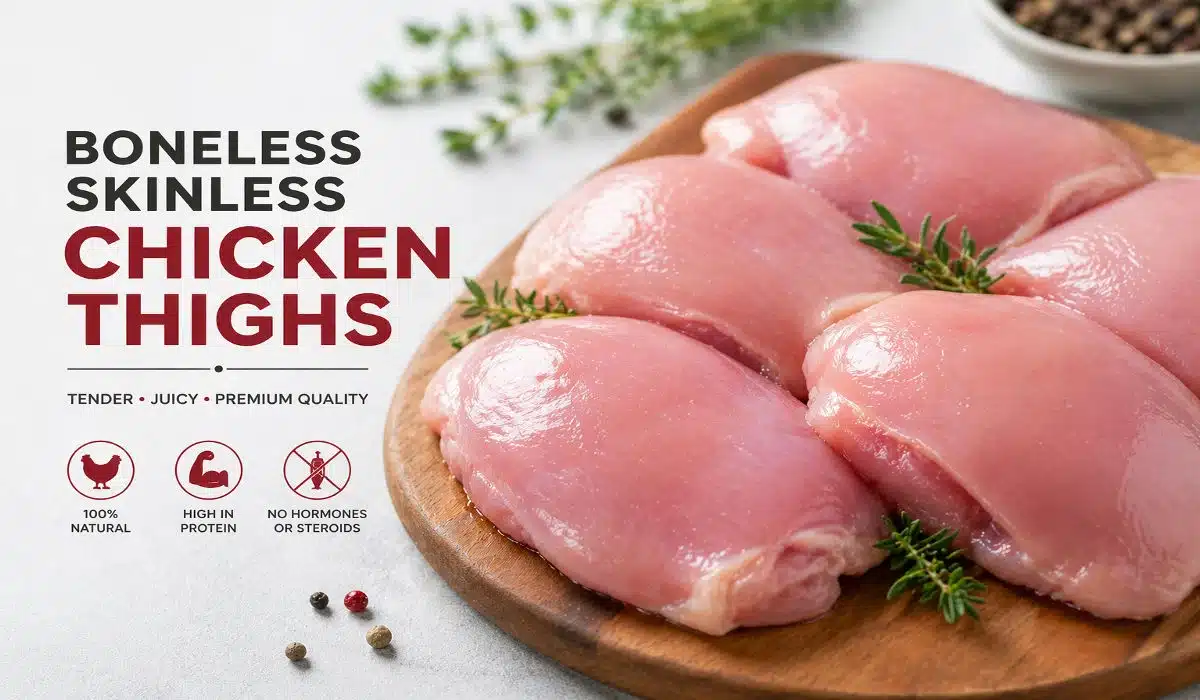
In 2026, the culinary world has embraced dark meat for its “fat-to-flavor” ratio. Boneless skinless chicken thighs contain a slightly higher fat content than breasts, which prevents them from drying out during high-heat cooking methods like air frying or grilling. This makes them the “forgiving” cut; even if you overcook them by a few minutes, they remain juicy and tender, whereas white meat would become tough and stringy.
The Dark Meat Advantage
Many health-conscious eaters are surprised to learn about the impressive nutritional profile of boneless skinless chicken thighs. Per 100g serving, these thighs provide approximately:
Protein: 26g – 28g (Essential for muscle repair).
Iron & Zinc: Thighs contain significantly higher levels of iron and zinc compared to white meat, supporting healthy blood cells and immune function.
B-Vitamins: Rich in B6 and B12, which are crucial for energy production and brain health.
Selenium: A powerful antioxidant that protects cells from damage.
The Secret to Perfect Prep
One of the most important tips for cooking boneless skinless chicken thighs is to pat them completely dry with a paper towel before seasoning. Moisture is the enemy of a good sear. By removing surface water, you allow the heat of the pan or air fryer to interact directly with the meat and spices, creating that coveted golden-brown crust (the Maillard reaction) that locks in flavor.
Pan-Searing and Air Frying
For a quick weeknight dinner, pan-searing is unbeatable. Heat a cast-iron skillet over medium-high heat with a tablespoon of avocado oil. Season your boneless skinless chicken thighs generously and cook for about 4-5 minutes per side.
Pro Tip: Do not move the chicken once it hits the pan! Letting it sit undisturbed for the first few minutes ensures a perfect crust. Alternatively, air fry them at 400°F (200°C) for 12-15 minutes for a “fried” texture without the excess oil.
Staying Juicy for Days
Boneless skinless chicken thighs are the “holy grail” of meal prep. Unlike chicken breasts, which often become dry and unappealing when reheated in a microwave, thighs retain their moisture and texture. You can batch-cook them on a sheet pan with roasted vegetables like Brussels sprouts and sweet potatoes, ensuring a high-protein, ready-to-eat lunch that tastes just as good on Thursday as it did on Monday.
Food Safety First: The 165°F Rule
To ensure your boneless skinless chicken thighs are safe to eat, always use a digital meat thermometer. The USDA recommends an internal temperature of 165°F (74°C). However, because thighs have more connective tissue, many chefs prefer cooking them to 175°F (79°C) to allow the collagen to break down further, resulting in an even more tender “fall-off-the-bone” texture.
The Marinade Advantage
Because of their slightly more open muscle structure, boneless skinless chicken thighs absorb marinades much more efficiently than leaner cuts. In 2026, the trend is moving toward “Acid-Base” marinades using ingredients like lemon juice, yogurt, or apple cider vinegar. Just 30 minutes of marinating can transform the texture and infuse deep flavor throughout the meat. For a global twist, try a “Shawarma style” blend of cumin, turmeric, and garlic—it pairs perfectly with the natural richness of the dark meat.
Value and Sustainability
In today’s economy, boneless skinless chicken thighs are often priced significantly lower than chicken breasts, making them a sustainable choice for families. Buying them in “Family Packs” or bulk allows you to stretch your grocery budget without sacrificing protein quality. Additionally, since they are less likely to be wasted due to poor texture after reheating, they represent a smarter “value-per-meal” investment for the average household.
The “Sheet Pan” Strategy for Busy Households
For a truly effortless dinner, boneless skinless chicken thighs are the ultimate candidate for sheet pan roasting. Unlike breasts, which cook too quickly to allow vegetables to caramelize, thighs can withstand 25-30 minutes in a hot oven. This allows you to roast them alongside “hard” vegetables like carrots, potatoes, and onions on a single tray. The juices from the chicken naturally season the vegetables as they cook, creating a cohesive, restaurant-quality meal with minimal cleanup.
Keto and Paleo Compatibility
For those following specialized diets in 2026, boneless skinless chicken thighs are a nutritional goldmine. Their healthy fat content makes them naturally compatible with the Ketogenic (Keto) diet, providing the necessary macros without the need for excessive added oils. Similarly, for Paleo enthusiasts, thighs offer a more “ancestral” nutrient profile, including higher amounts of naturally occurring minerals that are often missing from overly lean, processed proteins.
Slow Cooking and Braising Potential
While you should never slow-cook a chicken breast (it will turn into sawdust), boneless skinless chicken thighs are built for the slow cooker or Instant Pot. The connective tissue in the thighs breaks down over several hours, resulting in meat that can be easily shredded for tacos, sandwiches, or stews. Whether it’s a “Slow Cooker Butter Chicken” or a “Zesty Lime Pulled Chicken,” thighs remain the only cut that can survive a 6-hour simmer while staying incredibly tender.
The 2026 “Swicy-Sour” Glaze Revolution
In April 2026, the biggest trend in seasoning boneless skinless chicken thighs is the “Swicy-Sour” profile—a sophisticated evolution of traditional sweet-and-spicy glazes. By adding an acidic or sour element like calamansi, tamarind, or sumac, you cut through the natural richness of the dark meat, creating a three-dimensional flavor hit. Chefs are currently obsessed with global mashups like Miso-Honey-Chili or Blackberry-Black Pepper jam glazes. Because thighs can stand up to these bold, layered profiles without being overpowered, they are the perfect canvas for experimenting with 2026’s adventurous, “maximalist” flavor trends.
FAQ
Q1: Is it better to bake or pan-fry chicken thighs?
Ans: Both work well! Baking is great for large batches (30 minutes at 400°F), while pan-frying is faster and provides a better crust.
Q2: Should I trim the fat off boneless skinless chicken thighs?
Ans: While you can trim large pieces of excess fat, a small amount is beneficial as it melts away during cooking, adding flavor and preventing the meat from drying out.
Q3: Can I substitute thighs for breasts in any recipe?
Ans: Yes! In almost every recipe, boneless skinless chicken thighs can replace breasts. Just be aware that thighs may take a few minutes longer to cook due to their density.
read more: Top Entry Level Remote Jobs to Launch Your Career Today

Mr. Udoy is a professional Web Developer and Blogger with 7+ years of experience in the tech world. He specializes in web architecture and digital storytelling. As the driving force behind worldincidents.com, he focuses on delivering high-quality, well-researched content to a global audience.