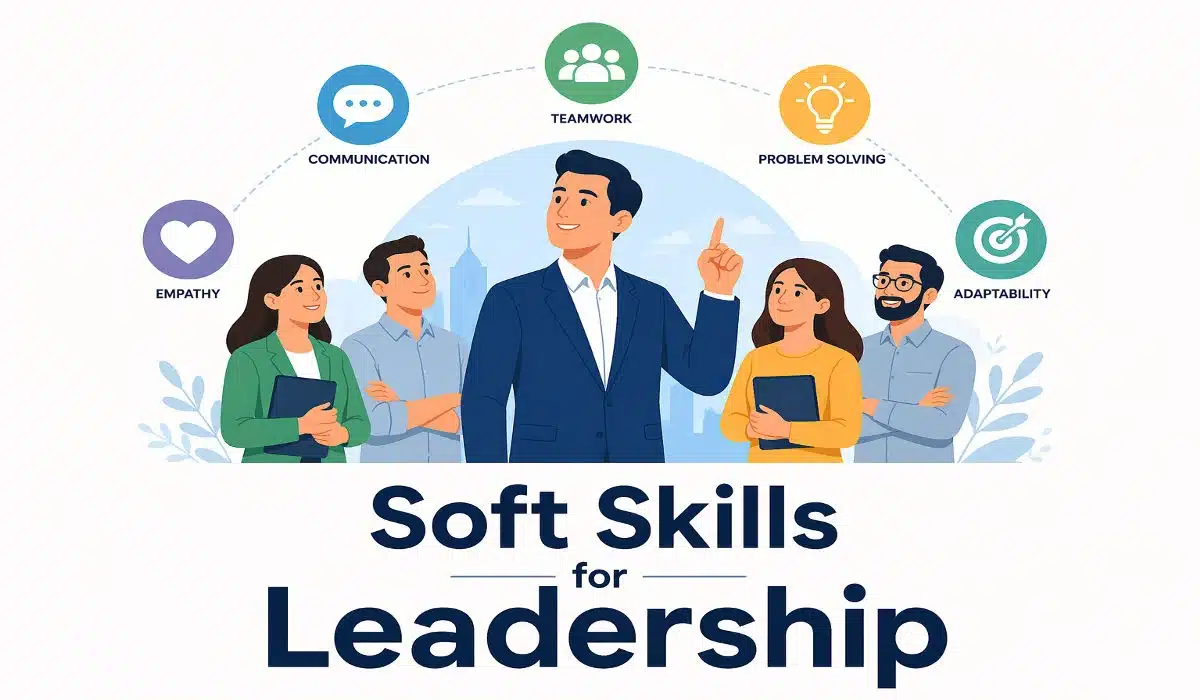
In 2026, emotional intelligence remains the most critical of all soft skills for leadership. EQ involves the ability to recognize, understand, and manage your own emotions while effectively influencing the emotions of others. Leaders with high EQ can stay calm under pressure and foster a psychologically safe environment. In a world of remote and hybrid work, being able to “read the room” through a digital screen is a superpower that separates managers from true leaders.
Radical Empathy and Active Listening
Modern leadership requires more than just hearing words; it requires understanding the “why” behind them. Among the essential soft skills for leadership, empathy stands out as the bridge between diverse team members. Active listening—giving full attention, acknowledging perspectives, and responding thoughtfully—ensures that every employee feels valued. When people feel heard, their engagement and productivity naturally skyrocket.
Adaptive Communication for Hybrid Teams
Communication is a cornerstone of soft skills for leadership, but in 2026, it must be adaptive. A leader must be able to switch styles between a high-energy town hall, a concise Slack update, and a sensitive one-on-one video call. Clarity, brevity, and transparency are essential. Adaptive communication ensures that the vision remains clear, regardless of the time zone or medium used to deliver the message.
Conflict Resolution and De-escalation
Where there are people, there is friction. Great leaders view conflict as an opportunity for growth rather than a disruption. Mastery of soft skills for leadership in 2026 includes sophisticated conflict resolution techniques. Instead of taking sides, an effective leader acts as a facilitator, helping parties find common ground and move toward a solution that benefits the team’s collective goals.
Cultural Intelligence (CQ) in a Global Market
As businesses become more decentralized, Cultural Intelligence has emerged as a top-tier category within soft skills for leadership. CQ is the ability to work effectively across different cultural contexts. Whether managing a team in Dhaka, London, or New York, a leader must be sensitive to cultural nuances, communication norms, and holidays. This skill is vital for building a truly inclusive and high-performing global workforce.
Strategic Decisiveness Under Uncertainty
Being a leader means making tough calls when the data is incomplete. Strategic decisiveness is one of the most practical soft skills for leadership. It’s the ability to analyze a situation quickly, weigh the risks, and move forward with confidence. In 2026’s fast-paced market, “analysis paralysis” can be fatal. A leader who can make a firm decision while remaining open to feedback is a leader who can navigate any crisis.
Cognitive Flexibility and Mindset Agility
In 2026, the pace of technological change is unprecedented. Soft skills for leadership now must include cognitive flexibility—the ability to pivot your thinking and unlearn old habits as quickly as new tools emerge. A leader with mindset agility doesn’t see a market shift as a threat, but as a puzzle to be solved. This skill allows you to lead your team through transitions without causing “change fatigue,” keeping morale high even during periods of intense transformation.
Leading Without All the Answers
The era of the “all-knowing” boss is over. Intellectual humility is a rising star among soft skills for leadership. It is the ability to admit when you are wrong and the willingness to learn from subordinates who may have more specialized knowledge (especially in AI or new tech). By modeling humility, a leader creates a culture of continuous learning and psychological safety where employees feel comfortable suggesting innovative ideas without fear of being shut down.
Resilience and Stress Regulation
Leadership is inherently high-pressure, but in a 24/7 connected world, the ability to regulate your own stress is vital. Soft skills for leadership in 2026 include “Emotional Resilience”—the capacity to bounce back from setbacks and maintain a steady hand for the team. When a leader practices healthy stress regulation, it prevents “emotional contagion,” ensuring that the leader’s anxiety doesn’t trickle down and paralyze the entire department.
Persuasion and Ethical Influence
In decentralized and flat organizational structures, “command and control” is dead. Leaders must now rely on persuasion and ethical influence. This category of soft skills for leadership involves storytelling, building a compelling narrative around a project, and winning “hearts and minds” rather than just giving orders. Ethical influence focuses on aligning a team’s personal values with the company’s mission, leading to authentic motivation rather than forced compliance.
Digital Etiquette and Presence
As most leadership happens behind a lens, “Virtual Gravity” has become a necessary skill. This involves mastering digital etiquette—knowing when to use a video call versus a quick message, and how to command a room during a hybrid meeting. Soft skills for leadership now extend to how you present yourself digitally: maintaining eye contact with the camera, using inclusive language in digital threads, and ensuring that remote employees feel just as “present” as those in the physical office.
Psychological Safety Facilitation
In 2026, the most effective leaders have mastered the soft skill of creating and maintaining “Psychological Safety.” This is the shared belief that a team is safe for interpersonal risk-taking—where members feel comfortable speaking up with ideas, questions, or mistakes without fear of humiliation. As a leader, this involves actively soliciting dissenting opinions and reacting to failure with curiosity instead of blame. By facilitating an environment where “it’s okay to be wrong,” you unlock the full creative potential of your team, which is essential for rapid innovation in a high-tech economy.
FAQ
Q1: Can soft skills for leadership be learned?
Ans: Absolutely. Unlike IQ, soft skills are like muscles—they grow with practice, self-reflection, and consistent feedback from peers and mentors.
Q2: Why are soft skills more important than hard skills for leaders?
Ans: While hard skills get you the job, soft skills for leadership are what allow you to manage people. You can hire for technical skills, but leading a human team requires emotional and social intelligence.
Q3: How do I measure my progress in these skills?
Ans: Utilize 360-degree feedback tools, record and review your meetings, and maintain a journal to reflect on how you handled specific interpersonal challenges throughout the week.
read more: Why Boneless Skinless Chicken Thighs are the 2026 Kitchen MVP
Top Entry Level Remote Jobs to Launch Your Career Today

Mr. Udoy is a professional Web Developer and Blogger with 7+ years of experience in the tech world. He specializes in web architecture and digital storytelling. As the driving force behind worldincidents.com, he focuses on delivering high-quality, well-researched content to a global audience.