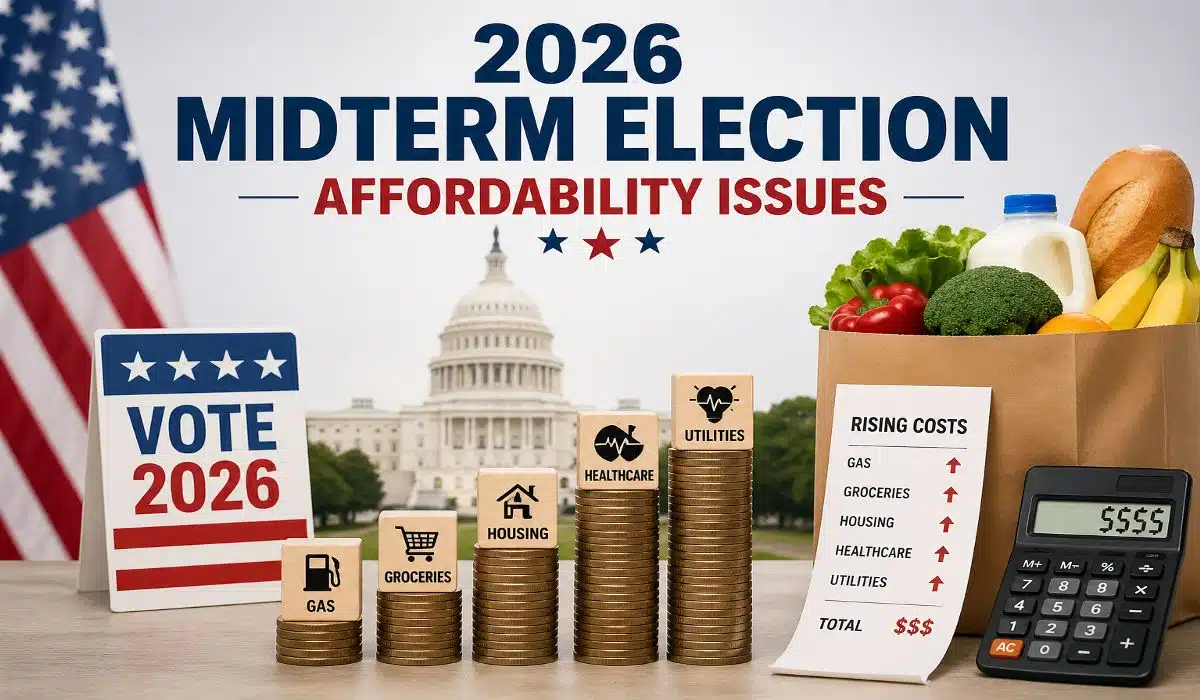
As the United States prepares for a pivotal political cycle, 2026 midterm election affordability issues have emerged as the primary driver of voter sentiment. From the rising cost of groceries to the unattainable dream of homeownership, the financial strain on the American middle class is forcing candidates from both parties to prioritize economic relief in their platforms.
The Dominance of the Cost of Living
For many citizens, the technical definitions of “inflation” matter less than the reality of their monthly bank statements. 2026 midterm election affordability issues center heavily on the persistent high cost of living. Even if the national inflation rate stabilizes, the cumulative price increases over the previous years remain a heavy burden. Voters are looking for specific legislative plans that promise to lower out-of-pocket expenses for everyday essentials.
Housing Markets and Political Strategy
Perhaps no topic highlights 2026 midterm election affordability issues more than the housing crisis. With mortgage rates fluctuating and inventory remaining at historic lows, younger generations are feeling locked out of the market. Candidates who can present viable solutions—such as tax credits for first-time buyers or incentives for sustainable urban development—are expected to gain significant traction among Gen Z and Millennial voters.
Healthcare Costs as a Campaign Pillar
Healthcare remains a perennial concern, but within the context of 2026 midterm election affordability issues, the focus has shifted toward the cost of prescription drugs and insurance premiums. Voters are increasingly frustrated with the complexity of healthcare billing and the high cost of emergency care. Campaigns that emphasize transparent pricing and expanded coverage are likely to see a surge in support from both the elderly and families.
Energy Independence and Utility Bills
Energy costs are a direct reflection of 2026 midterm election affordability issues. Whether it is the price at the gas pump or the monthly heating and cooling bills, energy remains a volatile factor in household budgets. The 2026 cycle will likely see a clash between proponents of traditional energy independence and those advocating for a transition to lower-cost renewable energy sources as a way to combat long-term inflation.
The Impact on Swing States
In battleground districts, 2026 midterm election affordability issues will determine the balance of power. Swing voters often prioritize “kitchen table” economics over partisan ideology. Therefore, the party that successfully frames itself as the champion of the consumer—offering tangible ways to reduce the cost of childcare, education, and transportation—will have a distinct advantage in November.
The Rising Burden of Childcare and Education
Education and childcare have become massive components of 2026 midterm election affordability issues. As tuition rates and daycare costs outpace wage growth, middle-class families are finding it impossible to remain in the workforce. Candidates who propose universal pre-K, childcare tax credits, or student loan interest caps are tapping into a vital demographic of “exhausted parents” who feel the current system is financially unsustainable.
Insurance Premium Hikes and Climate Risks
A newer, significant factor in 2026 midterm election affordability issues is the soaring cost of home and auto insurance. In many states, insurance premiums have doubled due to increased climate-related risks and rising repair costs. Voters are increasingly demanding legislative oversight of the insurance industry, making “premium stabilization” a surprising but powerful campaign promise for the 2026 cycle.
Transportation Costs and Infrastructure Access
While gas prices are a common talking point, the broader scope of 2026 midterm election affordability issues includes the total cost of transportation. This includes the price of new and used vehicles, high interest rates on car loans, and the lack of affordable public transit in growing suburban hubs. Politicians who focus on making commuting cheaper—whether through EV subsidies or localized transit projects—address a daily financial pain point for millions.
The Impact of “Shrinkflation” and Food Security
Voter frustration often boils down to what they see on grocery store shelves. 2026 midterm election affordability issues are frequently personified by “shrinkflation”—where product sizes decrease while prices remain high. This has led to calls for greater antitrust enforcement and investigations into corporate pricing strategies. Campaigns that promise to take on “Big Food” to lower the grocery bill are finding a resonant voice among lower-income voters.
Interest Rates and the “Debt Trap”
The cost of borrowing money is a central pillar of 2026 midterm election affordability issues. High interest rates designed to fight inflation have made credit card debt and personal loans significantly more expensive to maintain. As household debt reaches record levels, voters are looking for leaders who can navigate the delicate balance of lowering interest rates without reigniting inflation, providing a path toward debt relief and financial breathing room.
The Digital Divide and Remote Work Costs
In the 2026 political landscape, 2026 midterm election affordability issues have expanded to include digital infrastructure. High-speed internet is no longer a luxury; it is a necessity for employment, education, and healthcare. As remote and hybrid work become permanent fixtures, voters in rural and underserved urban areas are struggling with the high costs of unreliable broadband. Candidates who champion the “Digital Affordability Act” or propose subsidies for home-office infrastructure are addressing a modern financial hurdle that directly impacts a voter’s ability to earn a living in a digital-first economy.
Retirement Security and Inflation-Adjusted Savings
A major pillar of 2026 midterm election affordability issues is the growing concern over long-term financial security for seniors and near-retirees. With the cost of living eroding the purchasing power of fixed incomes, voters are increasingly anxious about the solvency of Social Security and the adequacy of their 401(k) plans. The 2026 cycle will see intense debate over cost-of-living adjustments (COLAs) and tax incentives for private savings. Candidates who can offer a credible plan to protect retirement nests from being hollowed out by inflation will win the trust of one of the most consistent voting blocs in the country.
FAQ
Q1: Why are affordability issues so important in the 2026 midterms?
Ans: Affordability directly affects the daily lives of voters. When people feel they cannot afford basic necessities, they often look for a change in leadership, making 2026 midterm election affordability issues the most influential factor in voter turnout.
Q2: Which age groups are most concerned about these issues?
Ans: While all ages are affected, Millennials and Gen Z are particularly focused on housing and education costs, while seniors are more concerned with healthcare and fixed-income stability.
Q3: How do candidates address these economic concerns?
Ans: Candidates typically propose a mix of tax reforms, subsidies for essential services, and deregulation to encourage market competition and lower prices.
read more: Protect Bank Account from AI Scams
High-Paying Corporate Jobs for Former Retail Managers

Mr. Udoy is a professional Web Developer and Blogger with 7+ years of experience in the tech world. He specializes in web architecture and digital storytelling. As the driving force behind worldincidents.com, he focuses on delivering high-quality, well-researched content to a global audience.