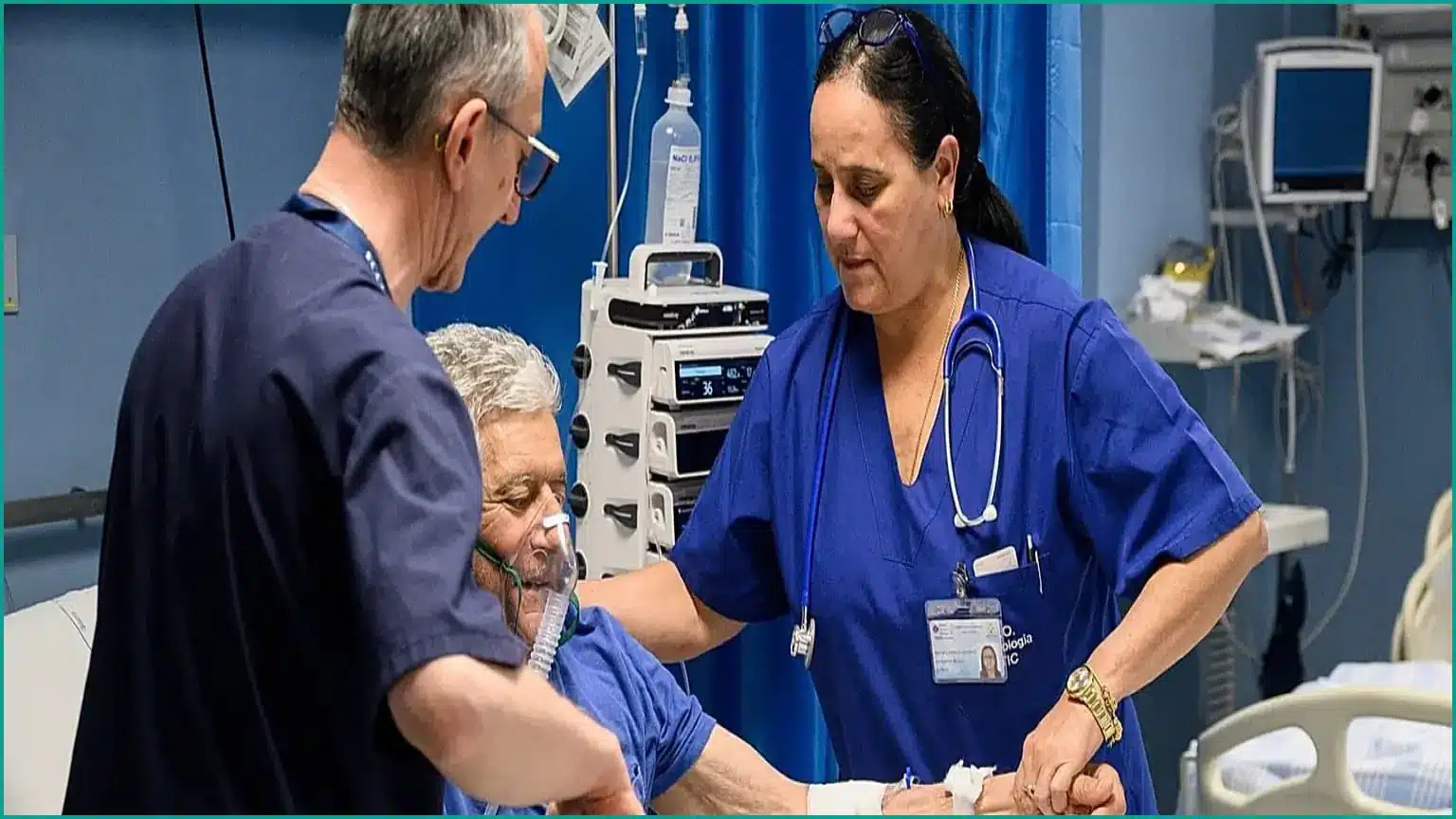
The southern Italian region of Calabria remains a rare European outpost for Cuban medical professionals, continuing a long-standing collaboration despite significant pressure from the United States to terminate the program. With over 200 Cuban doctors currently working in remote hospitals across the region, officials argue that their presence is essential to maintaining healthcare services in Italy’s poorest area, where severe staffing shortages had previously forced the closure of multiple hospital departments.
The situation in Calabria became dire before the arrival of the Cuban staff in January 2023. Francesco Moschella, the chief physician at Polistena hospital, recalled struggling to keep the emergency room operational entirely on his own. Today, the facility treats 30,000 patients annually, with Cuban doctors making up half the staff. Emergency medicine specialist Zoila Yakelin Arevalo Cruz noted that wait times, which once spanned eight to 12 hours, have been reduced to under an hour.
Washington has repeatedly criticized the program, with US Secretary of State Marco Rubio characterizing the missions as a form of human trafficking. The US government alleges that the Cuban state retains the majority of the doctors’ salaries and may confiscate passports. In February, Mike Hammer, the US head of mission to Cuba, visited Calabria alongside the American consul-general in Naples to address the issue. Calabria’s president, Roberto Occhiuto, stated that while pressure from the US intensified under the Trump administration, he has refused to end the cooperation.
Occhiuto explained that he informed Ambassador Hammer of his commitment to keep hospitals open, noting that the region is simultaneously working on incentives to attract local Calabrian doctors. The region’s economic challenges are stark, with wages approximately 30% lower than the Italian average and unemployment rates double the national figure. According to the health ministry, Calabria ranks last in Italy for public healthcare access.
The Cuban doctors involved maintain that their participation is voluntary. While they acknowledge that they send up to half of their earnings back to the Cuban government, they view it as a contribution to the country that provided their education. Cardiologist Daisy Luperon Loforte rejected the label of modern-day slavery, stating that the staff are happy to support their home country. To ensure transparency, Calabria signs individual contracts with the physicians and deposits their pay directly into Italian bank accounts, rather than paying the Cuban state agency.
The US pressure extends beyond Italy; in March, Jamaica ended its 50-year medical cooperation agreement with Cuba, affecting nearly 300 workers, while Honduras expelled over 150 medical staff in the same month. Despite this, the program in Italy persists, and Occhiuto confirmed that 63 Cuban doctors have recently applied to work in the Italian healthcare system independently.
Cuba has more doctors per person than almost any country on Earth — around 9.5 physicians per 1,000 people according to WHO data, nearly three times the OECD average — and its community-based prevention model is studied by health systems worldwide.
The country has sent its doctors to developing nations such as Gambia and Venezuela for decades, particularly due to their skills in providing care with scarce resources.
Md. Kazi Bijoy is a dedicated tech enthusiast and content creator with a passion for digital innovation. With years of experience in the tech industry, he specializes in breaking down complex topics into easy-to-understand guides. When he isn’t writing, he explores the latest gadgets and researches emerging trends in the digital world.