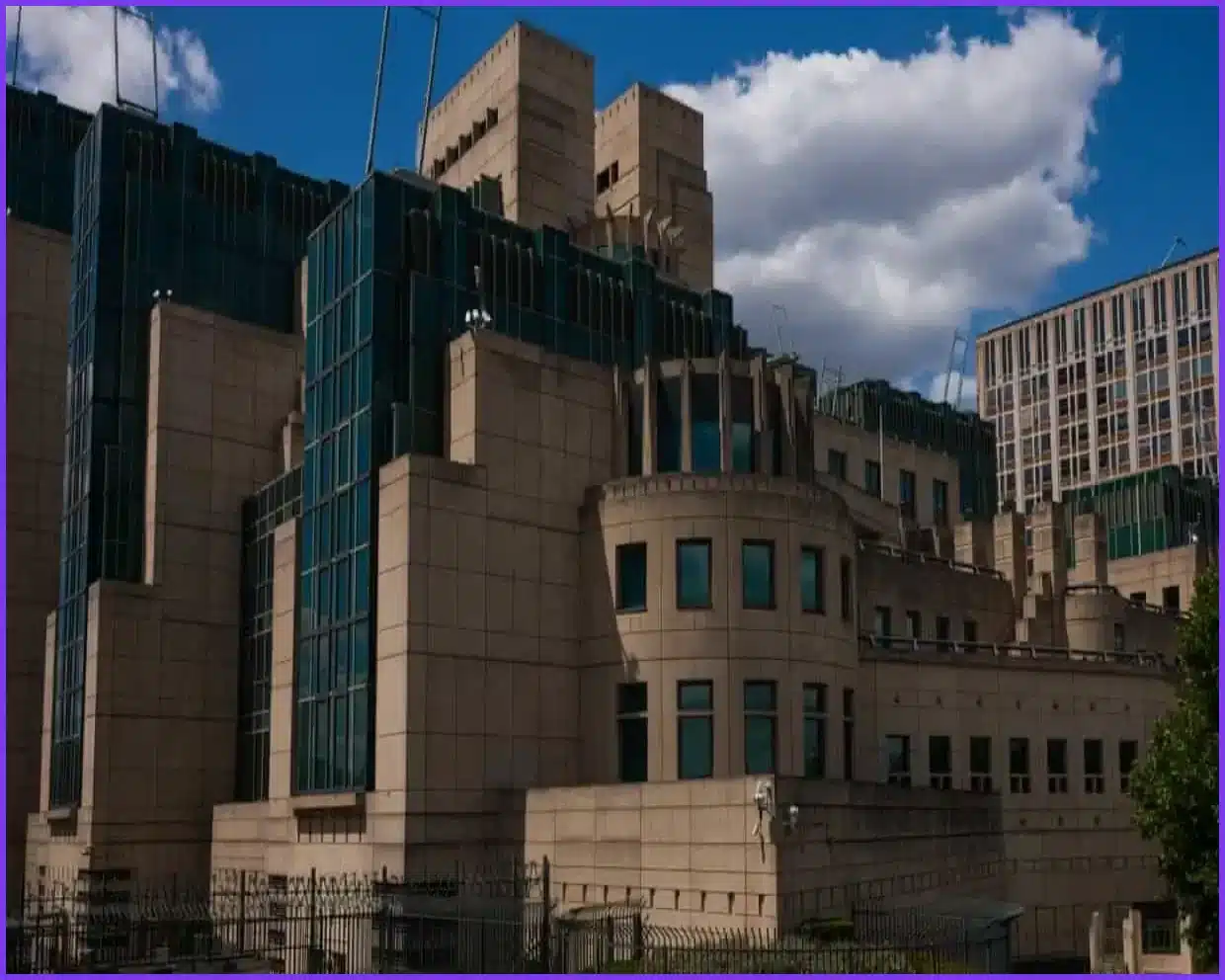
Britain’s Secret Intelligence Service, widely known as MI6, has secured the top spot as Europe's premier espionage agency in a secret poll of international intelligence professionals. The survey, conducted by the French news weekly L’Express, placed the British agency significantly ahead of its French counterpart, the DGSE, reflecting a deep-seated respect among global allies and adversaries alike.
The Eurovision-style poll gathered secret ballots from 60 current and former spies across Europe, as well as representatives from the US Central Intelligence Agency (CIA) and Israel’s Mossad. Among the respondents were 17 current or former agency chiefs. MI6 dominated the rankings with 251 points, while the French DGSE trailed in second place with 169 points. Alexandra Saviana, a deputy editor at L’Express specializing in defense and intelligence, noted that while the victory itself was not entirely unexpected, the massive point gap between the top two positions surprised observers.
Inside MI6’s headquarters in Vauxhall, London, the agency’s chief, Blaise Metreweli, has maintained public silence. However, insiders report a quiet satisfaction with the result, as the agency places high value on its international standing. A former Whitehall insider remarked that reputation is a crucial asset in the global espionage arena. According to L’Express, the fascination with British intelligence extends far beyond Europe, driven largely by MI6's historical focus on human intelligence (HUMINT) in an era increasingly dominated by satellite surveillance, intercepts, and technology.
A former French DGSE spy told the magazine that the British excel at playing the long game, demonstrating a willingness to cultivate and rely on high-level human sources over a decade or more, a trait they compared to Russian intelligence methods. The former spy also claimed the British have a "penchant for underhand tactics," though they did not elaborate further. Nevertheless, some skepticism remains. One former intelligence officer cautioned that a human intelligence agency is only as effective as the high-value assets currently on its books, pointing to previous concerns under former MI6 chief Richard Moore that the agency did not possess enough of them. Others suggested that GCHQ, the UK's signals intelligence agency, deserved equal credit, though it was not included in the poll.
MI6's enduring reputation is built on legendary Cold War operations, such as the recruitment of Oleg Gordievsky. The KGB double agent worked for the UK throughout the late 1970s and early 1980s, providing intelligence that helped convince Prime Minister Margaret Thatcher to engage seriously with Mikhail Gorbachev. Gordievsky was eventually smuggled out of Russia into Finland in 1985 after his cover was blown.
However, the agency has also faced severe setbacks and tragedies. Alireza Akbari, a former Iranian deputy defense minister who held dual British citizenship, was arrested during a return to Iran in 2019 and executed in 2023. Before his execution, Akbari confessed to working for MI6. While the confessions were widely believed to have been coerced, multiple international intelligence sources indicated he was indeed the source who revealed the existence of Iran's Fordow nuclear enrichment site in 2008.
The agency's lowest point in recent history occurred during the run-up to the 2003 Iraq war. MI6 was heavily criticized for uncritically backing the case for military action, promoting false source material that claimed Saddam Hussein could deploy chemical weapons within 45 minutes. One of those sources described chemical delivery systems that closely resembled a device featured in the Hollywood action film The Rock.
According to L’Express, MI6 rehabilitated its standing through its performance prior to the February 2022 invasion of Ukraine. Working alongside the CIA, the British agency accurately warned of Russia's imminent invasion plans, while French and German intelligence agencies remained skeptical. The misjudgment was so pronounced that the chief of Germany's BND intelligence service flew into Kyiv just a day before the invasion, apparently caught off guard by the outbreak of war.
The successful prediction highlights the strength of the UK's close relationship with the CIA and the broader Five Eyes alliance, which includes the US, UK, Australia, Canada, and New Zealand. This intelligence-sharing partnership remains highly coveted by European nations, with Saviana noting that "every other country wants to say they are the sixth eye."
The legendary status of British spies is also aided by fiction. Gordon Corera, co-presenter of The Rest is Classified podcast, recalled a story told by a former MI6 chief about a young officer sent to a remote location. Unsure if his target spoke English, the officer was greeted by the contact extending a hand and saying, "Hello, Mr. Bond." The former chief remarked that a representative from the Belgian secret service would unlikely receive such a warm welcome.
Related Articles

Md. Kazi Bijoy is a dedicated tech enthusiast and content creator with a passion for digital innovation. With years of experience in the tech industry, he specializes in breaking down complex topics into easy-to-understand guides. When he isn’t writing, he explores the latest gadgets and researches emerging trends in the digital world.
1 thought on “MI6 Ranked Europe’s Top Spy Agency in Secret Poll”