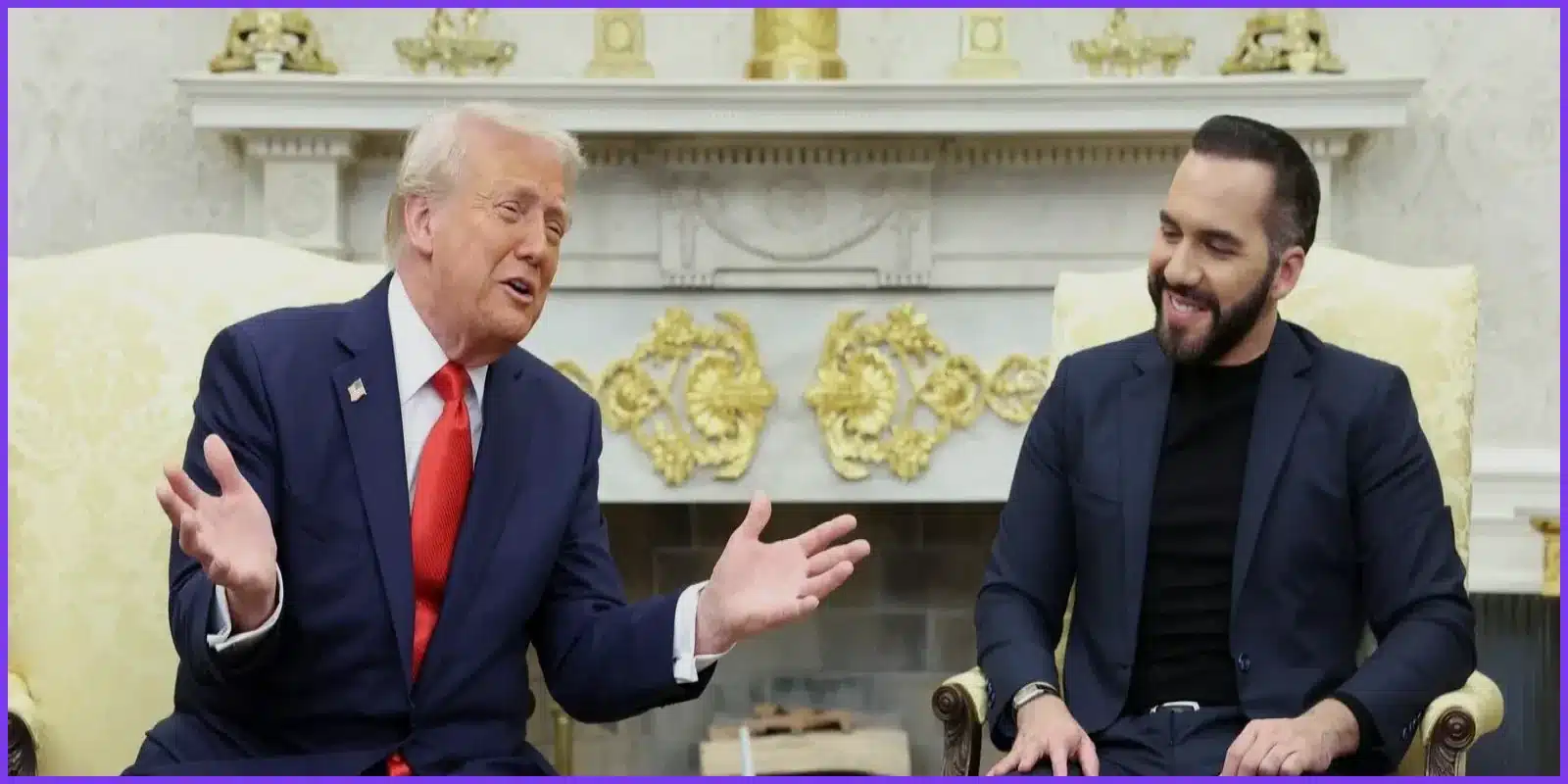
At the inaugural Shield of the Americas Summit in Doral, Florida, Donald Trump stood before a room of Latin American leaders, surveying a political landscape he has actively sought to reshape. His audience consisted of right-wing allies, handpicked candidates, and ideologically aligned governments that mirror his political brand. Among them were Argentinian President Javier Milei, whom Trump endorsed and offered a $20 billion bailout, and Honduran President Nasry Asfura, who secured a narrow victory with Trump's backing. Reflecting on his influence, Trump boasted to the gathering, "They are losing and they beg me for an endorsement. I give them an endorsement. They win by 30 points. If I could sell that, is there a way?"
This approach marks a significant departure from previous American presidencies. Trump has actively endorsed candidates and favored governments in Latin America that align with his domestic and international vision, reviving the 19th-century Monroe Doctrine as a framework for U.S. intervention. By leveraging the strength of the U.S. military and threatening to withhold foreign aid, Trump has sought to reestablish American dominance across the Western Hemisphere.
The rebranding of the regional alliance was on full display during the March 7 launch of the Shield of the Americas. This new U.S.-led coalition effectively replaced the Clinton-era Summit of the Americas, which was established in 1994 in Miami to host a politically diverse group of leaders from across the region. While the 1994 summit featured a broad agenda covering economics, democratization, and transnational security, Trump's Shield of the Americas has a much narrower, security-focused scope, emphasizing the use of lethal military force to eliminate suspected drug smugglers. It also excluded regional giants like Brazil and Mexico, whose leaders have defied Trump's administration.
Over the past year, this aggressive strategy has manifested in direct actions across several nations. In Ecuador, the United States partnered with local forces to conduct military strikes against suspected drug traffickers. However, an investigation revealed that one highly publicized bombing operation in the Amazon targeted a border dairy farm near Colombia rather than a drug compound. Meanwhile, in El Salvador, the administration contracted with President Nayib Bukele to imprison deportees in a newly constructed mega-prison, accusing hundreds of Venezuelan nationals of belonging to the Tren de Aragua gang, despite most of the imprisoned men having no prior criminal history. Trump hosted Bukele at the White House in 2025 to celebrate this partnership.
Trump's influence has also heavily impacted Colombia. He repeatedly threatened the nation with military action, sanctioned its former leftist president, Gustavo Petro, and accused Petro of involvement in drug trafficking. Trump subsequently threw his support behind conservative Abelardo de la Espriella, who was inaugurated as Colombia's president on August 7. De la Espriella, a dual Colombian and U.S. citizen, has promised to assist Trump in a sweeping crackdown on organized crime, pledging to continue military strikes against suspected drug-running vessels and proposing the construction of several mega-prisons modeled after El Salvador's facilities.
Political analysts note that this wave of conservative leadership represents a distinct shift from traditional Latin American conservatism. William LeoGrande, a professor specializing in Latin American politics at American University, observed that these leaders are "pretty far right wing" and include "true outsiders, just like Donald Trump," differing significantly from the types of conservative governments that would have felt a kinship with former President George H.W. Bush. A senior White House official explained that the spread of the MAGA movement has allowed Trump to support like-minded candidates as a means to address migration and illicit drug flows. Will Freeman, a fellow for Latin America studies at the Council on Foreign Relations, added that Trump finds personal satisfaction in shaping the politics of an entire region, treating U.S. influence as a tangible power rather than the "lip service" of past administrations.
Historically, U.S. presidents have avoided direct interference in foreign elections. While the administration of Barack Obama sought to keep foreign leaders away from the White House close to their elections, Obama did offer a soft endorsement of German Chancellor Angela Merkel during a late 2016 visit to Berlin, stating, "If I were here, and I were German, and I had a vote, I might support her. I don’t know whether that hurts or helps." However, Ricardo Zuniga, a career diplomat who served as senior director for Western Hemisphere Affairs at the National Security Council under Obama, emphasized that Trump's actions in Latin America are fundamentally different. Trump has utilized social media to issue full-throated endorsements and has threatened direct consequences, such as cutting off aid to Honduras if voters chose a candidate other than Asfura. "That level of activism, that's quite unusual," Zuniga remarked.
Rather than relying on traditional soft power—such as humanitarian aid, diplomatic warnings, and Oval Office meetings—Trump has gutted foreign assistance and leaned heavily on threats of military force. This "carrot-and-stick" approach has been largely coordinated by Cuban-American Senator Marco Rubio, whom Trump empowered to execute his regional plans.
The administration's most aggressive intervention has occurred in Venezuela. The U.S. effectively turned the country into a protectorate after seizing its state-owned oil assets, sidelining Venezuelan leader Nicolás Maduro, and backing his second-in-command, Delcy Rodríguez, as interim president. Speaking at an August 5 campaign rally in Nevada, Trump openly discussed this strategy, stating, "Now, I love Venezuela. We’re taking a lot of oil from Venezuela. And we’re getting along great with them. It's the old-fashioned way: to the victor, belong the spoils."
This transaction-based approach has drawn sharp criticism from former diplomats and even administration allies. Zuniga warned that such rhetoric severely damages U.S. credibility, making the nation appear as though it is blocking democratic players to endorse an extension of a prior dictatorship. Carrie Filipetti, who served as deputy assistant secretary for Cuba and Venezuela during Trump's first term, argued that the endorsement of Rodríguez has directly undermined previous policy successes. Filipetti pointed out that Rodríguez commands the support of only about 6 percent of the Venezuelan population and has empowered figures like Diosdado Cabello, an alleged drug lord serving as the minister of interior, justice, and peace. Consequently, U.S. businesses remain hesitant to invest due to concerns over the lack of the rule of law.
The effectiveness of Trump's interventions remains a subject of debate. In Honduras, where Trump warned there would be "hell to pay" if Asfura lost, the endorsement did provide a political boost. Freeman noted that smaller nations closely tied to the U.S. face a severe power asymmetry and risk material harm if they fall out of favor with the White House. Yet, Trump has been selective with his endorsements, choosing not to back a candidate in Peru's election and delaying his endorsement of Colombia's de la Espriella until the second round of voting in June.
The ultimate test of Trump's regional influence will likely unfold in Brazil's upcoming October presidential election. Trump has yet to officially endorse a candidate in the tight race between sitting leftist President Luiz Inácio Lula da Silva and Flavio Bolsonaro, the son of Trump ally and former Brazilian President Jair Bolsonaro. Trump has frequently clashed with Lula's government over the prosecution of the elder Bolsonaro, who was convicted of plotting an attempted coup. Zuniga, who served as U.S. consul general in Sao Paulo, noted that Lula has benefited in the polls by framing himself as a defender of Brazil against hostile U.S. policies. Although Flavio Bolsonaro visited the White House in late May and posted a photo with Trump in the Oval Office, he maintained to reporters that he had not formally requested an endorsement.
Meanwhile, the long-term impact of the Shield of the Americas remains unclear. Richard Feinberg, a distinguished professor at the University of California, San Diego, who helped plan the 1994 summit, noted that months after its creation, the coalition has shown little concrete action. Feinberg pointed out that the U.S. has announced no new assistance programs or funding pledges, suggesting that the strategy of "fighting the bad guys" is primarily designed to project strength to Trump's domestic political base rather than appeal to Latin American audiences, where such aggressive language is highly unpopular and perceived as arrogant. Aside from a joint statement in June supporting Colombia's electoral process, the coalition remains in what Jason Marczak of the Atlantic Council described as a "nascent stage." Nevertheless, the administration's revival of the Monroe Doctrine serves as a clear signal of its intent to prioritize the Western Hemisphere over traditional European alliances while warning global competitors like China and Russia against expanding their influence in the region.
Related Articles
Md. Kazi Bijoy is a dedicated tech enthusiast and content creator with a passion for digital innovation. With years of experience in the tech industry, he specializes in breaking down complex topics into easy-to-understand guides. When he isn’t writing, he explores the latest gadgets and researches emerging trends in the digital world.