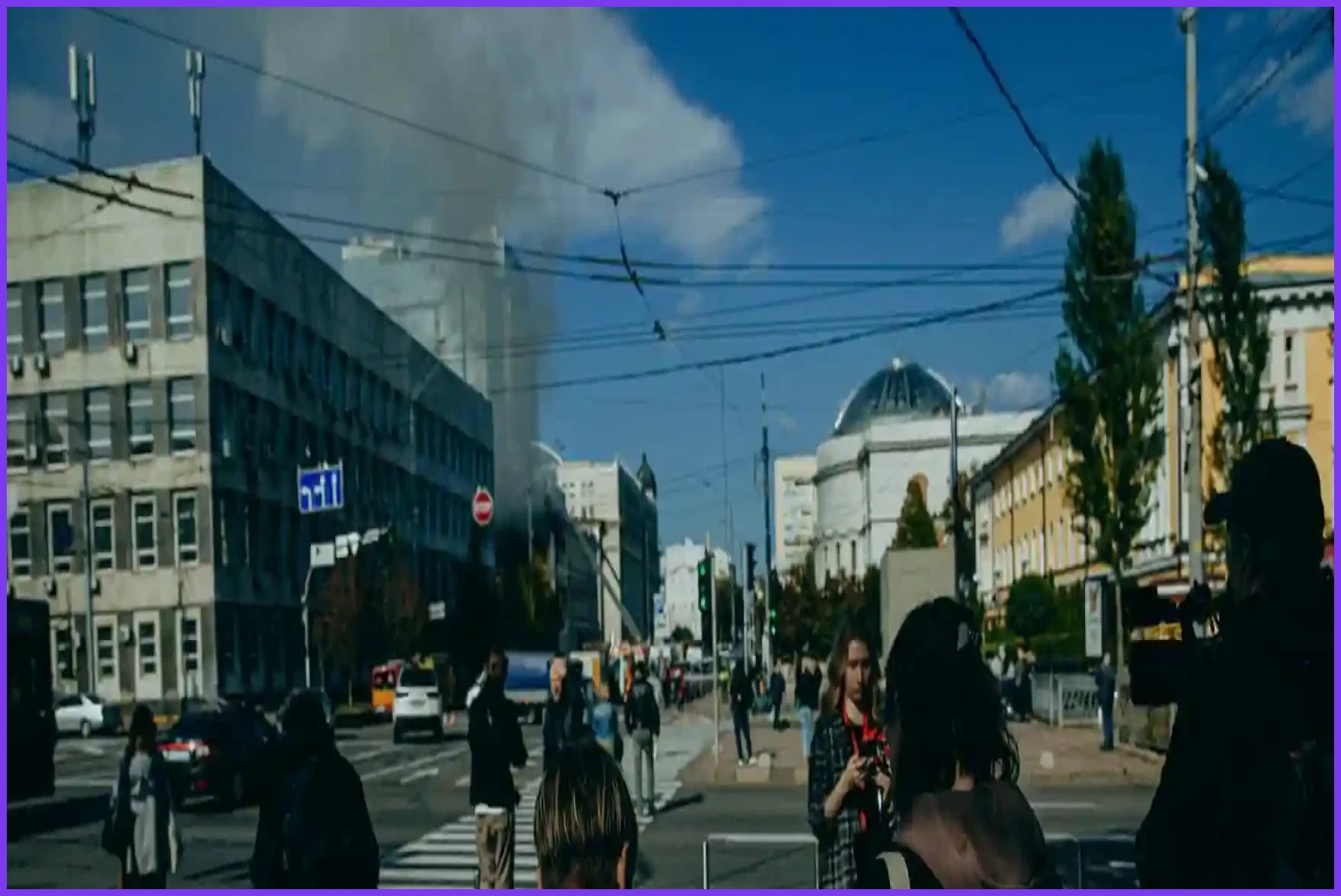
Kyiv is currently navigating its most perilous phase since the onset of the Russian invasion, as a surge in missile and drone strikes fundamentally alters the daily rhythm of the Ukrainian capital. Mayor Vitali Klitschko has publicly stated that residents can no longer maintain the illusion of peacetime, noting that the enemy is actively tearing the city apart. The capital is entering a dramatic situation, with many residents feeling that the hardship they anticipated for the coming winter has arrived early.
The impact of these intensified attacks is increasingly visible in the lives of Kyivans. Valeriya Tkachenko, a local lawyer, described the terror of hearing air raid alerts while dropping her son off at school, forcing them to spend hours in a shelter. The situation is compounded by the fact that Russian forces have recently struck a nearby school. For commuters like IT worker Artem Marchenko, the destruction of infrastructure has become a reality; he was forced to abandon his car and walk for 20 minutes across the damaged Pivdennyi Bridge on Friday morning, raising fears that Moscow intends to paralyze movement across the city of 3 million people, which is divided by the Dnipro.
This week, Russian missiles and drones have targeted a wide range of civilian and strategic sites, including offices, datacentres, a school, a hospital, and one of the city's main bridges. Moscow has also expanded its campaign to include energy infrastructure, striking a thermal power plant and leaving multiple neighbourhoods without power or water by morning. President Volodymyr Zelenskyy, in an interview with the Financial Times, remarked that Vladimir Putin has directed his commanders to disregard the rules of war, aiming to force Ukrainians to abandon the capital to undermine the nation's morale and sovereignty.
Kyiv is struggling with a shortage of Patriot interceptors while facing a new generation of faster, jet-powered Russian drones that are significantly harder to neutralize. Although three defence industry sources indicate that Ukraine is fast-tracking new interceptor drones, they warned that achieving scale could take weeks or months. Meanwhile, the broader conflict shows a stark contrast between battlefield progress and rear-guard vulnerability. Military analyst Mykola Bielieskov noted that while Ukraine has seen some success in land-based counteroffensives, such as the Vivaldi operations in the east, the vulnerability of the rear remains a critical strategic weakness that Moscow is exploiting.
Ukrainian officials have alerted European counterparts to an intercepted Russian plan to deploy up to 1,000 missiles, drones, and bombs against the country’s energy system, aiming to trigger a humanitarian crisis by plunging cities into darkness and cold. A senior western diplomat in Kyiv described the intent as a plan to freeze the capital and force it back into the stone age. While western diplomats publicly maintain their presence in the city to avoid a propaganda victory for Moscow, private discussions regarding contingency plans to relocate embassies to Lviv or Poland are reportedly underway as the situation deteriorates.
Moscow captured about 361 sq km in September, according to the military analyst Konrad Muzyka, an increase on recent months but still far short of the pace needed to seize the rest of the Donbas before winter, when offensive operations typically become more difficult.
Related Articles

Meet Md. Rubel Rana
As a core contributor to Worlddincidents.com, Rubel Rana brings a unique perspective to the world of journalism. Whether it’s deep-diving into historical trivia or covering the latest global headlines, Rubel Rana is committed to delivering high-quality, high-impact articles. Their writing blends meticulous research with a compelling voice, helping readers stay informed and curious about the world around them.