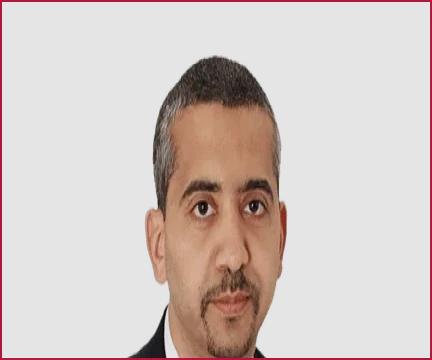
Western media outlets have shown a persistent fascination with Gadi Eisenkot, the former military chief and leader of the newly formed Yashar party. As Israel approaches its October elections, Eisenkot has been widely embraced by the international press as the primary "anti-Netanyahu" candidate. Headlines from major publications like the Times of London, the Daily Telegraph, and the New Yorker have highlighted his personal tragedy—the loss of his son in Gaza—to frame him as a compelling challenger to the current prime minister.
However, this narrative of a moderate alternative is being challenged by those who point to Eisenkot’s own extensive military and political record. Between October 2023 and June 2024, Eisenkot served as a member of Benjamin Netanyahu’s war cabinet. During this period, the Israeli military campaign in Gaza resulted in the deaths of more than 30,000 Palestinians and the destruction of schools, hospitals, refugee camps, and residential buildings. While Eisenkot eventually resigned from the cabinet in 2024, his departure was based on disagreements regarding strategic failures, not the scale of the death toll. Even in a sympathetic profile by David Remnick in the New Yorker, it was noted that Eisenkot remains reluctant to condemn Netanyahu for the duration and severity of the war.
Eisenkot’s history of overseeing military operations against Palestinians is well-documented. As Israel’s chief of staff during the 2018 and 2019 "Great March of Return," he directed the response to mass demonstrations against the siege of Gaza. A UN commission of inquiry concluded that Israeli snipers killed more than 200 Palestinians, including dozens of children, and found reasonable grounds to believe that demonstrators were shot in violation of their right to life despite posing no imminent threat.
His political positions also contradict the "moderate" label often applied to him. While he opposes the current government’s specific annexation plans, he has explicitly rejected the two-state solution. In a June interview, Eisenkot declared, "I have never said two states for two peoples," and affirmed his belief in settlement expansion in the occupied West Bank, which is considered illegal under international law. Furthermore, as head of Israel’s Northern Command in 2006, he became synonymous with the "Dahiya Doctrine," a strategy of deterrence based on the widespread destruction of civilian infrastructure. In 2008, he stated that Israel would apply disproportionate force to any village from which it was fired upon, a policy that critics describe as an undeniable war crime.
The danger, according to critics, is that Eisenkot projects a "sober and reasonable" image that could neutralize Western liberal opposition to Israeli policies. By replacing Netanyahu with a figure who appears more humble, the Israeli military and settler movement could potentially continue their expansionist policies under a more palatable brand. Eisenkot is not an isolated case; he is part of a broader opposition group of retired generals, including Benny Gantz and Yair Golan, who have also made controversial statements regarding Gaza. Ultimately, while the end of the Netanyahu era may be approaching, the fundamental direction of Israeli policy regarding occupation and conflict remains a point of significant concern for Palestinians and the wider Middle East.
It’s a fair question. But perhaps British and American commentators aren’t the right people to answer it.
“I very much believe in settlement in Judea and Samaria,” he continued, using the biblical term for the occupied West Bank.
Related Articles

Mr. Udoy is a professional Web Developer and Blogger with 7+ years of experience in the tech world. He specializes in web architecture and digital storytelling. As the driving force behind worldincidents.com, he focuses on delivering high-quality, well-researched content to a global audience.