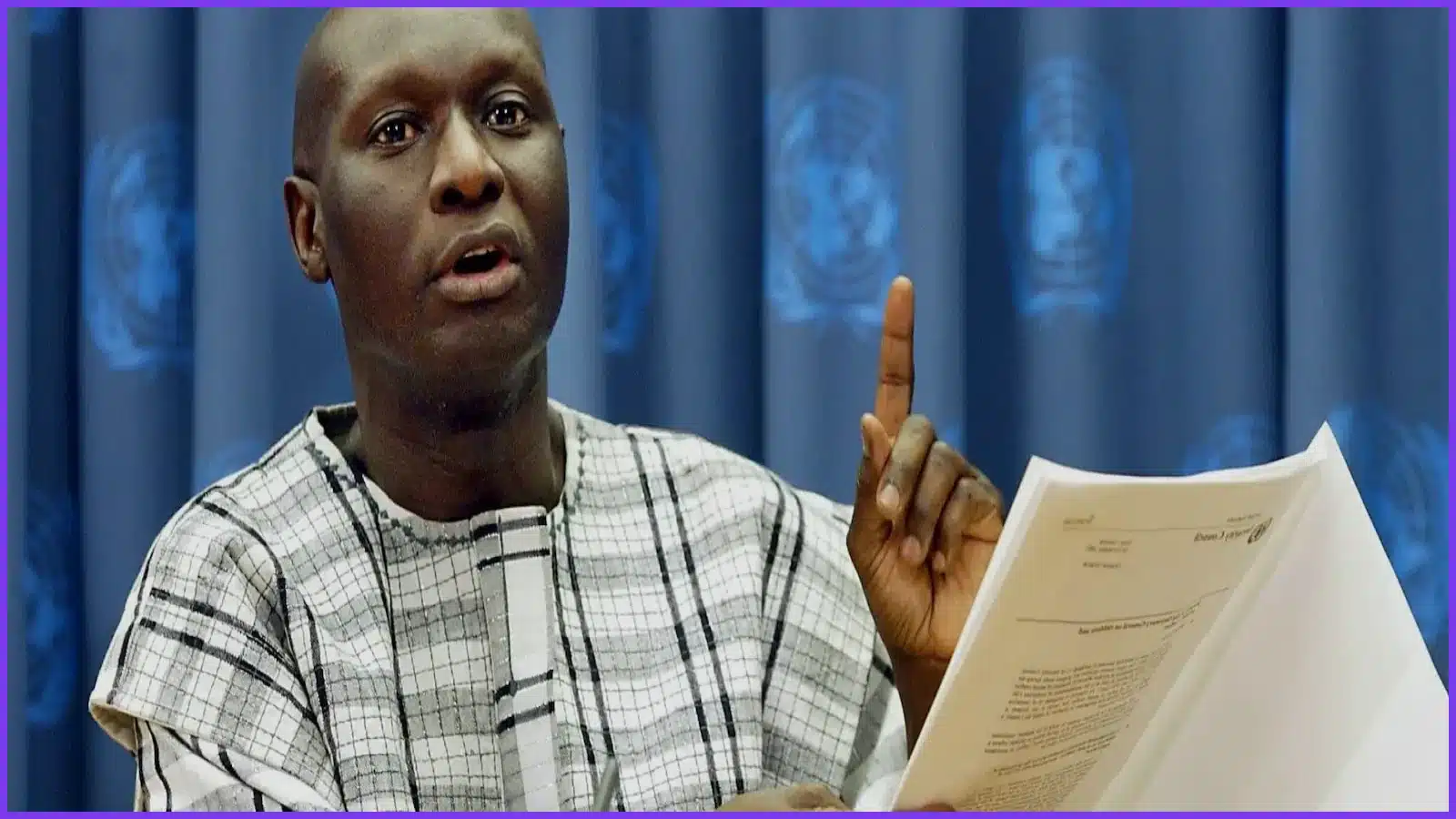
Olara Otunnu, a 75-year-old Ugandan statesman and veteran of the United Nations system, has officially entered the race to become the next secretary-general of the United Nations. Adonia Ayebare, Uganda’s permanent representative to the U.N., confirmed that Otunnu is currently in New York to engage in dialogue with the U.N. General Assembly and the Security Council. The candidate required visa assistance to travel, as Ugandan citizens are currently restricted from entering the United States due to measures intended to curb the spread of Ebola.
Otunnu’s candidacy comes after he retired from active politics following an unsuccessful run for the Ugandan presidency in 2011. His professional background includes a tenure as Uganda’s representative to the U.N. between 1980 and 1985, during which he served as president of the Security Council. He also held the position of Uganda's foreign minister during the 1980s. An alumnus of Oxford and Harvard Law School, Otunnu is widely regarded within Uganda as an elder statesman.
Reflecting on the role, Otunnu emphasized that peace and security remain the primary mandate for the organization. He noted his historical contribution to the U.N. process, specifically his design of the straw balloting system—often referred to as the "Otunnu Formula"—which was first implemented during the 1981 selection of Javier Pérez de Cuéllar. In 1997, Otunnu was previously considered a favorite for the secretary-general role, but his candidacy was blocked by the same Ugandan government that is now supporting his current bid. At that time, he led the International Peace Institute in New York and had a strained relationship with President Yoweri Museveni.
While the timing of his nomination remains a point of curiosity, as he entered the race several weeks after other candidates, he is viewed by some observers as a potential "dark horse." Analyst Angelo Izama of the Fanaka Kwawote think tank described Otunnu as a safe alternative, noting that he could serve as a fall-back option if the leading Latin American candidates fail to secure the necessary support. The selection process is complicated by a traditional regional rotation, with this year expected to favor Latin American candidates, although there is no formal barrier preventing contenders from other regions.
Other individuals seeking to replace Guterres include Senegal’s Macky Sall, Chile’s Michelle Bachelet, Argentina’s Rafael Grossi, Costa Rica’s Rebeca Grynspan, Ecuador’s Maria Fernanda Espinosa, and Guyana’s Carolyn Rodrigues Birkett. The final decision rests with the 15-nation Security Council, where the five permanent members—the U.S., Russia, China, the United Kingdom, and France—hold veto power. Following a successful nomination by the Council, the 193-member General Assembly must grant final approval. The new secretary-general is scheduled to assume office on January 1.
Related Articles

Mr. Udoy is a professional Web Developer and Blogger with 7+ years of experience in the tech world. He specializes in web architecture and digital storytelling. As the driving force behind worldincidents.com, he focuses on delivering high-quality, well-researched content to a global audience.