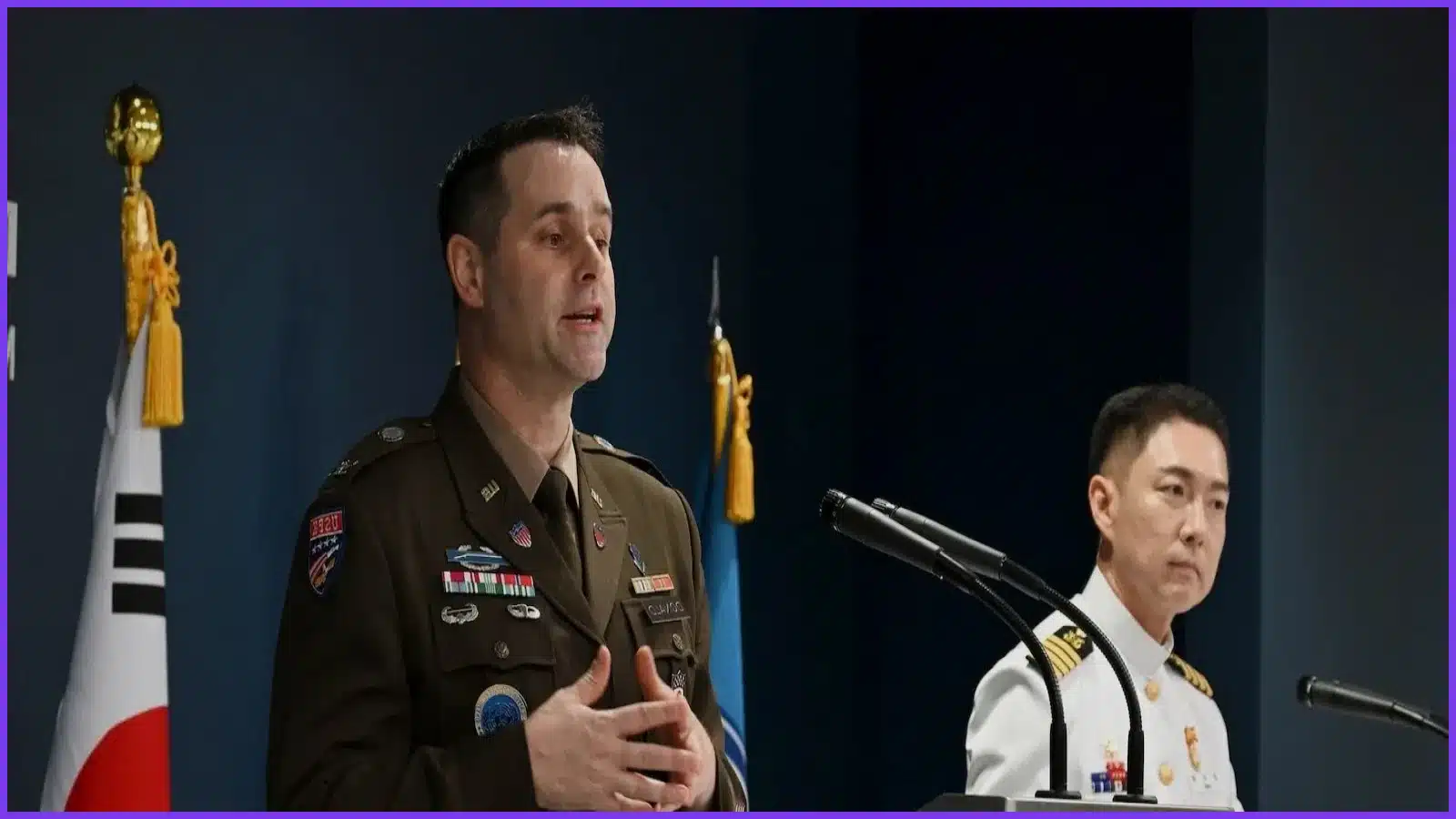
South Korea and the United States will launch their major annual joint military exercises next week to enhance defensive readiness against North Korean threats. The announcement on Monday comes shortly after North Korea resumed its banned ballistic missile testing activities.
The summertime drill, known as Ulchi Freedom Shield, is scheduled to start next Monday and run for 11 days. South Korean military spokesperson Jang Do-young told reporters that the scale of the exercise will remain similar to previous years, with approximately 18,000 South Korean soldiers taking part.
This year's training will integrate realistic threats, incorporating "lessons from recent conflicts" to bolster the alliance's combined, joint, and all-domain operations. U.S. military spokesperson Ryan Donald highlighted North Korea's recent deployment of troops to support Russia's war in Ukraine as a key factor in preparing for evolving threats.
"DPRK soldiers have been deployed and fought in Ukraine and they’ve taken those lessons they learned there and brought them back to North Korea," Donald said during a joint news conference, using the abbreviation for North Korea's official name, the Democratic People's Republic of Korea. He added, "That changes the DPRK capability and our training accounts for that threat."
Ulchi Freedom Shield is one of two primary joint exercises held annually by the allies, alongside their springtime drills. According to the U.S. military, the exercise will feature a combination of "live, virtual, constructive and field-based training." While North Korea did not issue an immediate response, Pyongyang has historically condemned these exercises as invasion rehearsals, often reacting with weapons tests and aggressive rhetoric. Washington and Seoul maintain that the drills are strictly defensive.
The drill's announcement follows a short-range ballistic missile test by North Korea last Thursday, which was detected by South Korea, the U.S., and Japan. The missile, which landed off North Korea's eastern coast, marked the country's first ballistic launch since late June. Both Seoul and Tokyo condemned the test as a provocation, citing multiple United Nations Security Council resolutions that ban North Korea from conducting any ballistic activities. The U.S. Pacific Command reaffirmed its ironclad commitment to defending the American homeland and its regional allies.
Since the collapse of high-stakes denuclearization talks between North Korean leader Kim Jong Un and former U.S. President Donald Trump in 2019, Pyongyang has steadily expanded its nuclear and missile programs. Analysts believe Kim intends to leverage a larger arsenal to extract greater concessions in potential future negotiations with Washington. Furthermore, North Korea's provision of troops and ammunition to Russia has fueled international concern that Moscow may be sharing sensitive military technologies to boost Pyongyang's nuclear capabilities, while also providing North Korean forces with invaluable real-world combat experience.
Related Articles

Mr. Udoy is a professional Web Developer and Blogger with 7+ years of experience in the tech world. He specializes in web architecture and digital storytelling. As the driving force behind worldincidents.com, he focuses on delivering high-quality, well-researched content to a global audience.