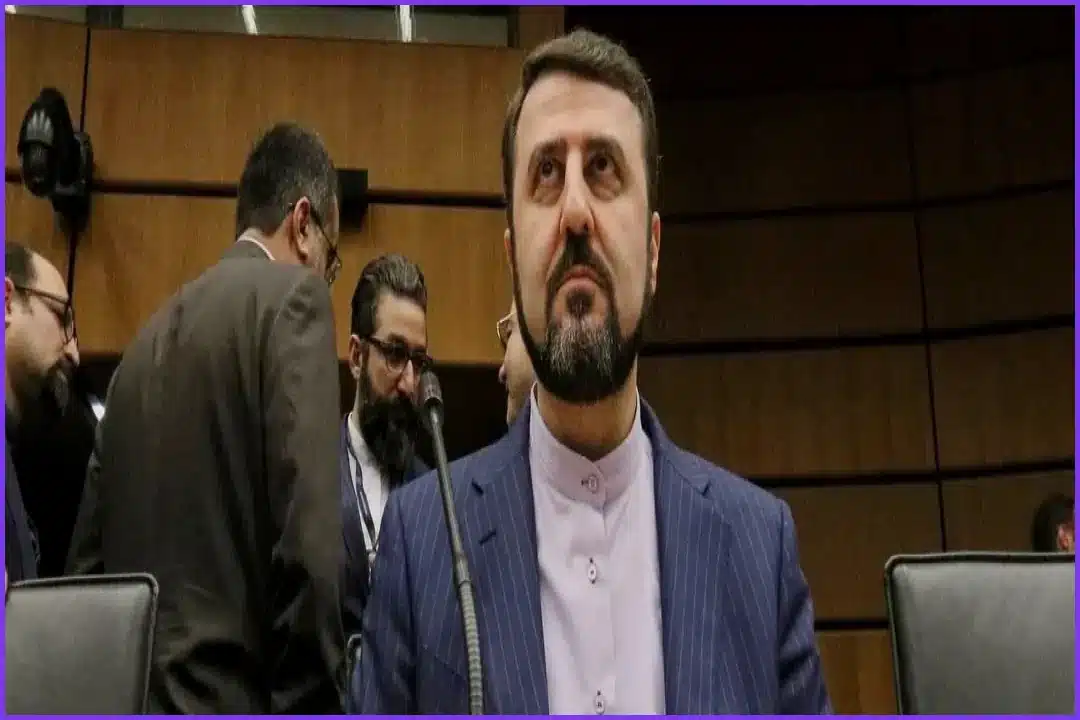
Iranian authorities have formally challenged a recent statement from US President Donald Trump regarding the future status of the Strait of Hormuz. During a political rally in New York state on Friday, Trump stated that he intended to declare the vital energy waterway a territory of the United States following a victory over Iran. However, an unnamed White House official later informed the Wall Street Journal that the president’s remark was intended as a joke.
Tehran responded sharply to the suggestion. Iranian Deputy Foreign Minister Kazem Gharibabadi took to the social media platform X to reaffirm his country's position, stating, "The Strait of Hormuz has been Iranian, is Iranian, and will remain Iranian." He added that the waterway would only be subject to opening or closing under Iran’s command. The strait, which served as a transit point for roughly one-fifth of global oil and LNG exports prior to the current conflict, has been effectively closed by Tehran since the start of the regional war in late February.
Tensions in the region remain elevated as diplomatic efforts have stalled. Last week, senior Iranian official Mohammad Bagher Zolghadr outlined specific conditions for the potential reopening of the strait, including an end to what he described as "war and aggression against Iran and its allies in Lebanon, Palestine, Yemen, and Iraq." He also demanded the lifting of sanctions and the provision of wartime compensation.
Meanwhile, the security situation for commercial shipping continues to deteriorate. On Saturday, the United Arab Emirates’ state-owned oil giant ADNOC reported that one of its vessels was attacked the previous night. Abu Dhabi officials subsequently accused the Iranian Revolutionary Guards of engaging in "acts of piracy." This follows a separate accusation from the UAE on Friday regarding attacks on two other ADNOC-linked vessels. These incidents have further jeopardized the fragile framework established in June, which aimed to have Iran and Oman coordinate future arrangements for the strait in accordance with international law. The previous April ceasefire between Washington and Tehran collapsed following similar maritime incidents. US Vice President JD Vance emphasized this week that Washington’s primary focus remains the maintenance of low domestic energy prices.
Related Articles

Md. Kazi Bijoy is a dedicated tech enthusiast and content creator with a passion for digital innovation. With years of experience in the tech industry, he specializes in breaking down complex topics into easy-to-understand guides. When he isn’t writing, he explores the latest gadgets and researches emerging trends in the digital world.