A sweeping domestic crackdown on online scam compounds in Cambodia, initially forced by a violent border conflict with Thailand, has been transformed by the country's ruling elite into a powerful mechanism to seize billions of dollars in real estate, expand its military capabilities, and entrench authoritarian control.
The shift represents a dramatic turnaround for Cambodia's political dynasties. Faced with intense pressure from the United States, China, and other international partners to address a forced-labor scam industry estimated to generate half of the nation's gross domestic product, the government has managed to turn its diplomatic rehabilitation project into a domestic asset. Rather than losing their grip on power, Cambodia's ruling families are leveraging the crackdown to commandeer massive infrastructure built by criminal syndicates and secure military assistance from global powers.
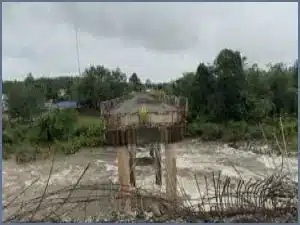
The catalyst for the crackdown was a border dispute with Thailand that escalated into active combat. In mid-2025, the Thai military began launching airstrikes against scam hubs on Cambodian soil, framing the operations as a "war against scammers" to contain a global security threat that fuels corruption and human trafficking. On December 13, 2025, a Thai F-16 airstrike destroyed the Me Teuk Bridge, the primary route into the border town of Thmor Da in Pursat province.
Weeks later, on December 27, 2025, Thai forces launched a heavy aerial and drone bombardment on a casino-scam compound in the jungle outpost of Choam, where Khmer Rouge dictator Pol Pot is buried. Trafficking survivors described sheltering in concrete drains while scam bosses hung Chinese flags from windows in a futile attempt to signal that the buildings were not under Cambodian military control. While Thailand claimed its operations were strictly directed at military targets used by Cambodian forces as bases and arms depots, survivors reported seeing no Cambodian military presence in the targeted compounds prior to the attacks.
Faced with a superior military force and under pressure from international allies, Cambodia pivoted from denying the existence of the scam industry to launching an aggressive domestic crackdown. Officials now claim the campaign has shut down more than 250 compounds and driven 300,000 scammers out of the country. Many of these compounds are not single buildings but massive, purpose-built real estate developments worth billions of dollars.
According to Senior Minister Chhay Sinarith, chairman of the Commission for Combating Online Scams, these seized properties have been converted into state assets. This massive transfer of private wealth has directly benefited a political establishment with deep ties to the targeted operations. Among the seized locations are #8 Park and Golden Fortune Science & Technology Park, both sanctioned by the United States, the United Kingdom, and the European Union for forced labor and online fraud. Both compounds were operated under the Prince Holding Group, a conglomerate founded by Chen Zhi, who has served as a personal adviser to Prime Minister Hun Manet, his father Hun Sen, and Interior Minister Sar Sokha.
The Cambodian government is rapidly repurposing these high-security compounds. The General Department of Prisons announced that the emptied #8 Park site is being prepared for use as a prison facility, while the former "Mango 2 Park" compound has already been converted into an immigration detention center overseen by the Interior Ministry. Conditions inside these repurposed facilities are reportedly severe, with survivors describing chronic overcrowding and open sewage flowing through cells in stifling heat.
This expansion of prison infrastructure comes as Cambodia faces a critical overcrowding crisis, with its prison population tripling over the last decade to reach 400 percent of capacity. The surge has been driven by minor drug arrests and a widening crackdown on political dissent, environmental activists, and journalists. In February, two Cambodian journalists were sentenced to 14 years in prison for taking a border photograph that inadvertently showed unplanted landmines, a move authorities labeled as prejudicial to national defense.
To ease prison overcrowding and support the military, the government has begun transferring nearly 800 juvenile offenders to border prisons. Under a "vocational" program, these juveniles are being deployed to assist military engineering and construction operations in Pursat and Oddar Meanchey provinces, close to active conflict zones like Thmor Da and Choam.
Despite international human rights concerns over the crackdown and the treatment of trafficking victims, Cambodia's military and political leaders are securing significant foreign defense support. In January, a U.S. Navy vessel docked at Ream Naval Base for the first time in years, and in March, the U.S. and Cambodian armies began planning the revival of the Angkor Sentinel joint exercises, which had been suspended since 2017. In July 2026, FBI Director Kash Patel met with Prime Minister Hun Manet in Phnom Penh to discuss cooperation on the anti-scam initiative.
China has also significantly expanded its military support. Following a visit by Chinese Foreign Minister Wang Yi in April, Beijing delivered 39 Type-59D tanks to Phnom Penh in June and transferred two Type-056C corvette warships. The subsequent Golden Dragon joint exercises were the largest ever conducted between the two nations, spanning land, sea, and air operations. Meanwhile, India has offered surveillance drones and demining kits, Japan signed a defense equipment agreement in July under its Official Security Assistance framework, and Russia has pledged to strengthen Cambodia's defense sector following naval visits and a meeting between Hun Manet and Russian President Vladimir Putin.
Domestically, Cambodia's national budget for 2026 reached a record $10 billion, with increased allocations for defense and security. A new conscription law enacted in May now mandates two years of military service for all Cambodian men aged 18 to 25.
Policy analysts, including Seun Sam of the Royal Academy of Cambodia, have expressed deep concern that a third round of fighting with Thailand is on the horizon, particularly if Thai forces attempt to establish permanent infrastructure in occupied border territories. Eight months after the initial ceasefire, Thai soldiers continue to occupy the ruins of former scam zones and border enclaves in Pursat, Oddar Meanchey, Banteay Meanchey, and Preah Vihear provinces.
At the border town of Thmor Da, shipping containers still block roads to form makeshift barracks for Thai soldiers, while warning signs for unexploded ordnance line the destroyed Me Teuk Bridge. Rather than seeking to de-escalate, Cambodia's ruling class appears to be utilizing the persistent threat of conflict to justify its tightening grip on the country. When a regional analyst warned that a prolonged border war would help entrench the autocratic regime, Senate President Hun Sen shared the analysis on his personal social media page, stating he would make no comment and would leave the text for the citizens of both nations to consider.
Related Articles

Mr. Udoy is a professional Web Developer and Blogger with 7+ years of experience in the tech world. He specializes in web architecture and digital storytelling. As the driving force behind worldincidents.com, he focuses on delivering high-quality, well-researched content to a global audience.
1 thought on “Cambodia Uses Border War and Scam Crackdown to Consolidate Power”