The devastating floods and landslides currently impacting communities across Tibet and Nepal represent a severe natural disaster, yet the resulting information vacuum inside Tibet is a man-made obstacle. While open reporting has emerged from Nepal, information regarding the situation in Tibet remains almost entirely dependent on the Chinese Communist Party’s tightly controlled state media. This lack of transparency is not merely an abstract issue; it is a critical barrier that may prevent the world from understanding the needs of affected Tibetans and providing essential aid.
Hundreds of people remain missing, and families are currently searching for their loved ones. Among those reported unaccounted for are foreign nationals, including Americans. As rescue teams struggle to reach communities across some of the world's most difficult terrain, they face the additional challenge of Beijing’s longstanding restrictions on access for foreign journalists, diplomats, researchers, and independent organizations. These policies, which keep the world from seeing Tibet during ordinary times, now threaten to impede the humanitarian response.
President Xi Jinping has ordered an “all-out” search, and China has mobilized hundreds of rescuers in the region. However, critics maintain that the mobilization of state power is not a substitute for independent scrutiny. If Beijing is confident in its response, it should allow the world to see the situation for itself. Humanitarian organizations require safe access to independently assess needs, journalists need to verify official accounts, and foreign governments require timely information to provide consular access to their citizens.
The disaster also highlights the reality that Himalayan climate risks, glaciers, and rivers transcend national borders. The flooding has already forced authorities in Bihar, India, to relocate residents due to concerns about downstream threats. Experts argue that China should urgently engage with Nepal, India, and other regional governments to build durable, real-time information-sharing networks and cross-border early-warning systems to ensure public safety.
For Washington, the crisis serves as a reminder of the consequences of restricted access to Tibet. The Reciprocal Access to Tibet Act was previously informed by the difficulties U.S. consular officials faced when attempting to assist Americans trapped in Tibet after the 2015 Nepal earthquake. Today, the U.S. administration is urged to press Beijing for information regarding missing Americans and to seek necessary consular access. Furthermore, as the focus shifts toward recovery, there is a critical need to ensure that Tibetans have a meaningful voice in the reconstruction process, rather than facing forced relocation or development decisions imposed without consultation.
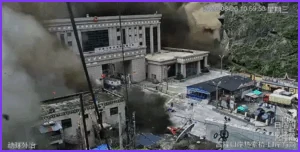
A screenshot of CCTV footage shows the moment that a massive mudslide engulfed the town of Gyirong in Tibet, China, Aug. 26, 2026.
You have reached the limit of 2 free articles this month.
Related Articles

Mr. Udoy is a professional Web Developer and Blogger with 7+ years of experience in the tech world. He specializes in web architecture and digital storytelling. As the driving force behind worldincidents.com, he focuses on delivering high-quality, well-researched content to a global audience.
1 thought on “Tibet Flood Crisis Highlights CCP Information Control and Access”