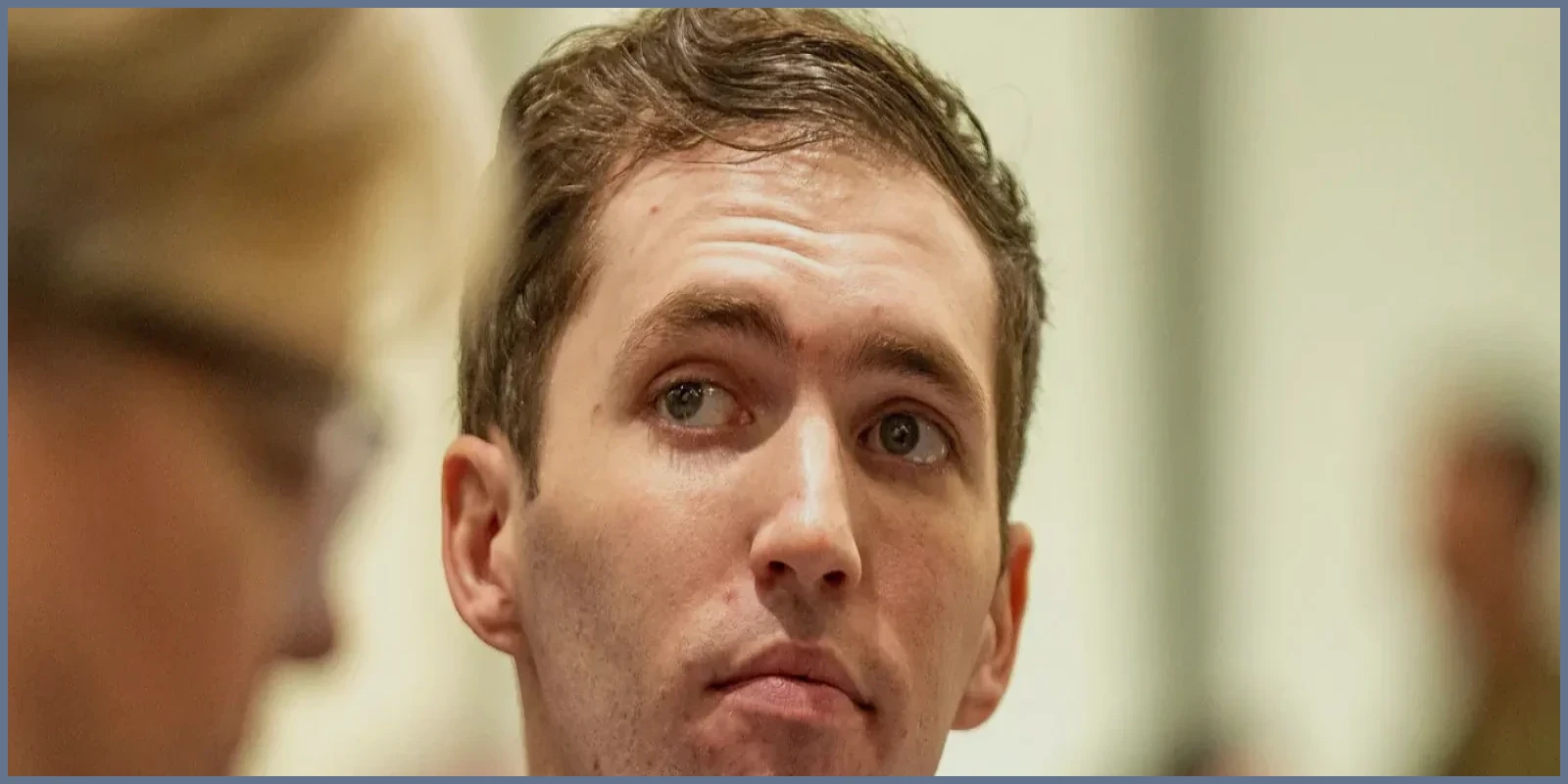
A Utah judge has ruled that 23-year-old Tyler Robinson must stand trial for the murder of conservative activist Charlie Kirk, who was shot and killed nearly a year ago while speaking at Utah Valley University. The decision, handed down on Sept. 1 by Utah Judge Tony Graf, follows a weeklong preliminary hearing held in July during which prosecutors laid out their case against Robinson.
Judge Graf determined that there is sufficient probable cause to believe Robinson committed the crime, allowing him to be tried on all seven charges brought against him, including first-degree murder. In explaining his ruling, Graf noted that he was required to evaluate the evidence presented during the July hearing "in the light most favorable to the prosecution." Addressing the standard of evidence, the judge remarked from the bench on Tuesday, "The line separating speculation from reasonable inference can be faint." However, he concluded that the "evidence is sufficient at this stage to support a reasonable belief at this stage that this is the individual that shot and killed Charlie Kirk."
The fatal shooting took place on Sept. 10, 2025, as Kirk, 31, was giving a speech on the university campus. Deputy Utah County Attorney Ryan McBride argued before the court that a "mountain of evidence" directly links Robinson to the assassination. According to McBride, the motive was ideological disagreement. "On September 10, 2025, the defendant Tyler James Robinson shot and killed Charlie Kirk because he disagreed with him," McBride told the court.
To support this claim, the prosecution relied heavily on security footage from Utah Valley University. McBride detailed how the video captured Robinson "scouting" the campus earlier in the day while wearing the same clothes he was later clad in when he surrendered to authorities. The footage then showed Robinson returning to the campus "dressed to kill." Prosecutors alleged that Robinson climbed onto the roof of a campus building, fired the single fatal shot at 12:23 p.m., and then fled into a nearby wooded area on campus.
In that wooded area, investigators recovered a rifle wrapped in a towel, which they believe is the murder weapon. McBride asserted that Robinson’s DNA was found "all over that gun." During the July hearing, Sgt. Jennifer Faumuina of the Utah Department of Public Safety testified that FBI testing on the towel and a screwdriver recovered from the rooftop indicated the presence of DNA likely belonging to Robinson and his former roommate and romantic partner, Lance Twiggs. Faumuina also testified that what was likely Robinson’s DNA was found on the rifle itself.
Beyond physical evidence, the prosecution emphasized multiple alleged confessions made by Robinson. McBride presented text messages and played video footage of an interview with Twiggs. Brian Davis, an agent with the State Bureau of Investigation, read some of these text messages aloud in the courtroom. In one exchange, Twiggs asked Robinson if he was "the one who did it," to which Robinson replied, "I am, I'm sorry." When Twiggs asked for a reason, Robinson texted back, "I had enough of his hatred, some hate can't be negotiated out."
Twiggs also informed investigators that during an in-person conversation on Sept. 11, the day after the shooting, he asked Robinson if his text confession was true. Robinson confirmed that it was, "started crying a little bit, and said he wishes he hadn’t done it," according to Twiggs' statement.
The prosecution argued that Robinson targeted Kirk due to Kirk's public stance against homosexual relationships. McBride cited Robinson's romantic relationship with Twiggs as well as messages etched onto ammunition found in the rifle. These messages included "Oh bella ciao," "Hey fascist! Catch!" and "If you read this, you are gay LMAO." McBride argued, "It's not difficult to understand the motive here."
Prosecutors are also seeking to establish an aggravating factor under Utah's death penalty laws: whether the shooter "knowingly created a great risk of death to another individual" besides the victim. McBride argued that firing a rifle into a crowd of approximately 3,000 people, which included children, inherently created such a risk. He noted that the single bullet could have missed Kirk, ricocheted, or passed through his body to strike someone else. "You can’t shoot a rifle into a crowd of 3,000 people without knowing that you create a great risk of death to all those around your target," McBride stated.
Robinson's defense team, however, vigorously contested the state's arguments and sought to cast doubt on the physical and circumstantial evidence. Defense attorney Michael Burt targeted the forensic DNA analysis, pointing out that experts could only identify Robinson as a "possible contributor" to the DNA found on the rifle and screwdriver. Burt argued that both expert witnesses testified they could not reach a definitive "source attribution opinion" or state with a "reasonable degree of scientific certainty" that Robinson's DNA was on the tested items.
Regarding the aggravating factor, defense attorney Staci Visser argued there was no evidence that anyone other than Kirk was put at risk by the shooting. She noted that the only other person under the tent with Kirk was positioned on the side opposite the bullet's path. "There's nothing in this evidence showing that there was a great risk that someone else was going to be killed, let alone that the shooter would have knowledge of that risk," Visser argued.
Defense attorney Richard Novak pushed back against other aspects of the prosecution's case, including a witness tampering charge. Novak argued that when Robinson sent a message telling Twiggs to "ask for a lawyer and stay silent," he was offering "altruistic" advice out of care, not attempting to obstruct justice. Novak quoted a message from Robinson: "you are all I worry about love, if any police ask you questions ask for a lawyer and stay silent," arguing this demonstrated genuine care rather than criminal intent.
Novak also argued that the state failed to prove Robinson knew children were present or that his actions were politically motivated. He stated that photos of children at the event did not prove what Robinson could actually see from his vantage point on the roof. Furthermore, Novak argued that Robinson's relationship with Twiggs and his texts about Kirk's "hatred" were insufficient to prove he targeted the activist over a specific political expression. "The state has utterly failed to prove that there’s a particular political expression that Mr. Robinson took issue with," Novak concluded.
Related Articles
Meet Md. Rubel Rana
As a core contributor to Worlddincidents.com, Rubel Rana brings a unique perspective to the world of journalism. Whether it’s deep-diving into historical trivia or covering the latest global headlines, Rubel Rana is committed to delivering high-quality, high-impact articles. Their writing blends meticulous research with a compelling voice, helping readers stay informed and curious about the world around them.