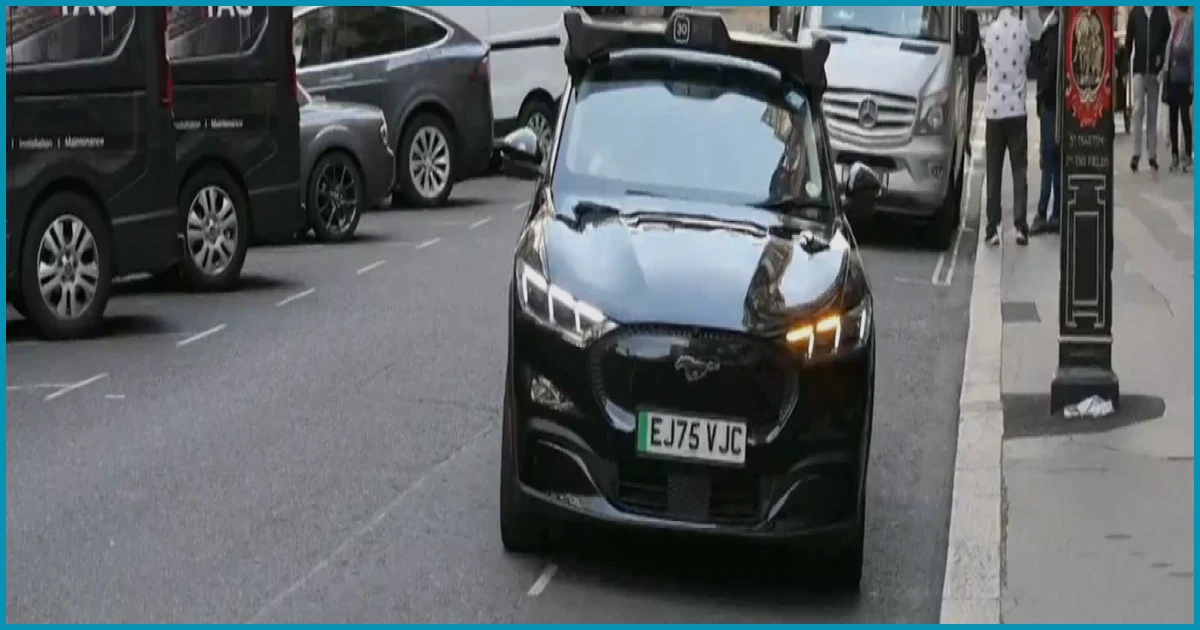
Uber has launched a fleet of autonomous vehicles onto the streets of London, marking a major milestone in testing self-driving technology within one of the world's most complex urban environments. The ride-hailing giant has deployed 15 AI-powered Ford Mustang Mach-E vehicles in a joint initiative with British technology firm Wayve.
Due to current regulatory frameworks in London, the vehicles cannot operate with complete autonomy yet. Each robotaxi is accompanied by a human safety supervisor who remains behind the wheel to intervene if necessary. Additionally, while these autonomous vehicles are permitted to navigate throughout London, they are currently restricted from making trips to airports.
Alex Kendall, the chief executive of Wayve, highlighted the unique difficulties of navigating London's ancient and crowded streets, some of which are hundreds of years old. He pointed out that the city features numerous roundabouts, complex interaction scenarios, and a high density of road users. According to Kendall, London presents over ten times more cyclists and pedestrians than cities like San Francisco, alongside ten times more active roadworks, making it a constantly busy and evolving city.
Wayve, whose investor base includes Uber, Nvidia, and Microsoft, is taking a distinct technological path from its chief competitor, Waymo. Waymo, a subsidiary of Google's parent company Alphabet, has been mapping London with its vehicles but has not yet rolled them out for public use. In contrast, Kendall explained that Wayve's AI does not map out a city before driving. Instead, the system is trained on millions of hours of global driving experience across more than 500 cities in Europe, Asia, and North America. This training allows the vehicle to understand unfamiliar environments and make real-time decisions on roads it has never seen before.
A test run of the service, which carries a 20% premium over standard Uber fares, demonstrated both the potential and the current limitations of the technology. During the trial, the vehicle operated autonomously at first, but when it attempted to navigate a narrow passageway, it eventually got stuck, requiring the onboard supervisor to take over and drive.
The rollout comes at a time of decline for London's traditional black cab industry, whose drivers are famous for their extensive knowledge of the city. Transport for London statistics reveal that the number of black cab drivers has fallen from approximately 25,000 in 2010 to around 16,000 today. Despite concerns that robotaxis could threaten these traditional drivers, Sarfraz Maredia, Uber's global head of autonomous mobility and delivery, dismissed immediate threats. Maredia stated that they do not see this as a near-term risk, explaining that the overall market is growing and autonomous vehicles will help absorb that growth.
Related Articles

Meet Md. Rubel Rana
As a core contributor to Worlddincidents.com, Rubel Rana brings a unique perspective to the world of journalism. Whether it’s deep-diving into historical trivia or covering the latest global headlines, Rubel Rana is committed to delivering high-quality, high-impact articles. Their writing blends meticulous research with a compelling voice, helping readers stay informed and curious about the world around them.