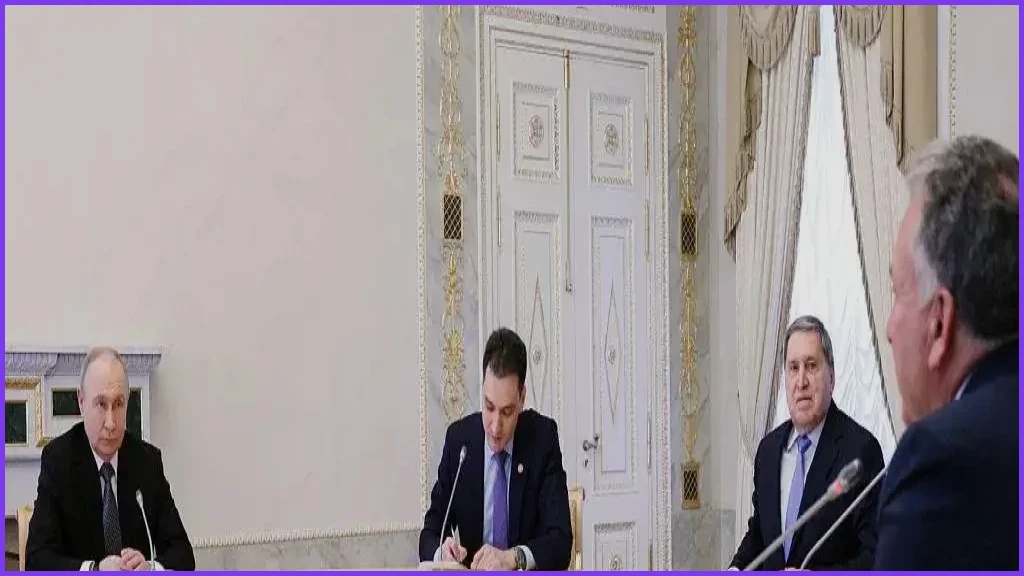
A two-day diplomatic push across Oslo and St Petersburg led by US special envoy Steve Witkoff has yielded little evidence of an imminent breakthrough to end the war in Ukraine. Despite high-level meetings involving Ukrainian President Volodymyr Zelensky, US representatives, and European officials, the Kremlin has signaled deep skepticism over proposals brought from Western capitals, agreeing only to explore lower-level technical discussions next month.
The diplomatic initiative began on Tuesday in Norway's capital, where discussions took place between President Zelensky, envoy Witkoff, and European representatives. Described as "good and constructive" by Norway's prime minister, the Oslo meetings floated the concept of a leaders-level trilateral summit bringing together Zelensky, US President Donald Trump, and Russian President Vladimir Putin to agree on an end to the fighting.
However, the proposal appeared to lose momentum upon reaching Russia. Kremlin officials subsequently indicated a potential willingness to resume trilateral dialogue next month in Abu Dhabi, but specified that any such meeting would occur strictly at a technical level rather than between heads of state.
Following his discussions in Russia, Witkoff acknowledged on X that "there is still important work to do" while asserting that "President Trump remains committed to seeing this war end…" However, Kremlin foreign policy aide Yuri Ushakov, who participated in the St Petersburg talks alongside Putin, expressed clear disappointment with the framework presented.
Ushakov noted that Witkoff had outlined the Oslo discussions and what the envoy described as "new approaches from the Europeans and Kyiv," but dismissed their substance.
"In terms of resolving the Ukraine crisis, there wasn't much there that was useful," Ushakov commented. Asked later by Russian state TV about peace prospects, Ushakov added, "I don't know how close we are getting, but things are moving in that direction."
The Kremlin's stance reflects a calculation in Moscow that Putin currently faces little pressure to halt military operations. Russian leadership is aware that Ukraine's air defences are under severe strain and views the approaching winter as an opportunity to intensify strikes and force Kyiv into submission.
Furthermore, Moscow views political developments in Washington favorably, where President Trump clearly desires an expanded and more profitable relationship with Russia.
In recent days, Trump has paused certain sanctions on Moscow, agreed to purchase Russian diesel, and voiced sharp criticism of President Zelensky. These moves have eased pressure on the Kremlin, leading Russian MP and television anchor Evgeny Popov to state that "right now Trump is the only leader in the Western world who is doing something for peace," even as critics observe that such efforts aim for peace on Russian terms.
While a direct trilateral summit between Putin, Zelensky, and Trump remains distant, an alternative high-stakes gathering may be emerging. Speculation is mounting that Putin, Trump, and Chinese President Xi Jinping could meet next month on the sidelines of the Apec summit in China.
Commentators in Russia have begun labeling the prospective gathering "The New Yalta," referencing the 1945 Yalta Conference where Joseph Stalin, Winston Churchill, and Franklin D.
Roosevelt met to plan the political and territorial reorganisation of post-war Europe. Welcoming the idea of a summit in China, Popov remarked, "Russia, China and the United States are the only superpowers right now in the world. Of course, it will be good for the entire world if our leaders meet in China." For Putin, participating in such a meeting after nearly five years of war would secure his desired position at the top table of global politics.
Related Articles

Mr. Udoy is a professional Web Developer and Blogger with 7+ years of experience in the tech world. He specializes in web architecture and digital storytelling. As the driving force behind worldincidents.com, he focuses on delivering high-quality, well-researched content to a global audience.