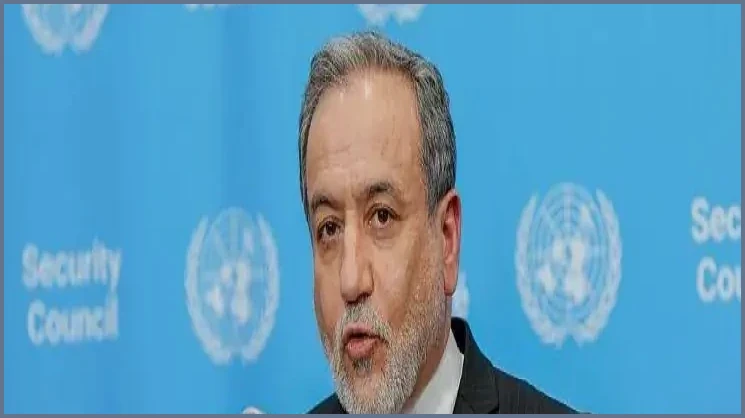
At the United Nations in New York, Iranian Foreign Minister Abbas Araghchi announced that Tehran has proposed a deal to the United States to reopen the strategic Strait of Hormuz within seven days. According to Araghchi, the restoration of normal maritime passage is possible "if the necessary conditions are met," with those conditions already outlined in the memorandum of understanding (MOU) signed by both nations in June.
Araghchi stated that the proposal was delivered to Washington through Qatar, adding that "the choice now rests with the United States." He emphasized that the required steps are not new and are fully contained within the existing June agreement.
However, the initial response from Washington suggests a lack of urgency. A U.S. official stated that the United States is currently "in a very strong position with control of the Strait of Hormuz, so we are not in a rush" to accept the terms.
The proposal comes amid a prolonged conflict that began on February 28, when the U.S. and Israel launched airstrikes on Iranian targets. Iran responded by attacking Israeli positions, targeting U.S. military bases in the Gulf, striking Arab Gulf allies of the U.S., and shutting down the Strait of Hormuz. Before the war, approximately 20% of the world's oil and liquefied natural gas (LNG) passed through this critical shipping lane. Its subsequent closure has triggered severe fluctuations in global energy prices and intensified domestic political pressure on U.S. President Donald Trump to resolve the conflict, particularly as the U.S. approaches Congressional elections in November.
The original MOU, signed on June 18, was a 14-point agreement intended to establish a ceasefire and partially reopen the strait. Under its terms, Iran committed to never acquiring nuclear weapons, while the U.S., Iran, and their respective allies agreed to halt military actions on "all fronts." The document also included provisions for lifting the U.S. naval blockade and providing sanctions relief. Additionally, Iran pledged to "make arrangements using its best efforts for the safe passage of commercial vessels" and to engage in shipping talks with Oman. However, the agreement collapsed shortly after signature when both sides resumed military strikes.
Since the collapse of the MOU, the maritime conflict has persisted. Iran has targeted vessels attempting to navigate the Strait of Hormuz without authorization, while the U.S. has conducted strikes on Iranian positions in the strait and targeted Iranian government tankers off the coast. The U.S. has also maintained a strict blockade of Iranian ports, severely damaging the Iranian economy. Although Trump has asserted that the U.S. has succeeded in facilitating oil transit through the strait, shipping data from the commodities data and analytics firm Kpler indicates a sharp decline. Recent data shows a 10-day average of approximately 18 transits per day, with daily transits dropping as low as nine vessels on certain days.
The regional security situation has been further complicated by Yemen’s Houthi rebels, who are allied with Iran. The Houthis have recently stepped up attacks aimed at disrupting Saudi Arabian oil exports via the Red Sea. During a rapid offensive this month, the rebel group captured strategically vital portions of the Red Sea coast, including the port of Mokha, which overlooks the Bab al-Mandab Strait—another critical global shipping chokepoint. Following Houthi strikes on Saudi oil installations, U.S. media has reported that Saudi Crown Prince Mohammed bin Salman requested military support from Trump.
The diplomatic overture also follows recent highly charged rhetoric. Trump previously questioned whether he should "annihilate the Islamic Republic and do it quickly, never giving them a chance to kill and destroy people and countries again? Do I drive them into hell?" Speaking on Friday, Araghchi made it clear that Iran rejects "coercion, threats or intimidation," declaring that "peace cannot be built through threats of annihilation."
Related Articles

Meet Md. Rubel Rana
As a core contributor to Worlddincidents.com, Rubel Rana brings a unique perspective to the world of journalism. Whether it’s deep-diving into historical trivia or covering the latest global headlines, Rubel Rana is committed to delivering high-quality, high-impact articles. Their writing blends meticulous research with a compelling voice, helping readers stay informed and curious about the world around them.