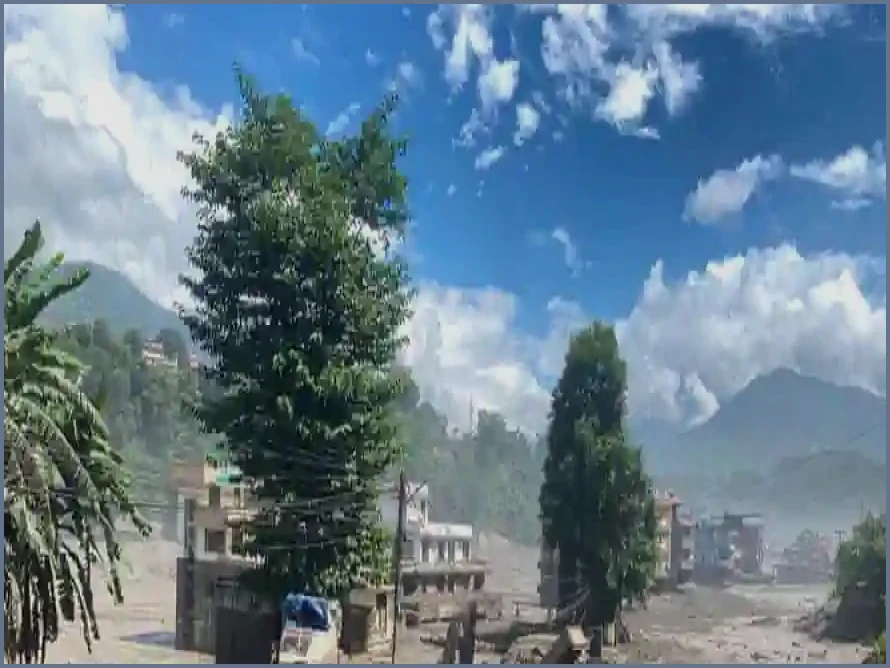
In the trekking capital of Argentina, local authorities and scientists are racing to establish the country's first glacial lake outburst flood (GLOF) early-warning system. The initiative in El Chaltén, a mountain town in Santa Cruz province, has taken on urgent significance following a catastrophic glacier collapse and flash flood in Nepal on August 26, 2026.
Enrique Rivero, El Chaltén’s secretary of government, confirmed that the municipality is actively preparing for a worst-case scenario. However, the efforts face financial headwinds. A proposed $220,000 (£163,000) detection system featuring six monitoring stations equipped with cameras, sensors, and emergency buoys has been delayed due to funding cuts. Eduardo Marino, a hotel owner and former secretary of government, noted that the cost currently exceeds the national park's financial capacity.
The geological danger is being mapped out by Daniela Schmidt, a geologist at the University of Buenos Aires. Schmidt, who watched the devastating images of the Nuwakot district floods in Nepal, has been analyzing the potential impact of a similar disaster at Laguna Torre, situated at the base of the Torre glacier. Her digital models and flood simulations paint a stark picture: if the unstable northern slope of the 2,121-meter (6,959-foot) Cerro Solo peak collapses, millions of cubic meters of rock and ice could plunge into the lake, sending a massive wall of debris and water rushing toward the town.
According to Schmidt's research, a landslide involving between 8 million and 13 million cubic meters of mountainside material would trigger a wave up to 5.8 meters high. This wave would sweep across Laguna Torre at 20 meters per second, entering the Fitz Roy River in just one minute and 40 seconds. In a worst-case scenario, the resulting torrent would travel the 5 miles (8 kilometers) to El Chaltén in a mere 20 minutes, discharging water at a rate of 1,769 cubic meters (62,472 cubic feet) per second. Even under a highly conservative analysis, the floodwaters would reach the town within 45 to 60 minutes, leaving a very narrow window for evacuation.
The Fitz Roy River, which runs past El Chaltén, could rise by up to 5 meters. This surge would likely inundate or completely sweep away the local bridge, which serves as the town's sole land connection to provincial route 41. Rivero noted that while the municipality has ordered dredging of the river channel and cleared the riverbed beneath the bridge, the latest findings suggest the structure remains highly vulnerable. Critical infrastructure located near the riverbanks—including schools, residential homes, and gas and power plants—is also at risk. Paula Chaparro of the El Chaltén Mountain Guides Association warned of a potential chain reaction: a cutoff of gas supplies from the provincial capital of Río Gallegos would eliminate heating, while a failure of the power grid would leave the town dependent on fuel-oil generators that could quickly run out of fuel.
The threat is particularly acute during the peak summer season from December to February, when more than 27,000 residents and tourists could find themselves stranded and cut off from external aid. Despite the risks, some in the community have expressed concern that discussing glacial floods could frighten away tourists, a critical source of livelihood. Marino, who was asked by some locals to remain silent about the issue until the summer season concluded, refused to comply, arguing that a single day of heavy rain or high temperatures could trigger a disaster. Sofía Bonangelino, a local bookstore owner and ski instructor who also serves as a member of Friends of Los Glaciares National Park, observed that public acceptance of the threat has improved as scientific findings have been explained, fostering a collective understanding that preparation is vital.
The physical threat has grown alongside climate-driven changes to the landscape. Between 1952 and 2023, the Torre glacier lost 4 square kilometers (1.5 square miles) of surface area, while its ice thinned by 60 to 70 meters. This retreat has caused a "release of stress" on the surrounding slopes, making them increasingly unstable. Landslide activity on the mountainside doubled in speed and increased in volume between 2002 and 2023. Furthermore, recent measurements revealed that sustained melting has created a second body of water within Laguna Torre, pushing its depth to over 220 meters—far exceeding previous estimates of 80 meters. Schmidt's colleague, Ariel Puntin, noted that while some locals still doubt the mountain could collapse, the unpredictable timing of such events makes risk management difficult.
Despite the funding delays for the high-tech warning system, Los Glaciares National Park has already taken several practical measures. Under park superintendent Horacio Pelozo, officials have relocated the De Agostini campsite, rerouted popular hiking trails, set up warning signs, and established an evacuation protocol that would deploy at least 25 personnel to manage crowds during peak seasons. The park is coordinating with the Federal Emergency Agency, the Argentine Geological and Mining Service, and the El Chaltén city council, which passed a resolution to design an official evacuation plan. The urgency is underscored by historical precedents, including a May 2025 disaster in Switzerland, where the collapse of the Birch glacier buried much of the village of Blatten under rock and ice. For Schmidt, the lesson is clear: communities must adapt to the rapidly shifting realities of glacial landscapes to keep both residents and visitors safe.
“You can’t say it will happen on a specific day or at a specific time, but society needs to be prepared,” Schmidt warns. “It is going to happen.”
As the ice on the Torre glacier retreats, the surrounding slopes can also shift. Photograph: Javier Rasetti
Related Articles

Meet Md. Rubel Rana
As a core contributor to Worlddincidents.com, Rubel Rana brings a unique perspective to the world of journalism. Whether it’s deep-diving into historical trivia or covering the latest global headlines, Rubel Rana is committed to delivering high-quality, high-impact articles. Their writing blends meticulous research with a compelling voice, helping readers stay informed and curious about the world around them.