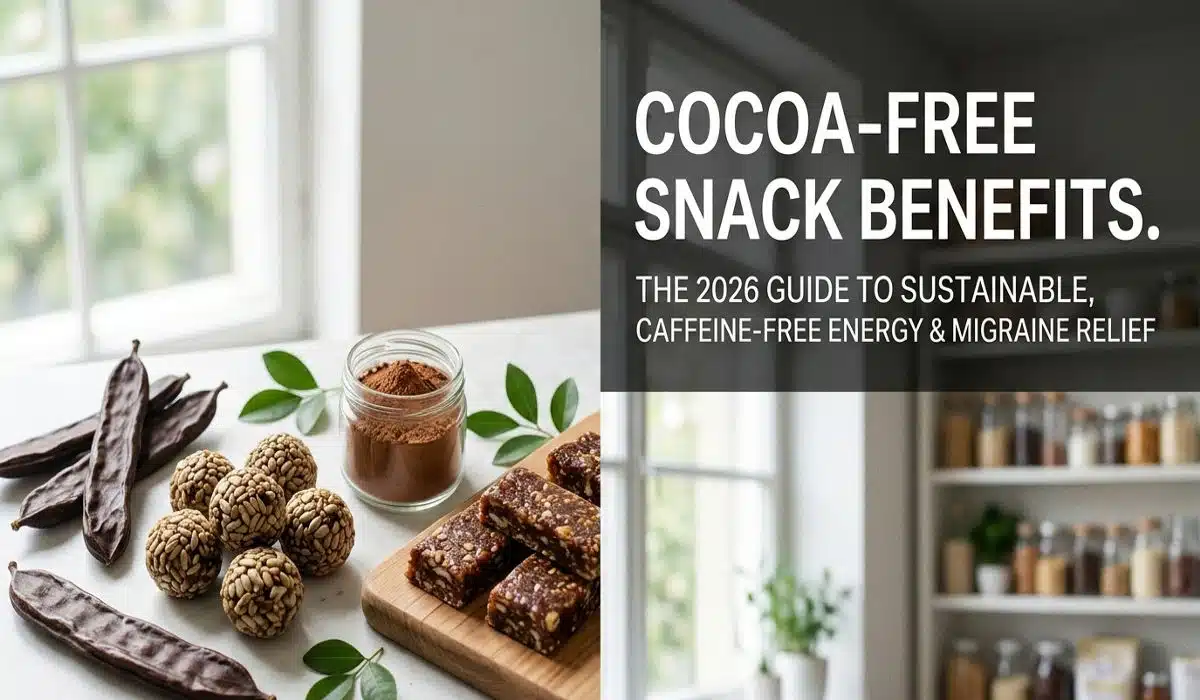
As we navigate the nutritional complexities of 2026, many are looking beyond the bean. While dark chocolate is often lauded for its antioxidants, it isn’t the perfect fuel for everyone. Understanding the cocoa-free snack benefits allows you to tailor your snacking habits to your body’s specific needs, particularly if you are sensitive to stimulants or prone to certain health triggers.
Relief from Caffeine and Theobromine Sensitivity
The most immediate of the cocoa-free snack benefits is the absence of stimulants. Traditional cocoa contains caffeine and theobromine, which can lead to jitters, increased heart rate, and sleep disruption. In 2026, where “sleep hygiene” is a top priority, cocoa-free snacks—often made from carob or fermented sunflower seeds—allow for evening indulgence without sacrificing your REM cycle.
A Migraine-Safe Alternative
For the millions suffering from chronic headaches, the cocoa-free snack benefits are life-changing. Cocoa contains tyramine, a well-known migraine trigger for many people. Alternatives like carob are naturally tyramine-free. By switching to cocoa-free snacks, individuals can enjoy a rich, “chocolatey” experience without the fear of a post-snack migraine flare-up.
Natural Sweetness with Lower Sugar Requirements
Carob, the most popular base for these snacks, is naturally sweet. One of the key cocoa-free snack benefits is that manufacturers don’t need to add nearly as much refined sugar to balance out the bitterness found in raw cocoa. This makes cocoa-free treats an excellent option for those managing blood sugar levels or following low-glycemic diets in 2026.
High Fiber and Digestive Support
In the age of gut-health focus, the cocoa-free snack benefits include a significant boost in dietary fiber. Carob powder, for instance, is packed with insoluble fiber and tannins. These compounds support healthy digestion and can help lower LDL cholesterol. Choosing a cocoa-free snack means you’re feeding your gut microbiome while satisfying your sweet tooth.
Sustainably Sourced and Eco-Friendly
By April 2026, climate change and supply chain volatility have made cocoa production increasingly difficult and environmentally taxing. The cocoa-free snack benefits extend to the planet. Many alternatives, such as ChoViva (made from sunflower seeds) or carob, require significantly less water and have a lower deforestation footprint compared to traditional cacao farming. For the eco-conscious consumer, cocoa-free is the sustainable choice.
Calcium-Rich and Low-Fat Nutrition
Unlike cocoa, which contains oxalates that can interfere with calcium absorption, cocoa-free alternatives like carob are actually a source of calcium. One of the nutritional cocoa-free snack benefits is the absence of the high saturated fats often found in cocoa butter. This makes it a “leaner” snack that still provides essential minerals like potassium and magnesium.
Read More: The Best Green Energy Penny Stocks for Long Term Growth
Zero Oxalates for Kidney Health
A major medical reason to embrace cocoa-free snack benefits is the absence of oxalates. Traditional cocoa is high in oxalates, which can bind to calcium and lead to the formation of kidney stones in susceptible individuals. Cocoa-free alternatives like carob or fermented grain-based treats are virtually oxalate-free, making them the safest “chocolate-like” indulgence for those prioritizing renal health.
Acid Reflux and GERD Management
For those struggling with chronic heartburn, the cocoa-free snack benefits provide a much-needed solution. Cocoa is known to relax the lower esophageal sphincter, allowing stomach acid to creep back up. Because cocoa-free snacks do not contain the methylxanthines found in cacao, they are significantly gentler on the digestive tract and do not trigger acid reflux or GERD symptoms.
Superior Mineral Profile
Beyond just being a “substitute,” the cocoa-free snack benefits include a unique mineral density. Carob-based snacks are naturally high in potassium, which is essential for heart health and muscle function, and they provide a non-heme iron boost. Unlike cocoa, which contains phytic acid that can inhibit mineral absorption, cocoa-free snacks allow your body to absorb these essential nutrients more efficiently.
Safe for Household Pets
A unique lifestyle advantage of the cocoa-free snack benefits trend is safety within the home. Cocoa contains theobromine, which is toxic to dogs and cats. By keeping cocoa-free snacks in the pantry, you eliminate the risk of accidental pet poisoning. In 2026, many “family-friendly” households are switching to cocoa-free treats to ensure a safer environment for their furry companions.
Supporting Local Biodiversity and Soil Health
In 2026, the cocoa-free snack benefits are increasingly linked to regenerative agriculture. Carob trees, for instance, are incredibly drought-resistant and thrive in poor soil where other crops fail. They act as carbon sinks and help prevent soil erosion in Mediterranean and arid climates. Choosing these snacks supports agricultural systems that require zero pesticides and very little irrigation compared to the intensive farming required for mass-market cacao.
Enhanced Flavor Versatility for Foodies
For the culinary adventurous, the cocoa-free snack benefits include an entirely new flavor palette. Cocoa often overpowers other ingredients, but cocoa-free bases like roasted chicory, carob, or mesquite have natural notes of cinnamon, caramel, and malt. This allows for more complex snack pairings with fruits and nuts, offering a sophisticated gourmet experience that goes beyond the standard “dark or milk” chocolate choice.
Price Stability and Supply Resilience
In the 2026 economy, one of the most practical cocoa-free snack benefits is financial. Traditional cocoa markets have faced extreme volatility due to climate-related crop failures and supply chain disruptions. In contrast, cocoa-free alternatives—made from resilient, locally sourced crops like sunflower seeds, grape seeds, and oats—are “decoupled” from the volatile cocoa stock market. This allows manufacturers to offer long-term price stability. For the consumer, this means that while chocolate prices may spike during global shortages, your favorite cocoa-free snacks remain affordable and consistently available on store shelves.
FAQ
Q1: Do cocoa-free snacks taste like real chocolate?
Ans: Modern 2026 food tech has closed the gap. While carob has a nuttier, caramel-like flavor, new fermentation-based alternatives (like those using oats or sunflower seeds) provide a texture and melt-profile nearly identical to traditional milk chocolate.
Q2: Are cocoa-free snacks better for children?
Ans: Yes. One of the primary cocoa-free snack benefits for kids is the lack of caffeine, which prevents hyperactivity and helps maintain a steady energy level throughout the day.
Q3: Can I use cocoa-free powder for baking?
Ans: Absolutely. You can substitute carob powder for cocoa powder in a 1:1 ratio, though you may want to reduce the added sugar in the recipe since carob is naturally sweeter.

Mr. Udoy is a professional Web Developer and Blogger with 7+ years of experience in the tech world. He specializes in web architecture and digital storytelling. As the driving force behind worldincidents.com, he focuses on delivering high-quality, well-researched content to a global audience.