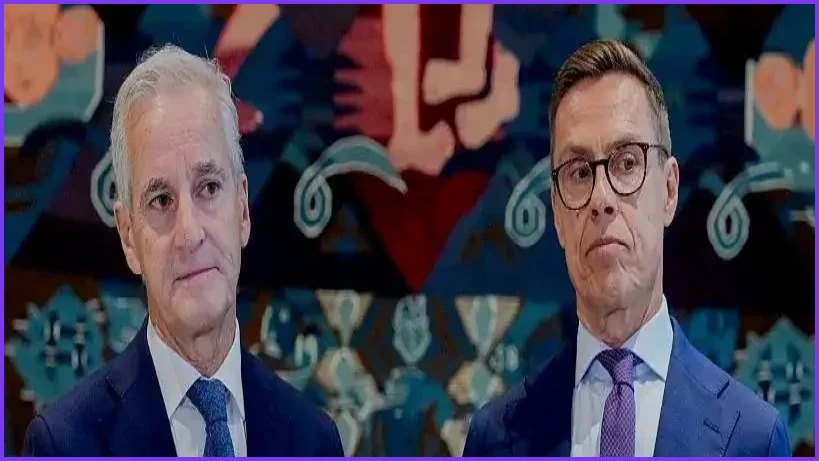
In a rare direct diplomatic encounter between Western leaders and the Kremlin, Finnish President Alexander Stubb and Norwegian Prime Minister Jonas Gahr Støre held a joint 90-minute telephone conversation with Russian President Vladimir Putin. Conducted from Helsinki, the call was initiated by the two Nordic nations to address Russia's war of aggression against Ukraine and explore diplomatic pathways toward ending the conflict and securing peace and stability in Europe.
According to the leaders' offices, the primary objective of the dialogue was to convey direct messages regarding future peace negotiations. Stubb emphasized that ending the war, which commenced with Russia's full-scale invasion of Ukraine in 2022, will not be achieved through silence. While the Finnish president characterized the exchange with Putin as frank and substantive, Støre acknowledged that significant differences in views remain between the parties.
Both Nordic leaders clarified that they were acting strictly in their roles as neighboring countries to Russia rather than representing Europe as a whole. Støre stated that they had not set out to speak on behalf of anyone other than themselves, emphasizing the severe toll of the conflict by noting that the war comes with enormous human and material costs, and that the suffering and destruction will impact generations.
The phone discussion was prepared in consultation with Washington and Kyiv following a meeting held last week in Oslo between Ukrainian President Volodymyr Zelensky, Nordic leaders, and US special envoy Steve Witkoff. The effort comes ahead of tentatively scheduled trilateral talks involving the United States, Ukraine, and Russia planned for early November in Abu Dhabi, which would mark the first such trilateral discussions since the beginning of the year.
Zelensky later confirmed that Stubb and Støre briefed him following their conversation with the Russian president, expressing gratitude for their active involvement. Ukrainian Foreign Minister Andrii Sybiha also endorsed the initiative, describing the direct contact as the right approach.
From the Kremlin's perspective, Putin told the Nordic leaders that achieving a fair and lasting peace settlement is only possible if Russia's legal interests are taken into account fully and unconditionally. The Russian president also reiterated what he considers the root causes of the conflict, a phrase frequently utilized by Moscow to reference Ukraine's sovereign aspirations. Despite the contrasting positions, all three leaders reportedly agreed to maintain open channels for direct phone communication.
The dialogue occurred without official European Union coordination, drawing mixed reactions across the continent. Swedish Prime Minister Ulf Kristersson remarked that Europe should stick together rather than going solo, noting alongside Danish leadership that the outreach had not been coordinated with other European partners. Conversely, Polish Prime Minister Donald Tusk revealed that Stubb had updated him on the initiative, describing Europe's outlook on the upcoming talks in the United Arab Emirates as moderately optimistic.
The initiative highlights shifting diplomatic dynamics as relations between the US, Ukraine, and European allies have faced strains after US President Donald Trump agreed to lift select sanctions on Russia, enabling Moscow to resume oil exports to America. As the Trump administration softened its stance toward Moscow, several European leaders voiced the need to re-establish direct communication with the Kremlin.
The contact marks the first time European leaders have spoken directly with Putin since French President Emmanuel Macron held a conversation with him in July 2025. Following that exchange, Putin attended a summit with Trump in Alaska, after which European nations felt increasingly sidelined from Ukraine peace discussions. While Moscow regularly criticizes European states and accuses the EU of prolonging hostilities through military aid to Ukraine, Kremlin spokesman Dmitry Peskov acknowledged last weekend that having a European negotiator at the peace table would be good. On Tuesday, Peskov described the dialogue with Stubb and Støre as very constructive and practical talks with the leaders of two key neighboring states, while noting Moscow did not view the duo as official envoys for Europe.
Related Articles
Mr. Udoy is a professional Web Developer and Blogger with 7+ years of experience in the tech world. He specializes in web architecture and digital storytelling. As the driving force behind worldincidents.com, he focuses on delivering high-quality, well-researched content to a global audience.