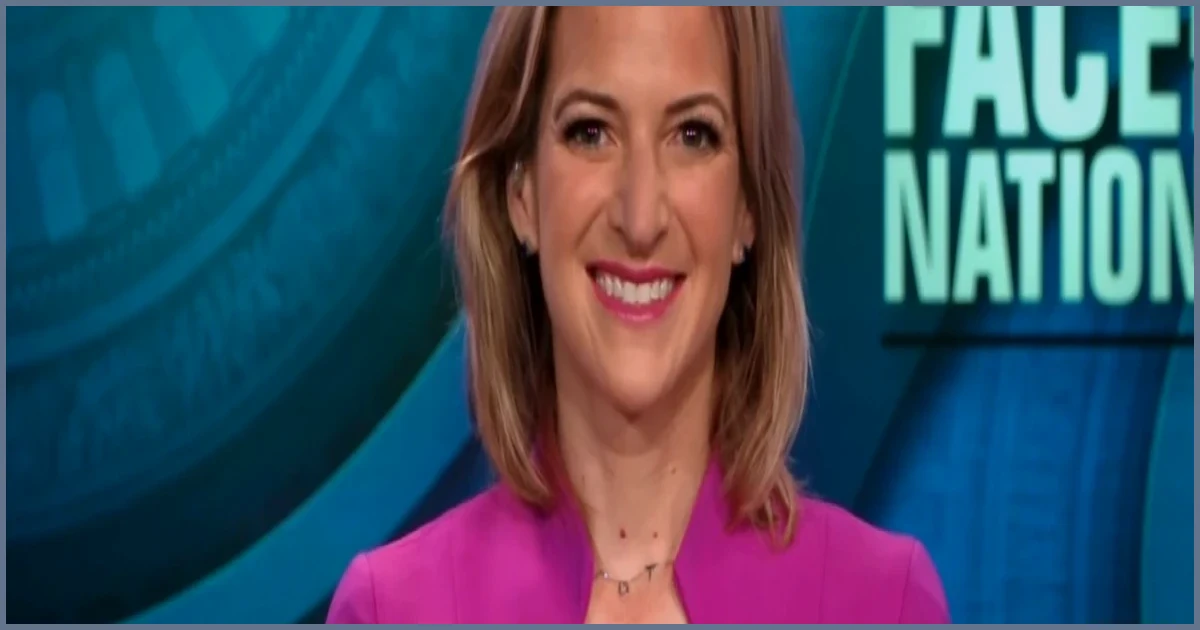
Michigan Secretary of State Jocelyn Benson, the Democratic nominee for governor, warned that ongoing trade disputes with Canada are disproportionately hurting Michigan families, raising household expenses by an average of $5,600. Speaking on "Face the Nation" on September 6, 2026, Benson criticized her Republican opponent, Congressman John James, for supporting federal tariffs and outlined her strategy to negotiate direct trade agreements with Canadian officials to bypass federal barriers and lower costs for residents.
The trade tensions come as Canada prepares to implement tariffs on Tuesday ranging from 15% to 50% on $20 billion worth of U.S.-made products. The tariffs will target steel and aluminum, dairy products, and household appliances. Because 36% of Michigan's exports go directly to Canada, the state is uniquely vulnerable to the economic fallout of the dispute. Benson emphasized that the financial pressure is already being felt across the state, describing the rising expenses as a direct tax on groceries, small businesses, and gasoline.
Benson pointed to a recent University of Michigan analysis showing that 40% of the state's population currently struggles to pay for basic necessities. She argued that the tariffs have driven up prices in Michigan more than in any other state, compounding the affordability crisis. "What's frustrating to me in this race is that my opponent has been fully supportive of these tariffs," Benson said, referring to James. "He's voted multiple times in support of them instead of in support of the people of Michigan. That is cowardice, and that is not leadership." She argued that Michiganders need a governor who will actively work to lower costs and stand up to the president.
To mitigate the impact of federal trade policies, Benson announced her intention to negotiate subnational agreements if elected governor. She explained that she would partner with other governors and meet directly with Canadian officials to establish trade pathways that circumvent the tariffs. This approach, she argued, is critical to protecting Michigan's auto industry and auto workers. "As governor, I can meet with officials in Canada and identify specific ways we can ensure trade between Michigan and Canada gets around these tariffs, reduces costs," Benson stated. She added that subnational agreements have already been discussed and negotiated by governors in other states when the federal government has failed to act.
When questioned about the feasibility of a state bypassing federal trade disputes, Benson defended the strategy and renewed her attacks on her opponent. She referred to the tariffs as the "John James tax," arguing that James must take responsibility for his congressional record. She cited a February vote in Congress where James voted in support of the tariffs, and noted that he has remained silent on the campaign trail when asked if he would take action to address the trade dispute's economic toll on the state. During his own appearance on the program the previous weekend, James stated that he does not want further trade disputes and plans to discuss the matter with the White House.
The interview also touched on Benson's current role as Secretary of State as Michigan prepares for the upcoming election. Approximately two million Michiganders are expected to vote by mail, with ballots scheduled to be distributed starting September 19. The election preparations follow a recent ruling by a federal judge who blocked the postal service from enforcing new mail ballot rules introduced by President Trump through an executive order. Benson expressed confidence in the state's voting infrastructure and its ability to protect the right of citizens to vote from home.
Benson defended the security of Michigan's elections, highlighting that the state has taken extensive measures to ensure voter rolls are accurate. She noted that during the 2024 election, which saw a record-high turnout of 5.5 million voters, non-citizen voting was extremely rare. She pointed out that the state's election system successfully identified and held accountable a handful of ineligible individuals who attempted to vote, which she described as proof that the security measures are functioning properly. Benson credited the state's 1,500 local election officials with maintaining secure and accessible elections.
Additionally, Benson contrasted her record on democracy with that of her opponent, bringing up his actions following his unsuccessful statewide race in 2020. She accused him of failing to accept the will of the voters and joining efforts to overturn and undermine the election results. Benson argued that this record makes him unfit to serve as governor, emphasizing the importance of having a leader who understands how to protect democratic processes and secure the voting rights of Michigan residents.
MARGARET BRENNAN: Well, Secretary Benson, we wish you well with that upcoming vote, but we also will watch your candidacy and some of these platform issues. Thank you for your time today. We'll be back in a moment.
Related Articles

Mr. Udoy is a professional Web Developer and Blogger with 7+ years of experience in the tech world. He specializes in web architecture and digital storytelling. As the driving force behind worldincidents.com, he focuses on delivering high-quality, well-researched content to a global audience.
1 thought on “Jocelyn Benson: Canadian Tariffs Cost Michigan Families $5,600”