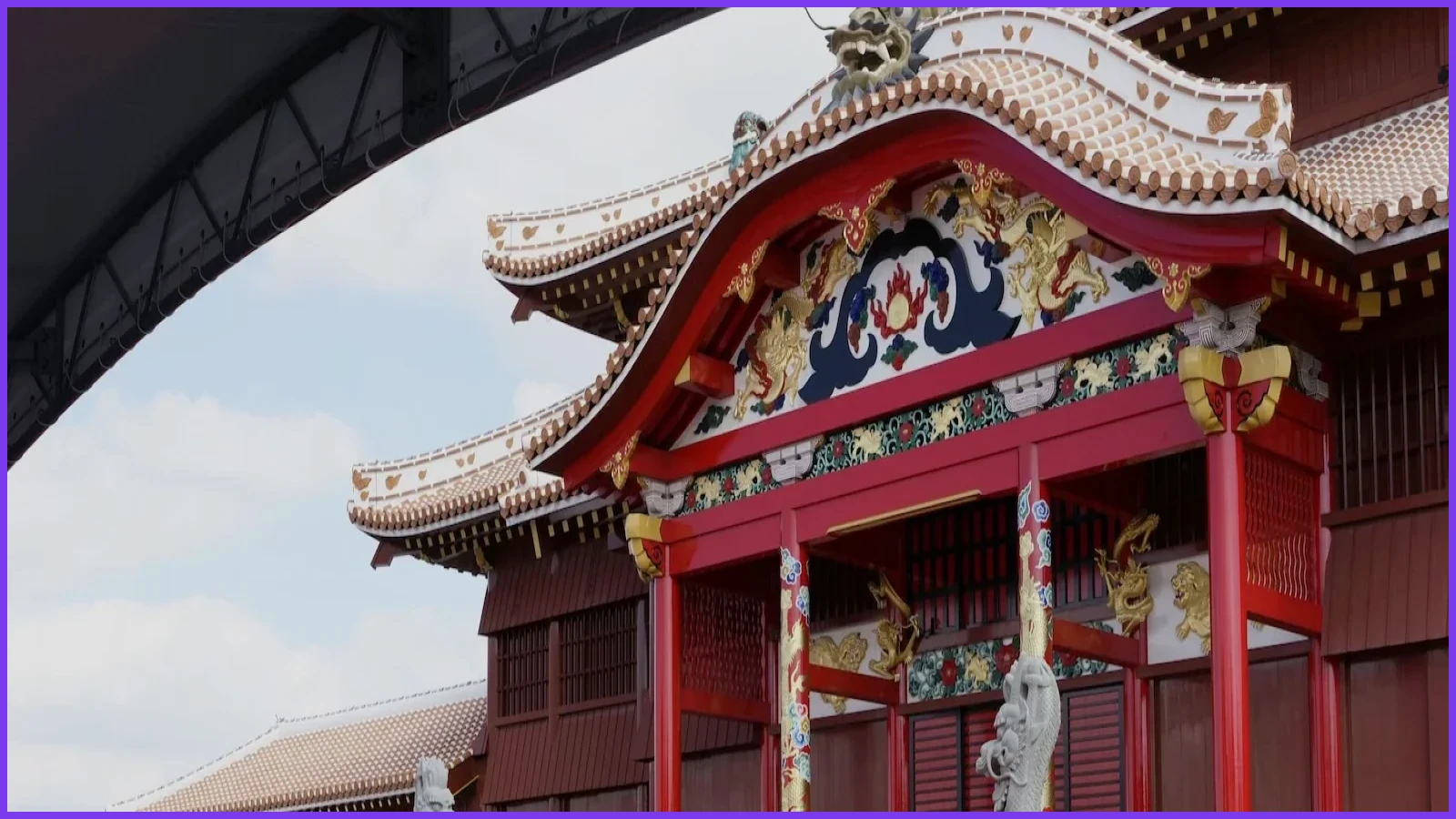
Officials and local residents gathered in Okinawa on Sunday to celebrate the restoration of Shuri Castle’s main hall, marking the return of the island’s most prominent cultural symbol seven years after a catastrophic fire destroyed the complex. Featuring a striking deep red exterior adorned with dragon ornaments, the reconstructed structure stands as a testament to the region's heritage.
The devastating blaze occurred on Oct. 31, 2019, while the castle grounds in Okinawa’s prefectural capital of Naha were hosting a local festival. High winds accelerated the flames from building to building, forcing firefighters to struggle for nearly 12 hours before bringing the blaze under control. Although investigators were unable to establish the definitive cause, an electrical fault was identified as the most probable explanation.
Speaking during a ceremony held in the courtyard outside the main hall, Okinawa Gov. Genta Koja expressed the emotional impact of the loss and the progress made since. "The fire was a tremendous shock to the Okinawan people," Koja said. "Seven years after the major loss, as we mark this milestone of the main hall restoration, I am deeply moved and delighted." Koja, who assumed office at the end of September, extended his appreciation to historians, artisans, and experts across Japan, as well as domestic and international donors who supported the restoration efforts.
The 2019 disaster destroyed the main hall, known as Seiden, along with two adjacent halls and four nearby structures, while two additional buildings suffered heavy damage. With the main hall set to open to the public on Monday, Koja stressed that the ceremony does not signal the completion of the project, calling for the full reconstruction of the surrounding historic complex. Experts anticipate that restoring the remaining sections of the castle will take more than a decade through phased work.
Shuri Castle holds deep significance as a representation of Okinawan identity dating back to the Ryukyu Kingdom, which governed the region for roughly 450 years from 1429 until Japan annexed the island in 1879. The site also symbolizes Okinawa's post-World War II recovery. In 1945, the original castle burned down during the Battle of Okinawa, a conflict that claimed approximately 200,000 lives, including many civilians. The complex was largely rebuilt in 1992 to mark the 20th anniversary of Okinawa’s reversion to Japan, following 27 years of U.S. occupation. Work on other sections was still in progress when the 2019 fire occurred, on an island that continues to host a substantial U.S. military presence.
To recreate the main hall with greater historical accuracy, researchers incorporated fresh historical findings, according to historian Kurayoshi Takara, who also participated in the 1992 restoration. Details gathered from ancient documents allowed experts to replicate the original design and pigment more closely. The distinct red coloring was traced to iron bacteria found in northern Okinawa. Following extensive testing, artisans successfully achieved the deeper shade of red by blending the bacteria-derived pigment with a commercial product.
Beyond its cultural value, Shuri Castle remains a premier tourist attraction, and the reopening of Seiden has raised hopes for an economic boost in a prefecture that has long lagged behind the rest of Japan. As part of his broader economic platform, Gov. Koja has pledged to double Okinawa's per capita income and tourism revenue over the coming decade while creating better opportunities to retain young residents.
Related Articles

Meet Md. Rubel Rana
As a core contributor to Worlddincidents.com, Rubel Rana brings a unique perspective to the world of journalism. Whether it’s deep-diving into historical trivia or covering the latest global headlines, Rubel Rana is committed to delivering high-quality, high-impact articles. Their writing blends meticulous research with a compelling voice, helping readers stay informed and curious about the world around them.