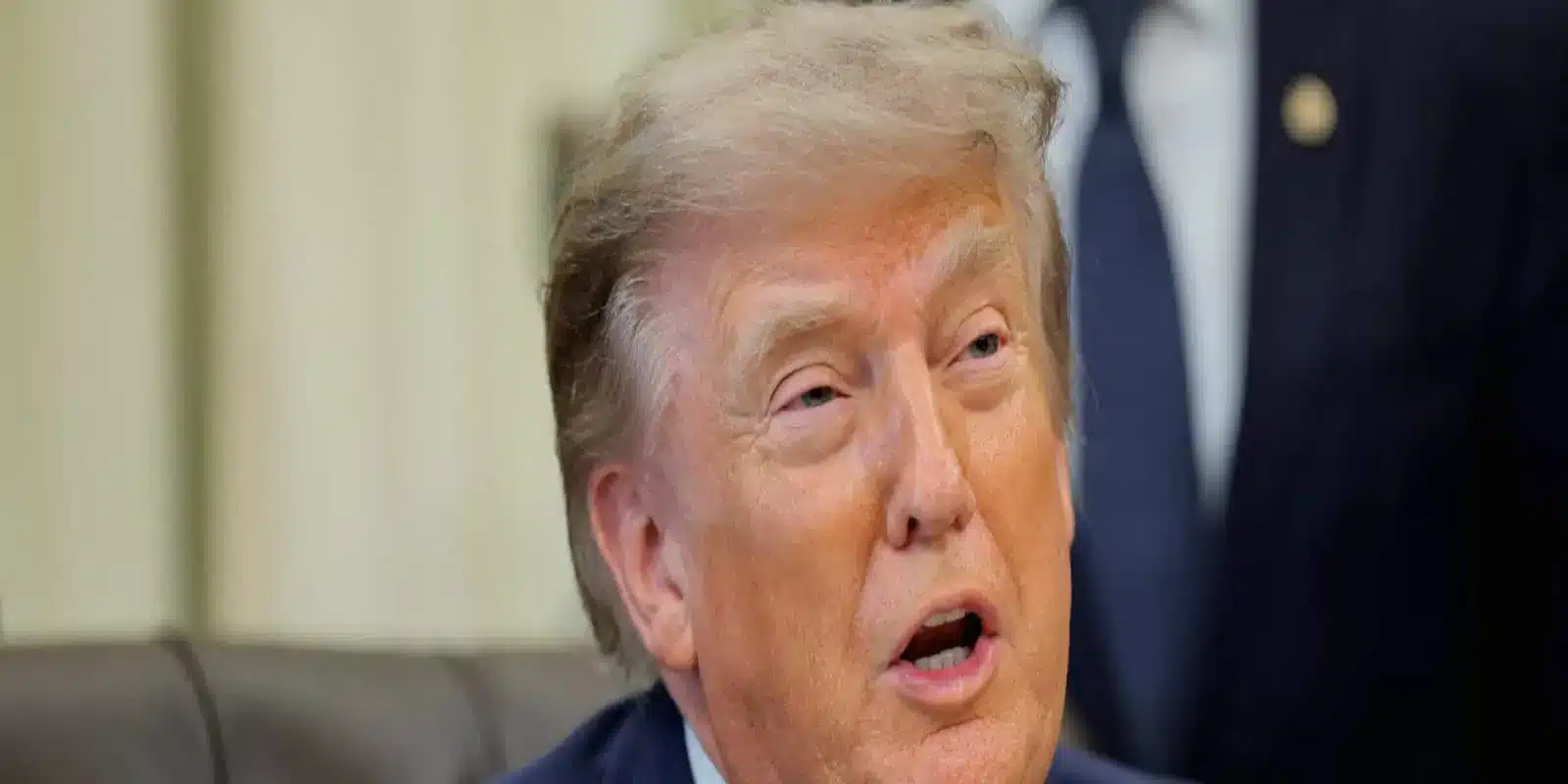
President Donald Trump is scheduled to deliver a rare primetime address to the nation on July 16 at 9 p.m. ET. The speech is expected to center on election security and may include allegations regarding foreign interference in U.S. elections, coming less than four months before the November midterm elections. While the president has teased a "very big announcement" concerning "free and fair elections," he indicated that he will also touch upon several other topics during the broadcast.
The upcoming address occurs as Trump continues to promote unsubstantiated allegations and debunked theories regarding the 2020 election. Despite losing to Joe Biden, Trump maintains that the election was "rigged" against him by Democrats and frequently claims, without evidence, that he has won three presidential elections rather than two.
Numerous independent reviews, including audits and investigations by the Justice and Homeland Security departments, have found no evidence of widespread fraud, voting-machine tampering, or foreign interference in the 2020 contest. Additionally, all 62 lawsuits filed by Trump in the weeks following the 2020 election were unsuccessful.
White House press secretary Karoline Leavitt stated that the president's remarks will "shock" Americans who listen with an "honest eye." She emphasized that the claims presented will be supported by evidence provided during the address. Leavitt noted that the president intends to highlight concerns about the current state of election security in the United States, stating, "We should have the safest and most secure elections in the history of the world, and what the president will be speaking about tonight will show you that perhaps that is not the case."
Reports from Reuters and CBS News suggest that the address could potentially include allegations of Chinese interference in the 2020 election. The White House has reportedly considered disclosing sensitive intelligence regarding China's capabilities, as well as information on vulnerabilities within U.S. voting infrastructure.
While a March 2021 report from the National Intelligence Council assessed with "high confidence" that China did not attempt to alter the outcome of the 2020 election, it did acknowledge a "minority view" that Beijing took steps to undermine Trump's reelection through social media and public statements.
Furthermore, a declassified 2020 report noted that Chinese intelligence officials had analyzed voter registration data from multiple states to conduct public opinion analyses.
Speculation has also emerged that the speech might focus on the 2020 election results in Georgia, where an ongoing FBI investigation has centered on Fulton County. In January, the FBI seized ballots and records from the Fulton County Elections Hub and Operations Center. Senator Jon Ossoff, who is up for reelection, expressed concern that the president might use the address as a "pretext" to exert unconstitutional power or intimidate officials, specifically noting potential rhetoric regarding himself and Senator Raphael Warnock.
Ossoff stated, "There's talk that he might try to declare me and Raphael Warnock illegitimate senators. Obviously, the president has no power to do that, but he does have the power to try to intimidate people."
Tulsi Gabbard, Trump's former director of national intelligence who resigned in June, was present during the FBI's February search of the center. Trump replaced her on an interim basis with Bill Pulte, the director of the Federal Housing Finance Agency, who lacked past experience in national intelligence. Trump has previously stated he gave Pulte broad permission to declassify records, including those tied to the 2020 election.
Legislative efforts remain a key focus for the administration, as Trump has urged Congress to pass the SAVE America Act. The bill, which has stalled in the Senate, would require photo identification and proof of citizenship for voting while prohibiting universal mail-in ballots. Trump has called for the abolition of the filibuster to pass the bill with a simple majority, though the proposal faces opposition from at least four Republicans.
House Speaker Mike Johnson has sought to include elements of the legislation in a budget resolution, though such a maneuver faces potential procedural hurdles from the Senate parliamentarian.
Beyond domestic policy, the president is managing an ongoing military conflict with Iran. Following the collapse of a June memorandum of understanding, the U.S. has conducted an aggressive air assault on Iran for two weeks. Trump recently stated he does not intend to negotiate further, accusing Tehran of reneging on private commitments. With no end in sight to the conflict, the address presents an opportunity for the president to chart a path to victory, though it remains unclear if he plans to ramp up attacks to force Iran to abandon its nuclear program.
A separate intelligence report from 2020, declassified in 2022 but still heavily redacted, found that Chinese intelligence officials analyzed election voter registration data of multiple states to conduct public opinion analyses of the 2020 election, CBS reported.
"There's talk that he might try to declare me and Raphael Warnock illegitimate senators," Ossoff said in a June 14 interview on MS NOW. "Obviously, the president has no power to do that, but he does have the power to try to intimidate people. He's demonstrated his will to abuse power."

Md. Kazi Bijoy is a dedicated tech enthusiast and content creator with a passion for digital innovation. With years of experience in the tech industry, he specializes in breaking down complex topics into easy-to-understand guides. When he isn’t writing, he explores the latest gadgets and researches emerging trends in the digital world.
1 thought on “Trump to Address Election Security in Primetime Speech”