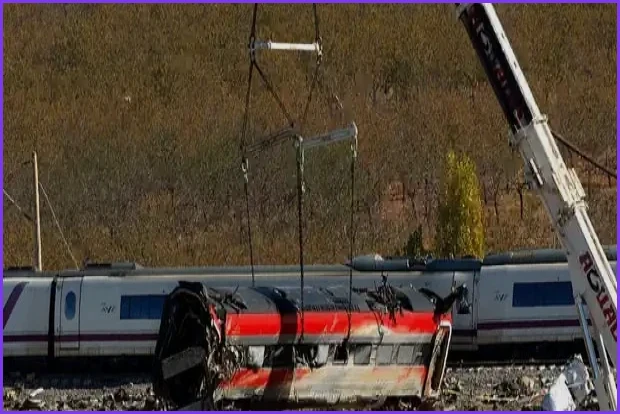
Four citizens of the United States were among at least 69 people killed when a high-speed passenger train struck the back of a stationary train in central Spain, officials confirmed on Sunday night, November 1, 2026. Almost all of the victims from the disaster have now been formally identified by legal authorities.
The legal body overseeing victim identification following major fatal events, the Center for Integrated Data, reported that all but three of those killed in the collision have been identified. Alongside the four American casualties, the identified victims include single citizens from Canada, Japan, Argentina, Mexico, Tunisia, and the Czech Republic. Officials had previously confirmed the deaths of one French citizen, one Portuguese citizen, and 54 Spanish nationals. Additionally, two citizens of Australia and one citizen of Japan remain missing following the crash.
Authorities noted that official confirmation for the remaining unidentified victims awaits the arrival of relatives traveling to the country. "As the contacted families have expressed their wish to travel to Spain to carry out in-person identification, we are awaiting their arrival in the country," the statement said, AFP reported.
The collision occurred on the morning of Oct. 28 near Urda in Toledo province, when a high-speed train slammed into the rear of a stopped train heading in the same direction, causing two railcars to derail. Both trains were traveling along the corridor connecting Madrid to Seville and carried a combined total of more than 540 passengers. The impact left 58 people injured.
Initial findings by independent investigators revealed that the state-owned RENFE train was traveling at speeds between 100 and 125 mph when it hit the rear of the privately operated IRYO train. The crash has sparked intense debate over rail safety and operational oversight.
Transport Minister Óscar Puente pointed to poor judgment by a traffic controller as a primary factor in the disaster. However, rail worker unions strongly disputed that characterization, pointing instead to declining working conditions. Union representatives argued that an inadequate number of controllers are tasked with managing rapidly expanding workloads, compromising safety across a network serving millions of travelers.
The tragedy marks the second lethal collision on the Madrid-Seville rail route this year. In January, a separate incident located more than two hours farther south saw a train derail and collide with an oncoming train, leaving 46 people dead. That earlier crash remains under active investigation.
Spain's high-speed rail network, the world's second-largest after China's, has long been regarded as a success of state industrial policy. Until this year, it had recorded no fatal crashes since entering service more than three decades ago.
Related Articles

Mr. Udoy is a professional Web Developer and Blogger with 7+ years of experience in the tech world. He specializes in web architecture and digital storytelling. As the driving force behind worldincidents.com, he focuses on delivering high-quality, well-researched content to a global audience.