A landscape once viewed as a steep climb for Democrats has transformed into a viable path toward securing a Senate majority, a shift that could allow the party to restrict President Donald Trump's legislative priority list for the remainder of his term. Holding a narrow 53-47 advantage, Republicans entered the midterm election cycle confronting significant political headwinds. Out-of-power parties traditionally make gains during midterm cycles, and congressional Republicans find themselves working to overcome presidential midterm friction alongside rising fuel prices tied to the ongoing conflict with Iran and voters attributing increased household expenses to administration policies.
This political climate has opened up competition for control of the upper chamber, even though Democrats are operating on a tough electoral map. Nearly every potential pickup opportunity for the party, as well as two seats Democrats are defending, sits in states carried by Trump during the 2024 presidential contest. Republicans have pulled back investments in previously competitive contests in North Carolina, which remains a top Democratic flip opportunity, and Georgia, where Democratic incumbent Jon Ossoff is mounting a defense of his seat. Meanwhile, Democratic candidates are mounting competitive campaigns in GOP-held terrain across Alaska, Texas, Ohio, Iowa, Florida, and Kansas, where polling has indicated tight margins. Following a chaotic candidate substitution in Maine, Democrats are also aiming to unseat five-term Republican Senator Susan Collins.
Despite those vulnerabilities, Republicans retain multiple routes to preserve their baseline power. In addition to challenging Ossoff in Georgia, the GOP is targeting Democratic-held seats in Minnesota, New Hampshire, and Michigan, where Trump secured a 1.4 percentage point victory in 2024. Trump has actively campaigned alongside vulnerable GOP nominees in historically conservative states, while high-profile donors including Elon Musk and major political action committees like MAGA Inc. have poured substantial funding into protecting the party's 53-seat majority.
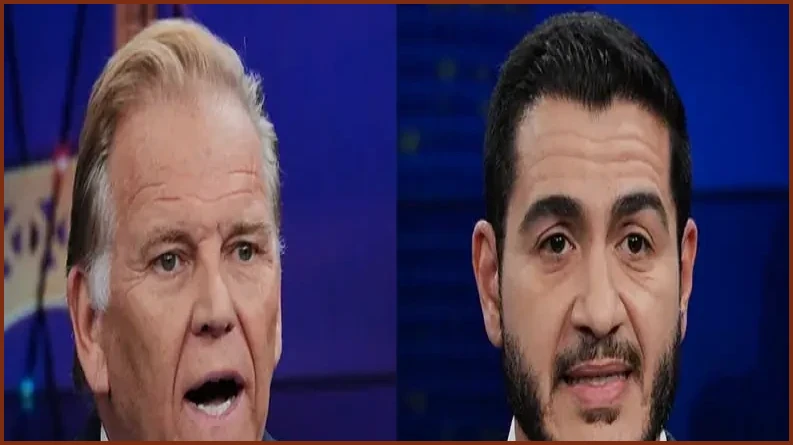
In Michigan, progressive candidate Abdul El-Sayed, a former Wayne County health director who advocates for Medicare for All and has expressed strong criticism of Israel, has worked to unify party voters after defeating moderate Democratic Representative Haley Stevens in a contentious primary campaign. El-Sayed, who has held narrow leads in recent surveys, has focused his attacks on Republican nominee Mike Rogers over the former congressman's past support for the war in Iran and trade tariffs on Canadian goods. Rogers, a former FBI agent, has recently advocated for resolving both the Iranian conflict and trade disputes.
The Maine Senate race pits five-term Republican incumbent Susan Collins against Democratic candidate Troy Jackson, the former state Senate president and a fifth-generation logger. Jackson entered the contest after previous Democratic nominee Graham Platner withdrew from the race following sexual assault allegations. Collins has historically maintained her seat in a state that voted against Trump in three consecutive presidential elections by occasionally breaking party lines, yet she remains a primary target for national Democrats. Recent polling in Maine has fluctuated between small leads for either candidate and exact ties.
In Ohio, Democrats are aiming to capture a state that has leaned increasingly Republican in recent elections. Former Democratic Senator Sherrod Brown is challenging Republican Senator John Husted for the remaining two years of the term vacated by Vice President JD Vance. With Brown maintaining a slim lead in public polling, the race has drawn major national figures, with Vance and Trump making campaign stops for Husted while former President Barack Obama campaigned on behalf of Brown.
The Texas contest has drawn broad attention following heavy spending from national Republican groups. Party leaders had expressed concern over the financial resources required to defend former state Attorney General Ken Paxton if he secured the GOP nomination over incumbent Senator John Cornyn. Following Paxton's primary victory, Republican organizations have invested more than $100 million into holding the seat. State Senator Angela Paxton, who initiated divorce proceedings against her husband citing biblical grounds, released campaign advertisements calling on voters to support the full Republican ticket without making explicit reference to her estranged spouse. Democrats, who have not won a statewide election in Texas in over three decades, are fielding state Representative James Talarico, who has leaned into his Christian faith and framed his platform around economic division rather than partisan conflict.
In Kansas, Democrats are attempting to end the longest active losing streak in U.S. Senate history, having not elected a senator in the state since 1932. Democratic challenger Adam Hamilton, the founding pastor of the 24,000-member Church of the Resurrection United Methodist congregation, has pulled ahead in select polls against Republican Senator Roger Marshall. Marshall, an obstetrician-gynecologist, faced public criticism after reports revealed he had taken legal action against hundreds of former patients over unpaid medical bills, creating a surprisingly competitive environment in a state Trump carried by 16 points in 2024.
Iowa presents another shift in traditional political alignment, as two-term Democratic state Representative Josh Turek faces Republican U.S. Representative Ashley Hinson to fill the seat left open by retiring GOP Senator Joni Ernst. Iowa, which backed Obama twice before leaning heavily Republican and backing Trump by 13 points in 2024, has not elected a Democratic senator since Tom Harkin's final campaign in 2008. Hinson has emphasized her legislative background and efforts to curb inflation while promising to align with Trump. Turek, a four-time Paralympian who won gold medals in wheelchair basketball in Rio and Tokyo, was born with spina bifida, a condition his family attributes to his father's Agent Orange exposure during Navy service in Vietnam. Running on a platform of prairie populism focused on healthcare access, government corruption, and cost-of-living issues, Turek remains locked in what analysts view as a toss-up race alongside Libertarian candidate Thomas Laehn.
Alaska's election features Democratic nominee and former Representative Mary Peltola challenging Republican Senator Dan Sullivan in a state that typically votes Republican in presidential contests. Peltola, who would become the first Alaska Native to serve in the Senate if elected, has emphasized support for the state's commercial fishing and resource extraction industries. Under Alaska's ranked-choice voting model, two additional candidates appear on the ballot: Republican Gerald Heikes and unaffiliated candidate Daniel J. Sullivan Jr. The senator's campaign previously mounted an unsuccessful legal challenge to remove the unaffiliated candidate of the same name from the ballot.
North Carolina stands out as a strong pickup opportunity for Democrats following the retirement of Republican Senator Thom Tillis. Democratic former Governor Roy Cooper leads in polls against Republican nominee Michael Whatley, the former Republican National Committee chair who secured Trump's endorsement. Despite Trump winning the state by three percentage points in 2024, forecasters view Cooper as the favorite in the open contest.
In Georgia, incumbent Democratic Senator Jon Ossoff holds a lead over Republican Representative Mike Collins, with some surveys showing Collins behind by double digits. The race has featured sharp exchanges, including Ossoff criticizing Collins over past rhetoric and Collins attacking Ossoff regarding personal finances. Ossoff has stated he has no intention of pursuing a presidential run in 2028 and plans to complete a full six-year term if re-elected.
New Hampshire's Senate race features Democratic Representative Chris Pappas, who would be the first openly gay man elected to the Senate, against Republican nominee John E. Sununu. Sununu, a former senator whose family members previously served as governor, won the seat in 2002 before losing to retiring Senator Jeanne Shaheen in 2008. Sununu has sought to position himself independently from Trump, despite receiving the president's endorsement during a competitive primary against former Massachusetts Senator Scott Brown. Pappas maintains a lead in recent polling but has characterized the contest as close due to the state's swing-state voter history.
Minnesota's contest has centered on state-level policy disputes between Democratic Lieutenant Governor Peggy Flanagan and Republican nominee Michele Tafoya, a former sports broadcaster. Flanagan advanced to the general election after defeating Representative Angie Craig in the Democratic primary, leveraging Craig's vote on federal immigration legislation following two fatal shootings by federal agents within the state. Tafoya has focused her campaign on addressing financial management issues in state social service programs under Governor Tim Walz while presenting herself as an independent-minded conservative, though she faced scrutiny over comments regarding economic sacrifices during the ongoing Iran conflict. Election forecasters place Flanagan as the favorite.
Nebraska Senator Pete Ricketts, a former two-term governor, faces a challenge from independent candidate Dan Osborn, an industrial mechanic and former labor union leader. Osborn, who achieved a surprisingly narrow loss against GOP Senator Deb Fischer in 2024, has declined to commit to caucusing with either major party, though Republicans have sought to link him to national Democrats following the withdrawal of the official Democratic nominee. Ricketts and outside Republican groups, including the Senate Leadership Fund, have directed significant capital into defending the seat.
In South Carolina, Republican Senator Darline Graham is seeking to maintain the seat she was appointed to following the death of her brother, Senator Lindsey Graham, in July. After winning a special primary with Trump's backing, Graham faced criticism over a debate performance regarding foreign policy matters. Her Democratic opponent, pediatrician Annie Andrews, has centered her platform on reducing healthcare expenses and household costs. While Republicans remain favored, narrow polling gaps have prompted spending from national GOP organizations and public statements from Trump opposing Andrews.
In Florida, appointed Republican Senator Ashley Moody is running for a full term against Democratic state Representative Angie Nixon. Moody was named to the seat after Marco Rubio resigned to assume the role of Secretary of State. Nixon, a democratic socialist who gained national attention after defeating a better-funded candidate in her primary, would be Florida's first Black U.S. senator if elected. Moody continues to hold an advantage in general election polling.
Related Articles

Md. Kazi Bijoy is a dedicated tech enthusiast and content creator with a passion for digital innovation. With years of experience in the tech industry, he specializes in breaking down complex topics into easy-to-understand guides. When he isn’t writing, he explores the latest gadgets and researches emerging trends in the digital world.