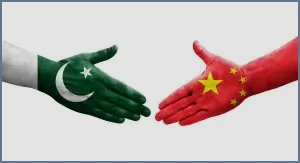
Pakistan's Ministry of Information and Broadcasting, alongside Chinese officials, launched the China-Pakistan Information Corridor (CPIC) on October 27 at the Pakistan-China Friendship Center in Islamabad. Promoted by authorities as a barrier against fake news and misinformation, the joint initiative arrives at a time when media watchdogs express grave concerns regarding press freedom in both nations. During the inauguration event, Pakistan's Information Minister Attaullah Tarar expressed gratitude to the Chinese embassy for supporting the establishment of the project.
Official statements from Chinese diplomats framed the corridor as a strategic mechanism to combat hostility and false narratives. According to China's Foreign Ministry spokesperson Mao Ning and Chinese Ambassador to Pakistan Jiang Zaidong, both of whom attended the launch, the platform will build a more favorable public-opinion environment and directly counter propaganda directed against China and Pakistan. However, critics argue that placing an official "fact-checking" unit in the hands of both governments gives state authorities unprecedented control over public information.
The introduction of CPIC coincides with severe legal restrictions facing reporters in Pakistan. In January 2025, the Pakistani government approved amendments to the Prevention of Electronic Crimes Act (PECA). Specifically, Section 26-A created criminal penalties of up to three years in prison, fines of up to 2 million Pakistani rupees, or both, for intentionally disseminating information known or reasonably believed to be false that is likely to induce public fear, panic, or unrest. Furthermore, the revised law granted a government-controlled regulator broad authority to block digital content, including material deemed contrary to "the ideology of Pakistan."
In the months following the legal changes, state institutions frequently deployed PECA against independent reporting. Reporters Without Borders (RSF) documented at least nine prosecutions of journalists under PECA within nine months of the amendments. Among those targeted was Raftar founder Farhan Mallick, who was arrested in March 2025 for alleged PECA violations. Additionally, Pakistan's National Cyber Crimes Investigation Agency (NCCIA) issued a formal notice to Dawn journalist Muhammad Akbar Notezai regarding his 2024 investigative report on corruption in Balochistan—the province that hosts the China-Pakistan Economic Corridor (CPEC) flagship port of Gwadar.
Official records highlight the widespread application of the legislative measures. By April 2026, the Pakistani government reported that 187 cases had been formally registered under Section 26-A of PECA. Simultaneously, press freedom monitor Freedom Network documented 129 separate violations targeting journalists between April 2025 and March 2026, which included 58 legal actions primarily driven by PECA. Freedom Network's executive director, Iqbal Khattak, identified the amended statute as the single most consequential tool used to suppress journalism and free expression, noting that it has fostered a profound climate of fear resulting in widespread self-censorship.
Legal challenges to the restrictions have met resistance in Pakistani courts. When the Pakistan Federal Union of Journalists petitioned the Islamabad High Court to suspend the PECA amendment, the court ruled in February 2026 that it could not issue an injunction to halt the law. Even prior to the creation of CPIC, scrutiny of CPEC projects carried severe risk. Foreign Policy noted in 2022 that criticizing CPEC was treated with similar severity to criticizing the military, with the army's media wing directly warning reporters over WhatsApp when red lines were crossed. A 2020 Brookings paper titled "At All Costs" similarly detailed how both Beijing and Islamabad rigorously protect the public narrative surrounding CPEC.
The media environment in China presents even stricter state control. On RSF's 2026 Press Freedom Index, China was ranked 178th out of 180 countries, placing above only North Korea and Eritrea. RSF identified China as the world's top jailer of journalists, with 121 media workers imprisoned. Citizen journalist Zhang Zhan, who was initially imprisoned for her early reporting on COVID-19 in Wuhan, was re-sentenced in September 2025 to an additional four years in prison. Under the CPIC framework, major Chinese state media organizations—including Xinhua, People's Daily, and China Media Group (CMG), which operates foreign outlets CGTN and China Radio International—will directly assist in determining verified news standards in Pakistan.
Press freedom advocates warn that CPIC's structure inherently creates a conflict of interest by allowing governments to evaluate investigative reports about their own actions. Issues such as CPEC financial debt, unpaid power sector dues, local protests in Gwadar, or security attacks on Chinese personnel can now be officially designated as misleading by state apparatuses before reporters face potential prosecution under Section 26-A. Under RSF's 2026 index, Pakistan ranked 153rd out of 180, reflecting ongoing efforts by authorities to control and suppress independent publications. Rights groups emphasize that when state institutions become the sole arbiters of truth, journalists face severe personal risks, leading critical reporting on government projects to go unpublished.
Related Articles

Meet Md. Rubel Rana
As a core contributor to Worlddincidents.com, Rubel Rana brings a unique perspective to the world of journalism. Whether it’s deep-diving into historical trivia or covering the latest global headlines, Rubel Rana is committed to delivering high-quality, high-impact articles. Their writing blends meticulous research with a compelling voice, helping readers stay informed and curious about the world around them.