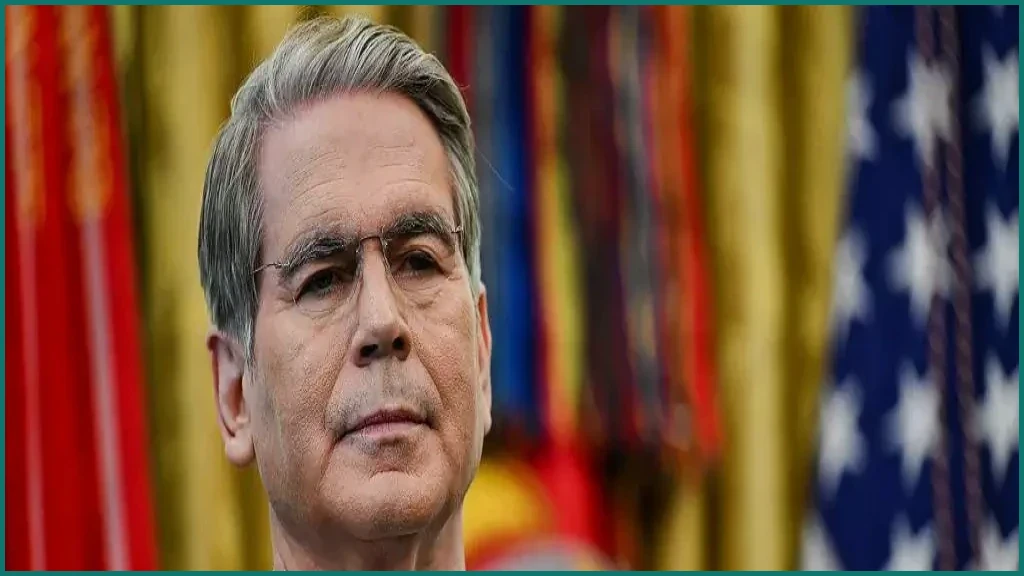
U.S. Treasury Secretary Scott Bessent has publicly assigned blame to Howard Lutnick's Commerce Department for failing to properly supervise the export of high-specification artificial intelligence microchips. The remarks bring internal Trump administration friction into public view as the broader fallout from the Nvidia scandal continues to spread across Washington.
Political pressure is escalating against Commerce Secretary Lutnick from both sides of the aisle to account for his agency's regulatory oversight. The scrutiny follows the removal of Jensen Huang as chief executive of Nvidia after revelations surfaced regarding an affair with a businesswoman who was allegedly working as a Chinese spy.
The businesswoman was affiliated with Megaspeed, a cloud computing enterprise that had been under federal investigation over suspicions of illicitly smuggling Nvidia's advanced AI hardware into China. Despite those active federal inquiries, Megaspeed was never placed on the U.S. entity list, which restricts domestic technology firms from conducting business with designated foreign entities.
Speaking during an interview on CNBC's "Squawk Box," Bessent noted that multiple government agencies had supported adding Megaspeed to the restricted trade list for months. However, he emphasized that the Commerce Department holds executive authority over export enforcement. "Commerce has the pen… and you will have to ask them about their internal process," Bessent stated.
Bessent expressed deep frustration over procedural delays in placing Megaspeed under formal export controls and over reported leaks of advanced microchips into Chinese markets. He reiterated President Donald Trump's policy directive that China must not receive Nvidia hardware performing above the H100 standard. Bessent argued that any chip leakage actively harms leading American technology companies in the international AI race while providing strategic advantages to Beijing.
According to details originally reported by the New York Times, the Commerce Department had been investigating Megaspeed since last year over allegations of covertly shipping advanced Nvidia hardware into China. Megaspeed was contacted for comment. Separate reporting in the Financial Times indicated that the Commerce Department had delayed efforts to include the cloud computing firm on the restricted entity list.
In addition to questioning federal oversight, Bessent directed criticism at Nvidia's corporate leadership. While public attention had concentrated on Jensen Huang's personal conduct, Bessent argued that the critical issue rests on corporate oversight. "The story has been thus far of Jensen Huang's personal foibles," Bessent said. "The real story here should be: Did Nvidia know their client, and was there a robust effort at Nvidia to make sure that there was no leakage and that they were selling to what were obviously pass-through shell companies? It's important that anyone at the company there be held accountable for that."
The public criticism marks a rare instance of internal cabinet disputes within the Trump administration surfacing publicly. Historical rivalries between Bessent and Lutnick have previously been reported by U.S. media, including a 2024 competition between the two men for the Treasury Secretary post ahead of Trump's return to office, as well as disagreement last year over executive tariff policies.
Congressional oversight has intensified alongside executive branch tensions. Senate Banking Committee Chairman Tim Scott, a Republican senator, posted on X that recent revelations raise grave concerns regarding national security and the protection of sensitive U.S. technology. The Senate Banking Committee has summoned both Howard Lutnick and Jensen Huang to testify in December regarding the Commerce Department's decisions and Huang's interactions with the former Megaspeed executive.
Simultaneously, leading Democrats on key congressional committees—including House Ways and Means Committee Ranking Member Richard E. Neal and Senate Finance Committee Ranking Member Ron Wyden—have initiated formal probes into export approvals given to Nvidia. Lawmakers have instructed Lutnick and the Commerce Department to retain all records, communications, and internal documentation concerning Nvidia and Huang.
According to Neal and Wyden, regulatory arrangements allowed Nvidia's high-end H200 microchips to be sold to Chinese buyers provided the hardware was first shipped from manufacturing plants in Taiwan into the United States for government inspection. Under this mechanism, a 25 percent tariff was imposed pursuant to a section of the Trade Act intended to empower the U.S. president to block imports that risk national security. Neal and Wyden argued that Trump's application of the trade statute had the opposite effect, stating that it ended up "undermining US national security and putting Americans at risk."
Related Articles

Mr. Udoy is a professional Web Developer and Blogger with 7+ years of experience in the tech world. He specializes in web architecture and digital storytelling. As the driving force behind worldincidents.com, he focuses on delivering high-quality, well-researched content to a global audience.